The water on your floor is more than a mess; it’s a ticking clock that threatens your home’s structural integrity. Within just 24 to 48 hours, clean water can degrade into a contaminated hazard while mold begins to take root in your walls. Understanding the professional water damage drying process is the first step toward reclaiming your peace of mind. You’re likely feeling the weight of this crisis, from the stress of an insurance claim to the constant hum of equipment disrupting your life. It’s a lot to handle, but you don’t have to face it without a clear plan.
We’re here to turn that chaos into a controlled recovery. This guide explains the scientific steps experts use to extract moisture and save your home from permanent damage. By following the industry’s highest standards, like the IICRC S500, we ensure every hidden pocket of moisture is gone. We’ll walk you through the essential phases of extraction, evaporation, and dehumidification. You will also learn how professional documentation helps you secure a successful insurance claim and preserve your property’s long-term value.
Key Takeaways
- Act within the critical 24-to-48-hour window to stop mold colonization before it starts.
- Master the water damage drying process by understanding how professionals use moisture mapping to find hidden threats.
- Discover the role of psychrometry and how high-velocity air movers break the boundary layer to accelerate evaporation.
- Learn why rapid water extraction is the most vital step in shortening your home’s total recovery time.
- Gain the upper hand on your insurance claim with specific documentation strategies that protect your property value.
Understanding the Water Damage Drying Process
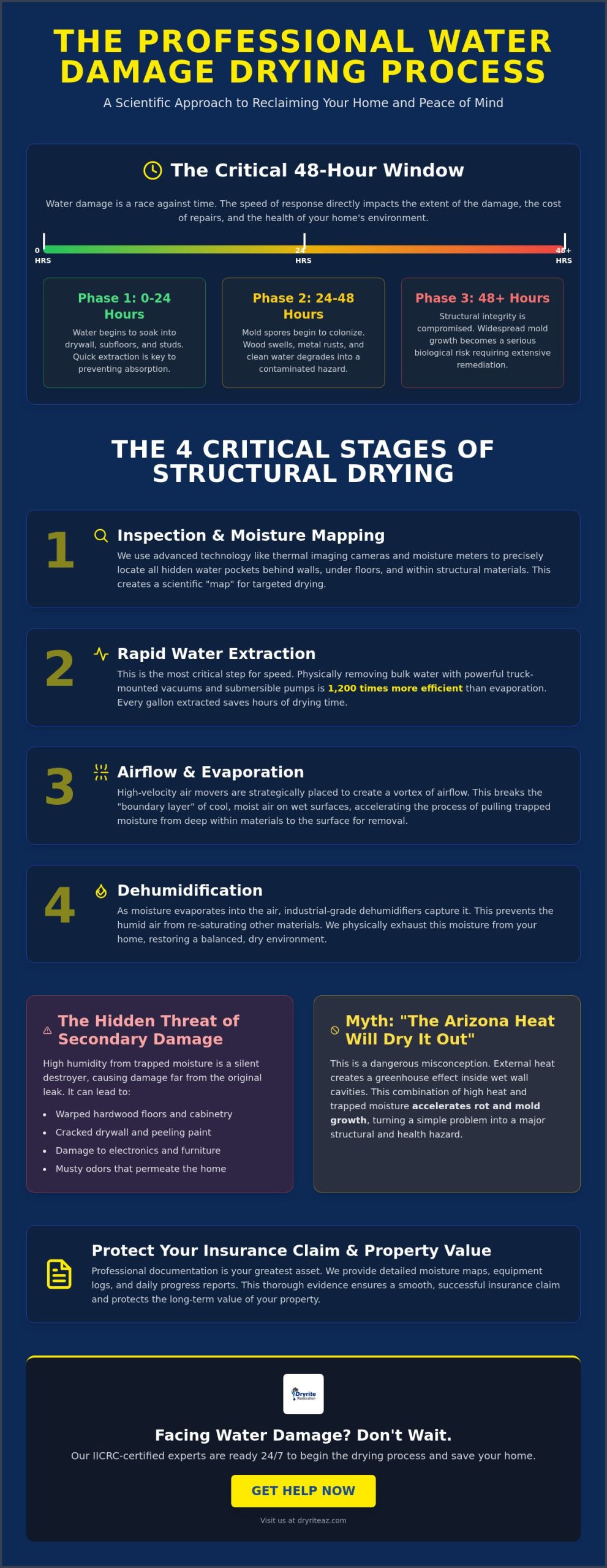
Structural drying is the scientific removal of trapped moisture from deep within your building materials. It’s a calculated race against time. While your floors might look dry, your studs and subfloors often hold water like a sponge. This Water damage overview explains how different water categories dictate the professional response. You have a 24-to-48-hour window before mold spores begin to colonize. If you miss this window, a simple leak turns into a biological hazard.
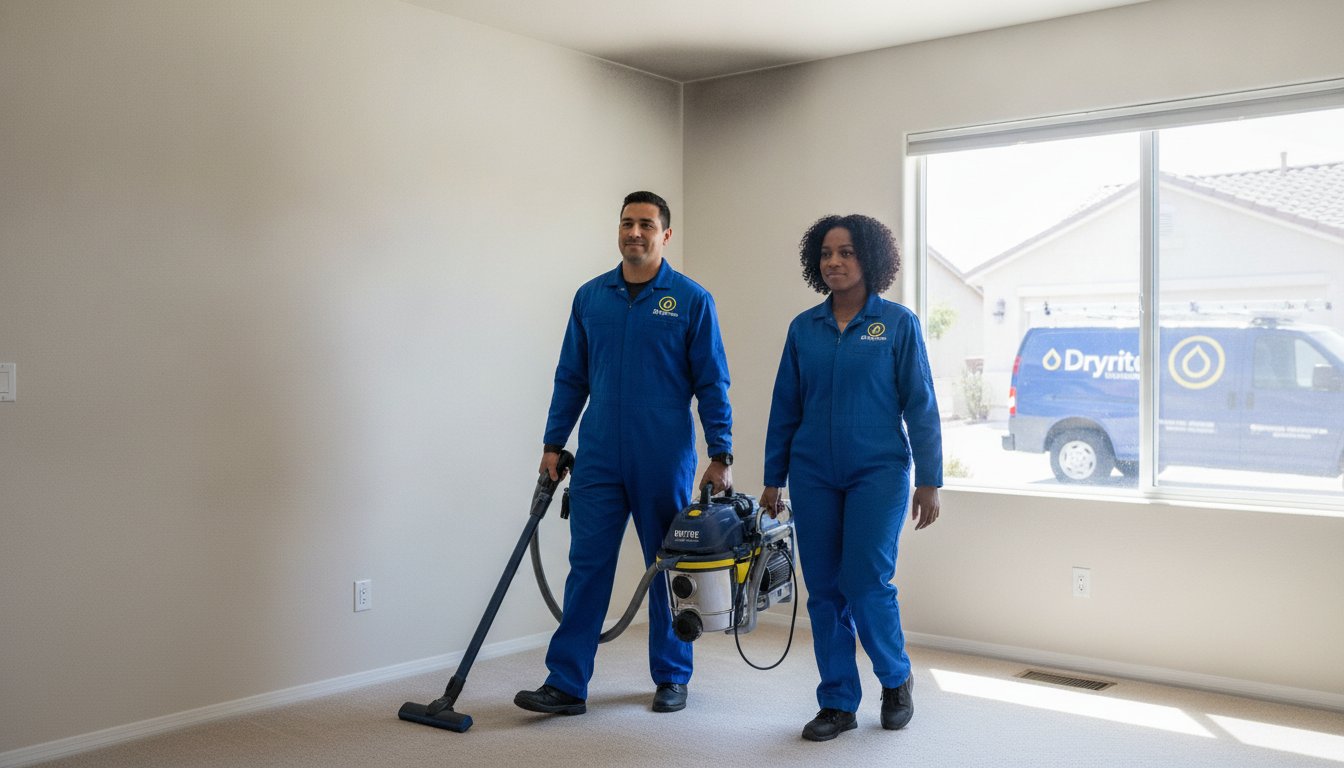
The professional water damage drying process goes far beyond DIY efforts. A shop-vac only handles surface water. We focus on deep-tissue structural drying. Our teams establish “Dry Standards” by testing unaffected areas of your home. This gives us a baseline moisture level to reach. We don’t guess. We measure until your home is truly safe.
Why Arizona Heat Isn’t Enough
Don’t let the Mesa sun fool you. Many homeowners believe our dry air will naturally fix a flooded room. It won’t. When water enters a wall cavity, it stays there. The exterior heat creates a greenhouse effect inside your walls. This high-heat, high-moisture pocket is a perfect breeding ground for rot. Several signs of hidden water damage remain invisible to the naked eye. Peeling paint and musty smells prove the desert air isn’t reaching the core of the problem.
The Dangers of Secondary Damage
Standing water is just the first threat. Secondary damage happens when high humidity destroys areas the water never actually touched. It warps expensive hardwoods and cracks your drywall. Excess moisture in the air can even fry your electronics and ruin furniture. If you delay, you will likely face the added cost of mold remediation mesa az. Speed is your best defense against these compounding losses. We act fast to stabilize the environment and protect your property value.
The 4 Critical Stages of Professional Structural Drying
Professional restoration isn’t a passive waiting game. It’s a high-speed, scientific intervention designed to stabilize your home before permanent damage sets in. We don’t just set up fans and leave. The water damage drying process follows a strict, four-stage protocol to ensure every drop of moisture is accounted for and removed. This systematic approach transforms a chaotic disaster into a managed recovery, protecting both your property and your health.
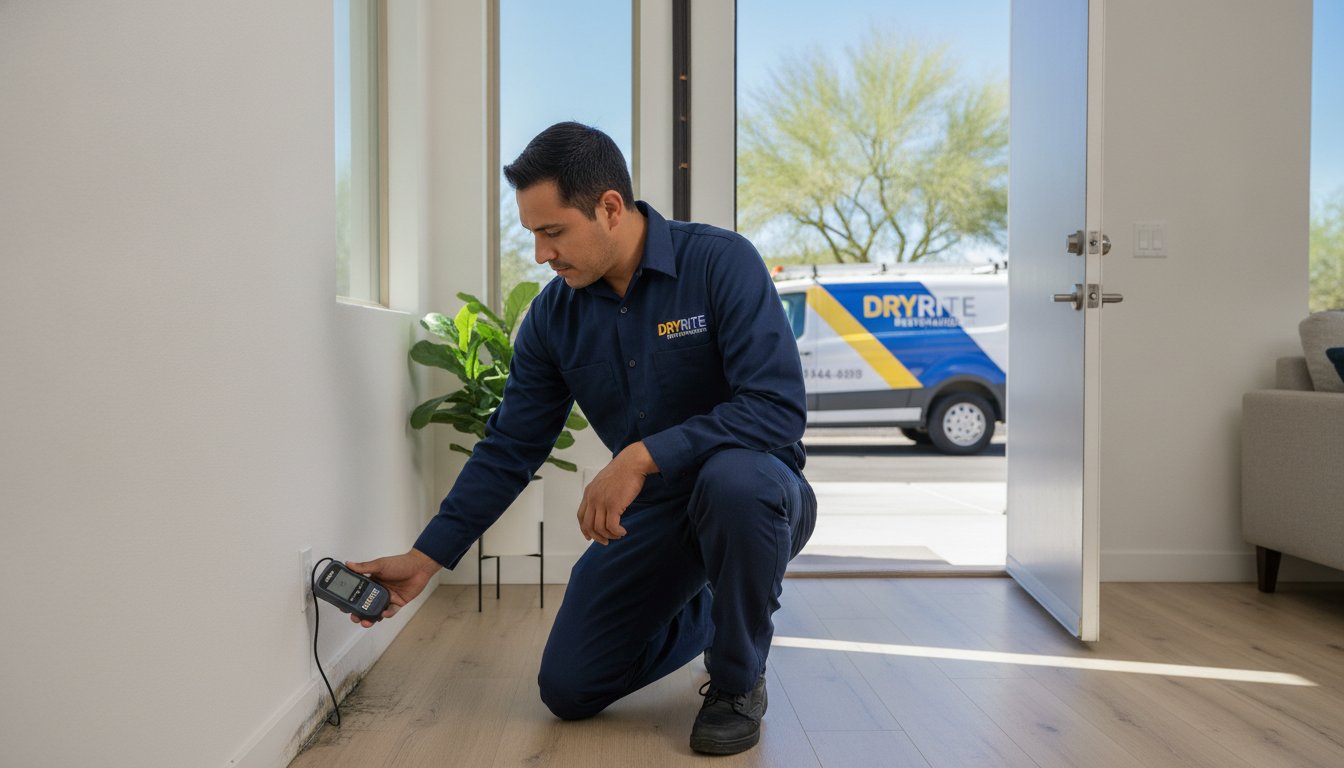
- Step 1: Inspection and Moisture Mapping. We deploy thermal imaging and moisture meters to find hidden water pockets behind walls and under floors.
- Step 2: Rapid Water Extraction. Our team removes bulk liquid using powerful truck-mounted units to prevent further absorption.
- Step 3: Airflow and Evaporation. High-velocity air movers pull trapped moisture to the surface of building materials.
- Step 4: Dehumidification. We capture airborne moisture and exhaust it, preventing the air from re-saturating your dry materials.
Phase 1: Inspection & Water Extraction
Precision starts with technology. We use thermal cameras to detect temperature differences caused by evaporative cooling. This allows us to see water trapped behind tiled walls or hidden under kitchen cabinets without tearing your home apart. Once we map the damage, we begin extraction. This is the most vital step for speed. Physically removing water is 1,200 times more efficient than trying to evaporate it. We use submersible pumps for deep standing water and weighted extraction tools for carpets and pads. Every gallon we pump out now saves hours of drying time later. If you are facing a sudden flood, our water damage restoration specialists can deploy these industrial tools immediately to minimize your loss.
Phase 2: Stabilizing the Environment
Once the bulk water is gone, we control the atmosphere. We set up containment zones using heavy-duty plastic barriers. This focuses all our drying energy on the affected area rather than wasting power on the rest of the house. During this stage, we also prioritize your air quality. We use HEPA air scrubbers to filter out dust and potential spores disturbed during the water damage drying process. Finally, we establish clear drying goals. By measuring the moisture levels in unaffected rooms, we create a baseline “dry standard.” This ensures we don’t stop until your home returns to its original, safe state.
The Science Behind the Machines: Air Movers and Dehumidifiers
Professional restoration isn’t just about blowing air; it’s about controlling physics. We use psychrometry, the study of air, moisture, and temperature, to manipulate the environment in your favor. By understanding how these three factors interact, we can force water out of dense building materials like subfloors and framing. This scientific approach is the engine of the water damage drying process. It ensures we aren’t just drying the surface while leaving the structure to rot from the inside out.
Air Movers vs. Household Fans
Don’t reach for your ceiling fan or a standard box fan. Household fans lack the static pressure needed to push air into porous materials. Industrial air movers are built for high CFM (Cubic Feet per Minute). They are specifically designed to break the “boundary layer.” This is the thin, stagnant layer of saturated air that clings to wet surfaces and prevents evaporation. By stripping this layer away, we create a constant “evaporation engine” that pulls moisture to the surface. Using standard fans can actually be dangerous. They lack the power to stabilize the room and can inadvertently spread contaminants or dust throughout your home while doing very little to dry the actual structure.
Dehumidification: The Moisture Sponge
Once the air movers pull moisture into the air, we must remove it immediately. This is where LGR (Low Grain Refrigerant) dehumidifiers come in. They are the gold standard for restoration. Unlike standard store-bought units, LGRs can pull moisture from the air even in very low humidity conditions. They lower the vapor pressure in the room, which essentially “sucks” water out of your walls. While desiccant dehumidifiers use chemical attraction to absorb water, LGR units use advanced cooling to condense it, making them ideal for most residential structural drying.
In Mesa, it’s tempting to open windows to let the “dry” air in. Don’t do it. Our technicians need to control the environment perfectly to maintain the water damage drying process. Opening a window introduces unmanaged variables that can stall the drying. We also perform daily monitoring. Our experts visit your home every 24 hours to check “moisture points” with specialized meters. We track the progress of every wall and floor to ensure the equipment is working at peak efficiency. If you need a team that understands the science of recovery, contact our water damage restoration experts today to start your structural recovery.
Taking Action: Your Role in a Successful Drying Project
Recovery starts the moment you secure your home. Safety is your first priority. If you’ve just experienced a house flood, shut off the water source and avoid contact with electrical outlets. Once the immediate danger passes, start your documentation. Take clear photos and videos of all affected areas and damaged belongings. This evidence is vital for your water damage insurance claim help arizona. It provides a baseline for your adjuster and ensures nothing is overlooked during the water damage drying process.
Communication is the bridge between disaster and peace. We coordinate directly with your insurance adjuster to ensure the scope of work is fully understood. This transparency prevents communication gaps that could delay your claim. Once the drying is complete, we move into the final phase. This is the transition from mitigation to full water damage restoration mesa az. We handle everything internally, so you don’t have to manage multiple contractors during an already stressful time.
Navigating the Insurance Maze
We take the administrative burden off your shoulders. Dryrite works directly with insurance companies to streamline the paperwork and billing. It’s important to understand the two distinct phases of recovery. Mitigation is the emergency water damage drying process focused on stopping the damage. Restoration is the subsequent repair of your home’s finishes. To give you total confidence, Dryrite offers a 2-year warranty on our mitigation work. We stand by our results because we know our scientific drying methods work.
Preparing Your Home for the Drying Crew
Help us work faster by clearing a path for our heavy equipment. Our industrial air movers and LGR dehumidifiers require significant space and access to power. Expect a constant level of noise while the machines are running. They must operate 24/7 to maintain the necessary vapor pressure and airflow. Never turn off the drying equipment. Even a few hours of downtime can allow moisture to re-settle into your building materials, potentially restarting the mold clock. We monitor these sensors daily, so keeping the power on is the best way to ensure a bone-dry home and a successful structural recovery.
Reclaim Your Home and Your Security
You now have the knowledge to navigate a property crisis with confidence. Successful recovery depends on acting within the critical 48-hour window before mold takes hold. By trusting the science of the professional water damage drying process, you ensure that moisture is removed from the deepest layers of your home’s structure. This calculated approach saves your property value and protects your family’s health from hidden biological threats.
We stand ready to act as your experienced protector. Our team provides a 24/7 emergency response to bring immediate order to a chaotic situation. We handle the heavy lifting and the administrative burden through direct insurance billing, ensuring you never have to manage the adjuster alone. To give you total peace of mind, we provide a 2-year mitigation warranty on our work. Don’t let hidden moisture destroy your home’s integrity or your sense of security.
Don’t wait for mold to grow—Get a 90-minute emergency response from Dryrite Restoration now!
Your home's recovery is just one call away. Let's get your life back to normal today.
Frequently Asked Questions
How long does the water damage drying process typically take?
A professional water damage drying process typically takes between three and five days to complete. The exact duration depends on the density of building materials like hardwood or concrete and the extent of the saturation. Our technicians visit your property every 24 hours to monitor moisture levels. We ensure the structure reaches its dry standard before we remove any equipment to prevent future mold growth.
Can I stay in my home while the drying equipment is running?
You can usually stay in your home while the equipment is running, but it’s often loud and uncomfortable. Industrial air movers and dehumidifiers generate significant noise and heat to facilitate rapid evaporation. If the damage is extensive or affects essential rooms like the kitchen or bathrooms, you might find it easier to stay elsewhere. This ensures your daily life isn’t disrupted by the constant hum of the machines.
Will my insurance cover the cost of professional drying?
Most homeowners insurance policies cover professional drying if the damage was caused by a sudden and accidental event like a burst pipe. We recommend reviewing your specific policy for exclusions related to regional flooding or sewage backups. Our team works directly with your adjuster to document the water damage drying process. This detailed documentation helps ensure your claim is processed smoothly and your property value is protected.
Why is my house so hot while the drying equipment is on?
The heat in your home is caused by the energy output of industrial dehumidifiers and air movers. This temperature increase is actually beneficial because warm air holds more moisture than cool air. This scientific principle speeds up the evaporation from wet surfaces. While the heat is uncomfortable, it’s a sign that the equipment is working at peak efficiency to pull water out of your building materials.
What happens if the water damage drying process isn’t started immediately?
Delaying the water damage drying process allows mold spores to colonize within 24 to 48 hours. Beyond mold, standing water causes secondary damage like warped subfloors, cracked drywall, and compromised structural integrity. Acting fast prevents a simple drying project from turning into a complex and expensive mold remediation job. Immediate intervention is the only way to save your home from permanent structural losses.
Can I just use a shop-vac and some fans to dry my basement?
Household fans and shop-vacs are insufficient for structural drying because they only address surface-level water. They lack the static pressure needed to reach moisture trapped deep inside wall cavities or under flooring. Without industrial-grade dehumidification to remove moisture from the air, the water will simply relocate. This creates a high-humidity environment that continues to cause rot and mold growth in hidden areas.