The first 90 minutes after your home takes on water will determine the next nine months of your property’s health. It’s a high-stakes race against mold and structural decay that starts the moment the water enters. You’re likely feeling the heavy weight of uncertainty, wondering how to stop the damage and if your insurance will even cover the bill. Knowing exactly what to do after a house flood is the difference between a successful restoration and a denied claim.
Part of returning to a normal routine involves addressing your personal belongings; for clothing and linens that were affected by the humidity, utilizing a professional service like Prescott’s Laundry can save you time and ensure your fabrics are properly cleaned and folded.
We understand the chaos you’re facing; it’s natural to feel anxious about permanent damage or health risks from contaminated water. This guide provides the professional roadmap you need to regain control, secure your insurance payout, and ensure every drop of moisture is removed. We’ll cover the critical 60-day NFIP Proof of Loss deadline, immediate safety protocols, and the professional restoration steps required to transform your home back into a safe sanctuary. You don’t have to navigate this disaster alone. We’ll show you how to move from a state of panic to a state of action with expert precision.
Key Takeaways
- Prioritize life safety by evacuating if structural integrity is compromised and learn the safe way to disable utilities without entering standing water.
- Protect your insurance claim by documenting the scene with specific wide-angle and close-up photos before any water extraction begins.
- Learn exactly what to do after a house flood to trigger the 90-minute mitigation rule and prevent long-term structural rot or mold growth.
- Identify hidden hazards like asbestos in older homes and understand why disturbing wet building materials can release toxic contaminants into your air.
- Navigate the full recovery journey from emergency water removal to professional reconstruction services that return your home to its pre-loss condition.
Table of Contents
- Immediate Safety Protocols: Securing Your Home and Family First
- Documenting the Damage: Protecting Your Insurance Claim
- The 90-Minute Rule: Why Professional Mitigation is Non-Negotiable
- Identifying Hidden Hazards: Mold, Asbestos, and Contaminants
- The Restoration Journey: Moving from Chaos to Peace of Mind
Immediate Safety Protocols: Securing Your Home and Family First
You’ve just discovered water in your home. Your heart is racing, and the urge to start cleaning is overwhelming. Stop. Before you grab a mop or a bucket, you must stabilize the environment. Knowing what to do after a house flood starts with physical safety. If you see water pouring from the ceiling or notice walls bowing, evacuate immediately. Your home is a structure of wood and stone, but your family is irreplaceable. Before acting, it helps to understand what is a flood? in a residential context and how it differs from a simple spill.
Electrical safety is your next priority. Never step into standing water to reach an electrical panel. If the breaker is in a dry area, shut it off immediately. If the source of the water is an internal pipe burst, close the main water valve to stop the flow. This simple action prevents thousands of dollars in additional damage. Avoid all contact with floodwater. It often contains sewage, chemical runoff, or sharp debris hidden beneath the surface.
The Danger of Electrical Shock and Structural Collapse
Wet drywall is a significant liability. It loses approximately 90% of its structural strength when saturated. This leads to heavy, sodden sheets pulling away from wall studs or ceiling joists. Watch for sagging ceilings or buckled floorboards; these are clear indicators of imminent failure. Never use a standard household vacuum to remove water. These machines are not designed for wet environments and create a massive risk of lethal electrical shock. If you see signs of structural buckling, stay out of the room until a professional arrives.
Identifying Water Categories: Clear, Gray, and Black
Water damage is classified by its level of contamination. Understanding these categories helps determine the safety gear required for entry.
- Category 1 (Clean): Water from a broken supply line or a leaking faucet.
- Category 2 (Gray): Water with some contamination, such as discharge from a dishwasher or washing machine.
- Category 3 (Black): Highly contaminated water from sewage backups, rising rivers, or seawater.
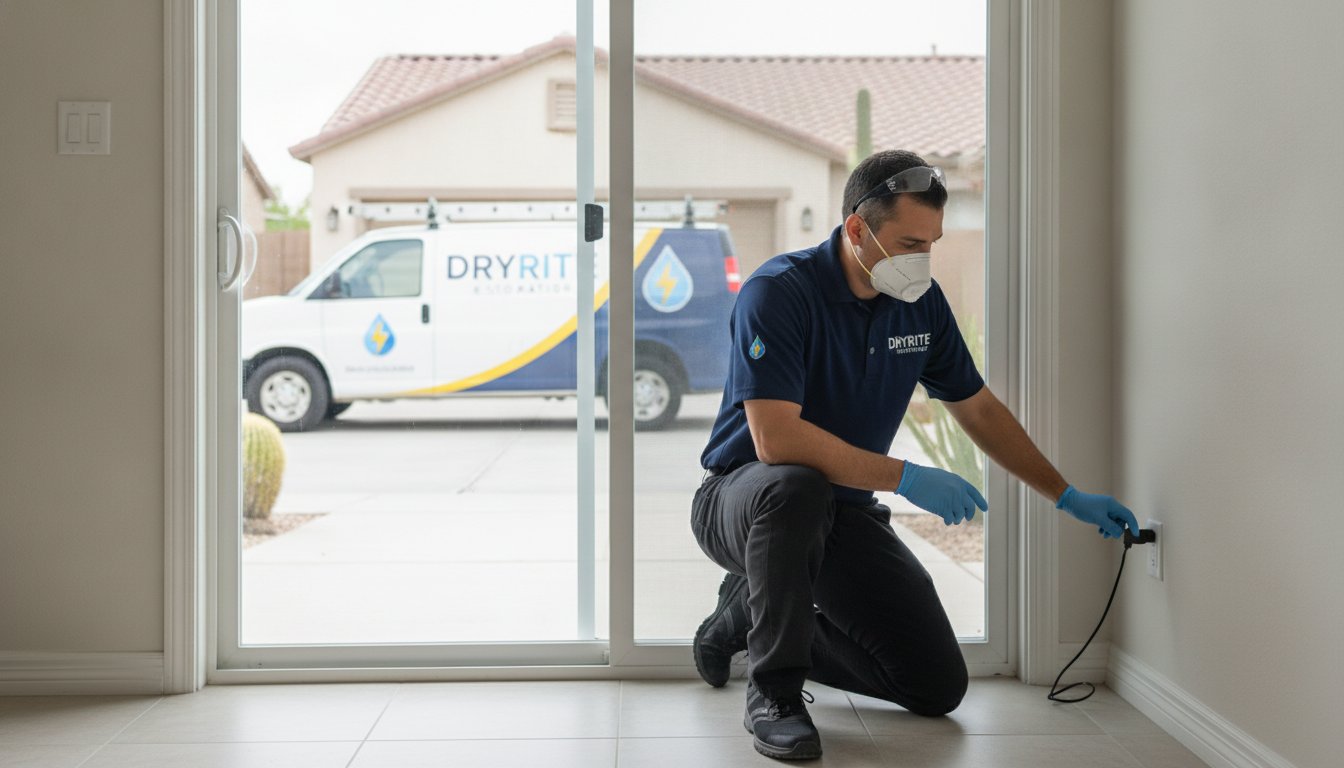
Time is your enemy. Category 1 water can degrade into Category 3 within 48 hours as bacteria multiply in the warm, damp environment. If you must enter the area to retrieve essentials, wear proper Personal Protective Equipment (PPE). This includes waterproof boots, heavy-duty gloves, and an N95 mask to protect against airborne contaminants. This is the first critical step in what to do after a house flood to ensure you don’t become a casualty of the restoration process.
Documenting the Damage: Protecting Your Insurance Claim
The first hour after a disaster is for safety. The second hour is for evidence. Once you have followed immediate safety protocols after a flood, your focus must shift to documentation. Insurance companies require proof to justify payouts. Without a clear record, you risk having legitimate claims denied or undervalued. Documentation is your primary defense against the administrative friction of the recovery process. It transforms your loss from a chaotic event into a factual, compensable claim.
Grab your phone and start recording. Take wide-angle photos of every room from at least four different corners. This establishes the full scope of the standing water. Next, capture close-ups of the water line on walls, door frames, and furniture. These stains prove the depth of the flooding and help experts determine the category of water involved. If you are unsure of the next steps, knowing what to do after a house flood involves starting a “loss of use” log immediately. Track every expense, from hotel stays to the cost of extra meals. These are often reimbursable under specific policy riders.
The “Don’t Discard” Rule for Flood Victims
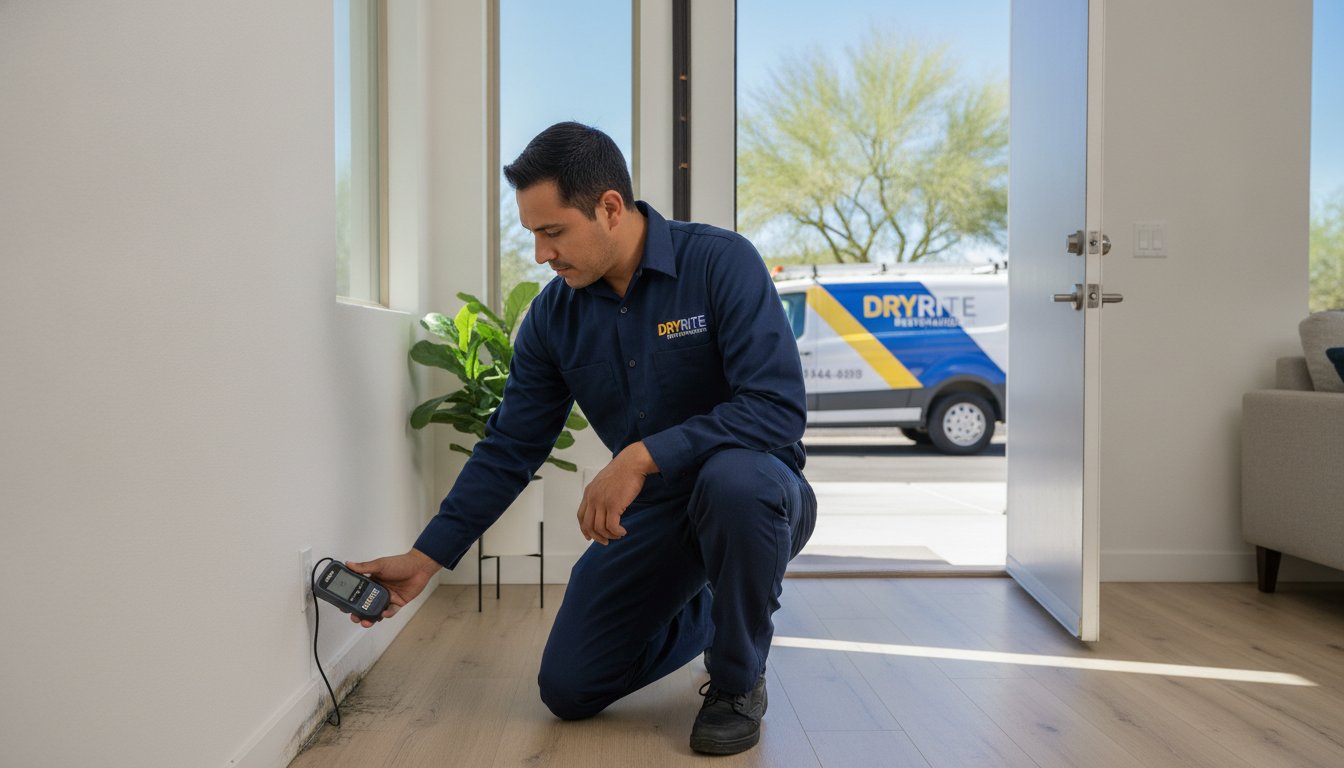
Never throw away damaged materials before an adjuster arrives. Keep a square foot of your carpet and a sample of the padding. These physical remnants prove the quality and grade of the materials you lost. For high-value electronics or family heirlooms, photograph the serial numbers and the damage in high resolution. We use thermal imaging leak detection to identify moisture trapped behind seemingly dry walls. This technology provides the visual evidence adjusters need to approve professional drying services that prevent long-term rot.
Communicating with Your Insurance Provider
Standard homeowners insurance rarely covers rising groundwater. You likely need to navigate a separate claim through the National Flood Insurance Program (NFIP) or a private flood carrier. Call your insurance agent, but call a restoration expert at the same time. Professional restorers speak the language of insurance adjusters and can provide the technical documentation required for a smooth payout. If you are dealing with a crisis in the East Valley, securing water damage restoration mesa az ensures you have an advocate who understands local building codes and documentation requirements. This dual-track communication prevents gaps that could stall your recovery. You can also request a professional assessment to begin the stabilization process immediately.
The 90-Minute Rule: Why Professional Mitigation is Non-Negotiable
Time is the most critical factor in property recovery. While general advice might suggest that cleanup takes time, the reality is that water damage is an active, aggressive force. We target a 90-minute arrival time across the Phoenix Metro area because the first hour and a half determines whether your home can be saved or if it requires a total gut-out. Mitigation is not just about cleaning up a mess; it’s the professional process of stopping secondary damage before it starts. If you’re wondering what to do after a house flood, the answer is to prioritize speed over DIY efforts.
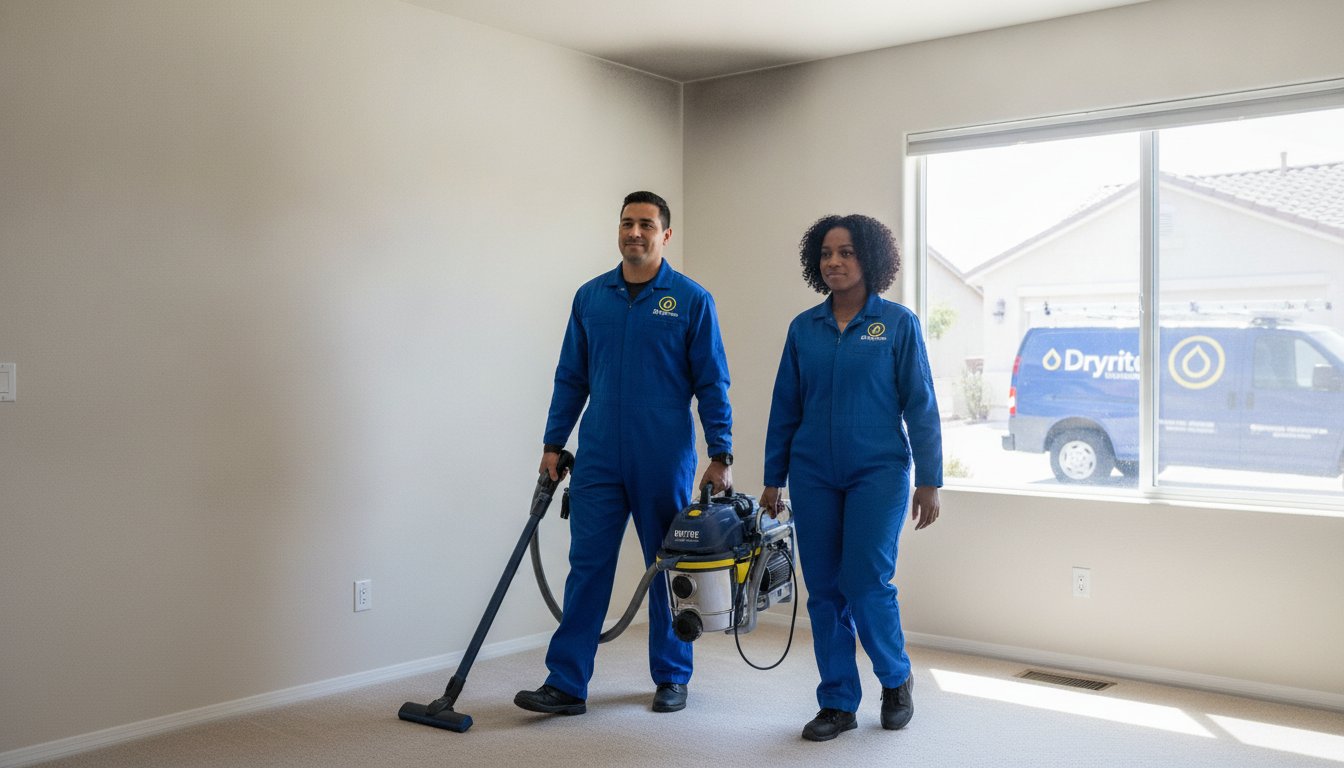
The difference between a standard household shop-vac and industrial extraction equipment is staggering. A typical consumer vacuum might remove a few gallons of surface water, but it lacks the lift capacity to pull moisture from deep within carpet pads or subfloors. Professional-grade extractors move hundreds of gallons per minute, physically removing the vast majority of moisture before it can migrate into your home’s structural skeleton. This rapid extraction is the only way to prevent wooden studs from swelling and subfloors from delaminating.
The Science of Structural Drying
Drying a home is a complex exercise in psychrometrics, the study of air, temperature, and water vapor. Just because a surface feels dry to the touch doesn’t mean the core of the wood is safe. We use Low Grain Refrigerant (LGR) dehumidifiers, which are specifically designed for the high-heat, low-humidity environment of Arizona. These units pull moisture from the air more efficiently than standard models, creating an environment where deep-seated water can evaporate quickly. This scientific approach ensures that your home is dry at the molecular level, not just on the surface.
Preventing Secondary Damage and Warping
Water doesn’t just sit; it climbs. Through a process called the wicking effect, moisture travels up drywall and into insulation, often reaching several feet above the visible water line. If this isn’t addressed within a 48-hour window, you face the permanent threat of rot and mold. For those with hardwood floors, we use specialized rescue mats that create a high-pressure vacuum to pull moisture directly through the wood grain. This can often save expensive flooring that would otherwise warp and require replacement. Understanding these technical nuances is a vital part of what to do after a house flood to protect your investment. Before you begin the heavy work, ensure you are prepared for filing a flood insurance claim by having a professional mitigation plan in place. This proactive stance provides the documentation and results that adjusters require for a successful settlement.
Identifying Hidden Hazards: Mold, Asbestos, and Contaminants
The most dangerous elements of a flood are often the ones you cannot see. While the visual shock of standing water is overwhelming, the microscopic threats triggered by moisture cause long-term health issues and legal complications. Knowing what to do after a house flood must include a plan for identifying hazardous materials before you tear out a single piece of drywall. In the high-heat environment of the Southwest, these hazards don’t just exist; they accelerate. You need an experienced protector to navigate these invisible risks before they become permanent liabilities. Learning to recognize the signs of hidden water damage — from faint yellow stains to persistent musty odors — is a critical skill that can prevent thousands of dollars in structural decay long before a major flood event occurs.
Asbestos and Lead: The Risks in Older Arizona Properties
Many Mesa homes built before the late 1980s contain asbestos in popcorn ceilings, floor tiles, and pipe insulation. When these materials become saturated, they become incredibly fragile. Disturbing a wet popcorn ceiling or pulling up damp vinyl flooring can release toxic fibers into your home’s air supply. We prioritize asbestos removal protocols by testing materials before starting any demolition work. This is a legal requirement in the Phoenix area. Proper disposal at specialized facilities ensures you don’t face heavy fines or, more importantly, respiratory health crises later.
Mold Prevention vs. Mold Remediation
Mold is a symptom of a failed drying process. In Arizona, the clock moves faster than in other climates. Black mold, specifically Stachybotrys, can begin to colonize within 24 to 48 hours when moisture meets our intense summer temperatures. Don’t rely on internet myths like spraying bleach on porous surfaces. Bleach is mostly water and often feeds mold growth in wood or drywall. Professional mold remediation mesa az involves physical containment, HEPA air filtration, and industrial antimicrobial treatments. These steps are standard in our restoration process to kill spores at the source.
Sewage backflow presents another invisible threat that requires immediate action. Monsoon storms frequently overwhelm local infrastructure, pushing Category 3 water into residential drains. This water carries pathogens, bacteria, and viruses that remain on surfaces long after the liquid has been extracted. If your flood involved a drain backup or rising outdoor water, professional sewage cleanup is mandatory to neutralize these biohazards. Hospital-grade disinfectants are the only way to ensure your home is truly sanitary. If you suspect your home contains hazardous materials or you’ve discovered a sewage backup, book a professional hazard inspection and asbestos removal service today to protect your family’s health.
The Restoration Journey: Moving from Chaos to Peace of Mind
The emergency phase is over. The water is extracted, the structures are dry, and the immediate crisis has passed. Now, the real work of returning your life to normal begins. Knowing what to do after a house flood includes understanding the critical bridge between mitigation and reconstruction. This is the moment where we transition from stopping the destruction to rebuilding your sanctuary. We manage this entire process internally. This ensures the team that dried your home is the same team that restores its beauty, maintaining a seamless flow of information and accountability.
We use Xactimate, the industry-standard pricing software that insurance adjusters use. This eliminates the friction of price disputes and speeds up your claim processing. Unlike competitors who leave you with a dry but gutted house, we provide comprehensive reconstruction services. This includes everything from drywall and painting to final flooring installation. Every project we touch comes with a 2-year warranty on all mitigation and repair work. This provides a layer of long-term accountability that national franchises rarely provide. We don’t just fix the damage; we stand by the quality of the recovery. To understand exactly what drives the pricing of these services, review our detailed water damage restoration cost estimate guide for Arizona homeowners so you can verify that every line item on your invoice reflects industry-standard rates.
Reconstruction and Returning Your Home to Pre-Loss Condition
Rebuilding is more than just aesthetics; it’s about safety. Before we consider a job finished, we perform final clearance testing. This verifies that your indoor air quality is pristine and that no residual moisture remains in the wall cavities. Seeing new drywall and fresh paint replaces the memory of the flood with a sense of tranquility. By keeping the reconstruction and mitigation under one roof, we prevent communication gaps that often delay projects for weeks. You won’t have to coordinate between multiple contractors while waiting for a return to normalcy.
In addition to water damage mitigation, comprehensive home safety includes robust fire protection. For those looking to install or maintain high-quality fire suppression systems, Firemex Solutions Inc. provides expert fire sprinkler services that can serve as a vital component of your property’s long-term safety plan.
Why a Local, Family-Owned Partner Matters
Since 2004, our family-owned business has served the Mesa community. We aren’t a faceless national franchise. We’re your neighbors. We understand the specific building codes of the Phoenix Metro area and the unique challenges of Arizona property damage. This local expertise allows us to move faster and with more precision than out-of-state contractors. Our commitment to your emotional well-being is as strong as our commitment to your home’s structure. We bring order to chaos and ensure your home is a safe environment once again. Don’t wait for the damage to double. Call Dryrite now and let us take the burden off your shoulders.
Take Decisive Action to Restore Your Peace of Mind
You’ve identified the hazards and understood the science of structural drying. Now, it’s time to act. Every minute water sits in your home, the risk of mold and structural decay increases. Knowing what to do after a house flood means moving quickly from documentation to professional mitigation. By prioritizing safety and securing evidence for your insurance claim, you’ve already taken the first steps toward a full recovery. The path from chaos back to tranquility requires a partner who understands the high stakes of property damage.
We’re here to handle the rest. As a licensed, bonded, and insured partner, we bring order to the chaos with a 2-year warranty on all mitigation work. We provide 24/7 emergency service to ensure you’re never left to navigate a disaster alone. Our team is ready to stabilize your property and guide you through every phase of restoration. Our 90-minute on-site arrival promise is our commitment to your home’s health and your family’s safety.
Get a Professional 90-Minute Emergency Response – Call Dryrite Restoration Now
Your home will be a safe, dry sanctuary again soon. We’re proud to be the seasoned protectors of your property and your peace of mind. Trust the process, and let’s get your life back to normal.
Frequently Asked Questions
How long do I have to wait before calling a professional after a flood?
You shouldn’t wait at all; call a professional immediately after ensuring your family’s safety. The first 24 to 48 hours are critical for preventing permanent structural damage and mold colonization. Waiting even a few hours allows water to wick higher into drywall and seep deeper into subfloors. Rapid intervention is the only way to minimize the scope of the restoration and control your total costs.
Will my homeowners insurance cover a flooded basement or kitchen?
Coverage depends entirely on the source of the water. Standard policies typically cover “sudden and accidental” internal discharges, like a burst pipe or a failed water heater. However, they almost never cover rising groundwater or storm-related flooding. You need a separate policy through the NFIP or a private carrier for those events. We’ll help you review your policy to determine what to do after a house flood regarding your specific coverage limits.
Can I stay in my house while it is being dried out after a flood?
You can stay in the home if the water was Category 1 and the affected area is small. However, if the flood involved sewage or significant Category 3 contamination, you must evacuate for health reasons. High-powered industrial fans and dehumidifiers also create significant noise and heat. We’ll assess the safety and comfort of your environment during our initial inspection to help you make an informed decision.
Is it safe to use bleach to clean up floodwater on my own?
No, using bleach is often ineffective and potentially dangerous. Bleach is primarily water; while it kills surface spores, the moisture can actually feed mold growth deep inside porous materials like wood and drywall. It also doesn’t neutralize the pathogens found in sewage. Professional-grade antimicrobials are necessary to properly sanitize your home without damaging your respiratory system or your property’s structural integrity.
What is the “90-minute rule” in water damage restoration?
The “90-minute rule” is the industry standard for emergency response times. Professional restoration teams aim to be on-site within 90 minutes to begin water extraction and stabilization. This speed is essential because it stops the clock on secondary damage. Rapid arrival ensures that moisture doesn’t have time to cause wood rot, delaminate subfloors, or allow mold spores to begin their 24-hour growth cycle.
How do I know if my flooded walls have asbestos in them?
Professional laboratory testing is the only definitive way to identify asbestos. If your home was built before the late 1980s, there’s a high probability that materials like drywall mud, floor tiles, or popcorn ceilings contain these toxic fibers. We perform mandatory testing before disturbing any suspect materials during the demolition phase. This protects your family from accidental exposure and ensures we follow all local Phoenix disposal regulations.
What happens if I don’t get all the moisture out of my subfloor?
Trapped moisture leads to catastrophic structural failure and hidden mold. Plywood subfloors will delaminate and lose their load-bearing capacity, while solid wood will warp or rot. Even if the surface feels dry, moisture trapped underneath can feed “silent” mold growth for months. This eventually ruins new flooring and compromises your indoor air quality. We use thermal imaging leak detection to ensure every layer is scientifically dry.
How long does the typical water damage restoration process take?
The mitigation phase typically takes three to five days to complete. This includes water extraction, professional drying, and stabilization of the environment. Once the structure is certified dry, the reconstruction phase begins. The timeline for rebuilding depends on the availability of materials and the extent of the damage. We manage both phases internally to keep the transition fast and prevent unnecessary delays in your recovery journey.