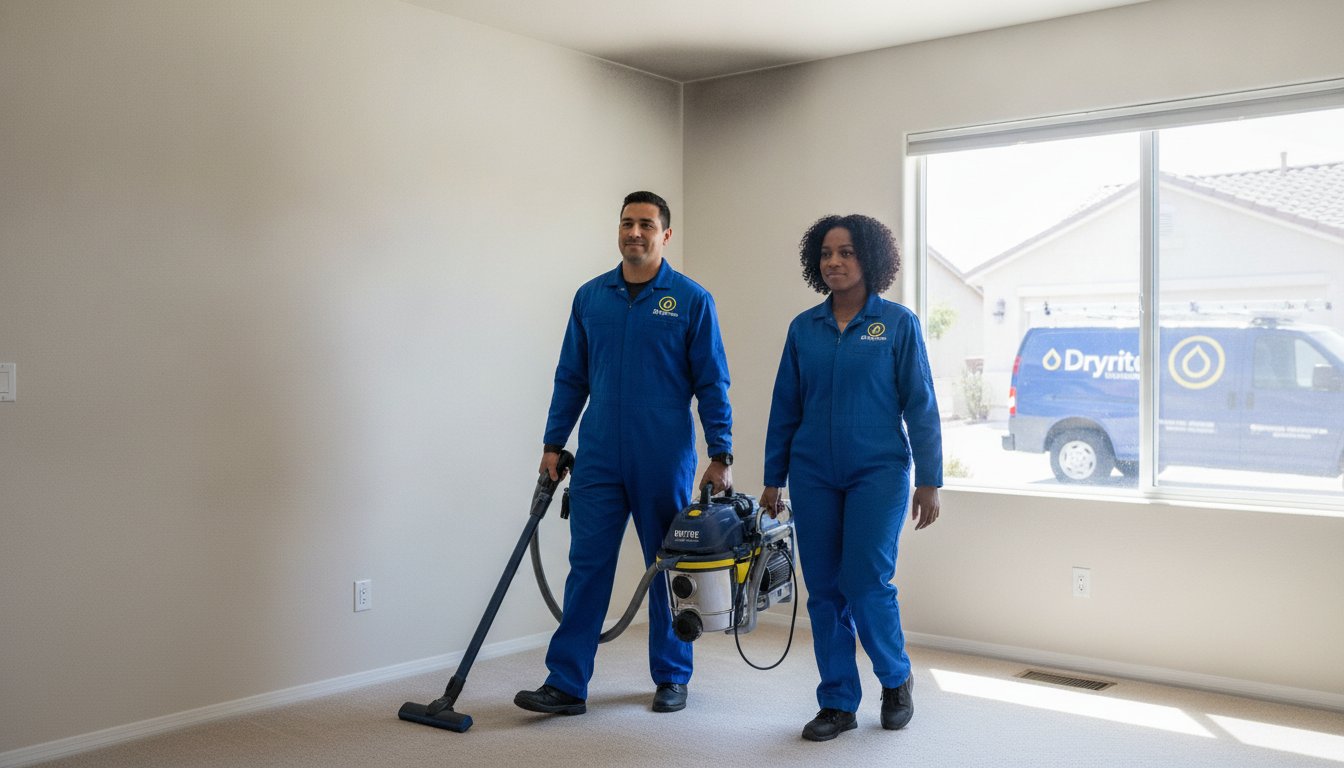
A fire in your home is terrifying, but often, the mess left behind causes the most long-term stress. Once the fire trucks leave, you’re left dealing with two distinct types of damage: smoke and soot.
While they happen at the same time, they behave completely differently, attack different parts of your house, and require totally different cleanup methods. Attempting a quick DIY wipe-down can actually lock the damage into your walls permanently.
If you’re dealing with the aftermath of a fire in Mesa or the Phoenix Metro area, here is a straightforward breakdown of what’s happening to your property and how to handle it safely.
Smoke: The Invisible, Odor-Trapping Threat
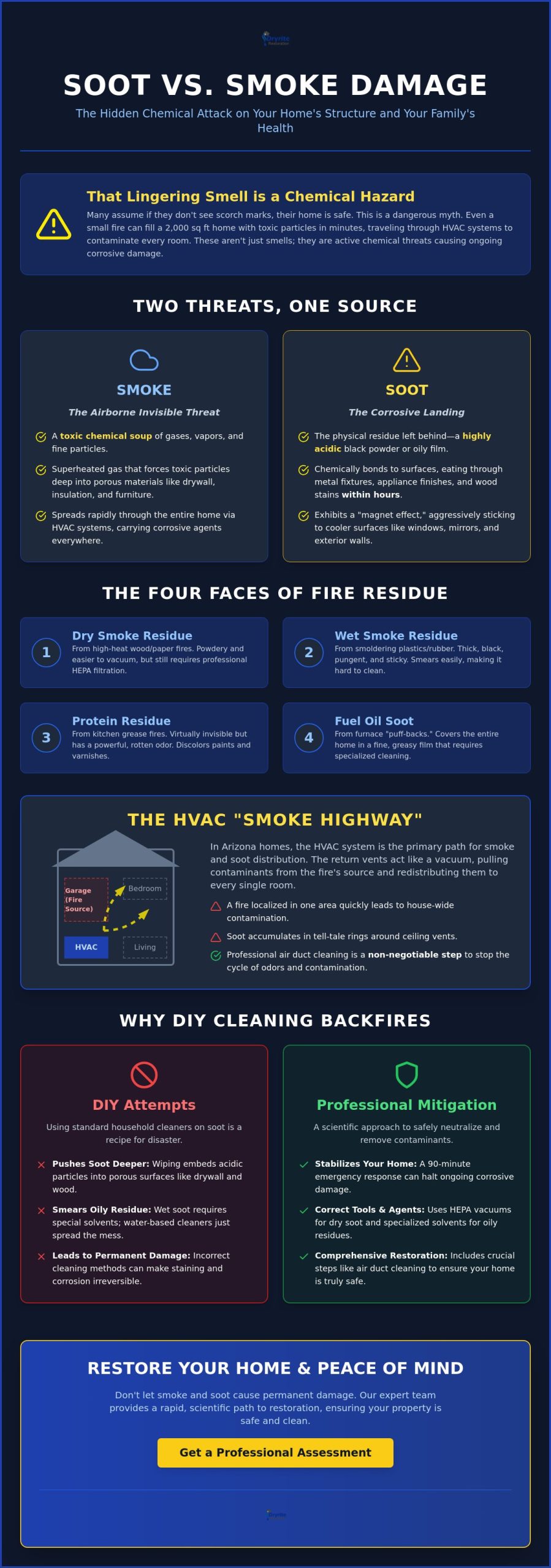
Smoke isn’t just dark air; it’s a floating cocktail of gases, unburned particles, and chemicals released by whatever caught fire (plastics, drywall, wood, or kitchen grease).
Because smoke is superheated during a fire, it expands. It forces its way deep into the porous materials of your home—like your insulation, carpet padding, and framing.
-
The Problem: As the air cools down, those microscopic odor particles get trapped inside your walls and ceilings.
-
The Arizona Factor: In the Phoenix Valley, our HVAC systems act like a smoke highway. If your AC was running during a small kitchen or garage fire, smoke was likely pulled directly into your return vents and redistributed throughout the entire house. This is why you might smell smoke in a master bedroom even if the fire was on the opposite side of the home.
Soot: The Acidic, Destructive Residue
If smoke is the ghost, soot is the physical monster left behind. Soot is the black, powdery, or oily residue that settles on your surfaces.
The most important thing to know about soot is that it is highly acidic.
-
The Clock is Ticking: Within hours, soot will begin to discolor plastic appliances, tarnish metal fixtures (like faucets and light switches), and permanently stain grout or porous stone.
-
The “Magnet” Effect: Soot particles are naturally attracted to cooler surfaces. In an air-conditioned Arizona home, you’ll often notice soot aggressively sticking to exterior-facing walls, windows, and mirrors first.
The Danger of a Quick DIY Cleanup
It is completely natural to want to grab a bucket of soapy water and start scrubbing your walls to get your life back to normal. However, with soot, water is often your worst enemy.
Dryrite Pro Tip: Standard household cleaners and water create a slurry when mixed with acidic soot. Instead of lifting the residue, wiping it with a wet rag smears the oils deep into the pores of your drywall or wood grain, effectively “setting” the stain and locking the smoke odor in forever.
Professionals use specialized dry-chemical sponges to lift and trap soot particles completely dry before any liquid neutralizing agents are introduced.
How Dryrite Restores Your Peace of Mind
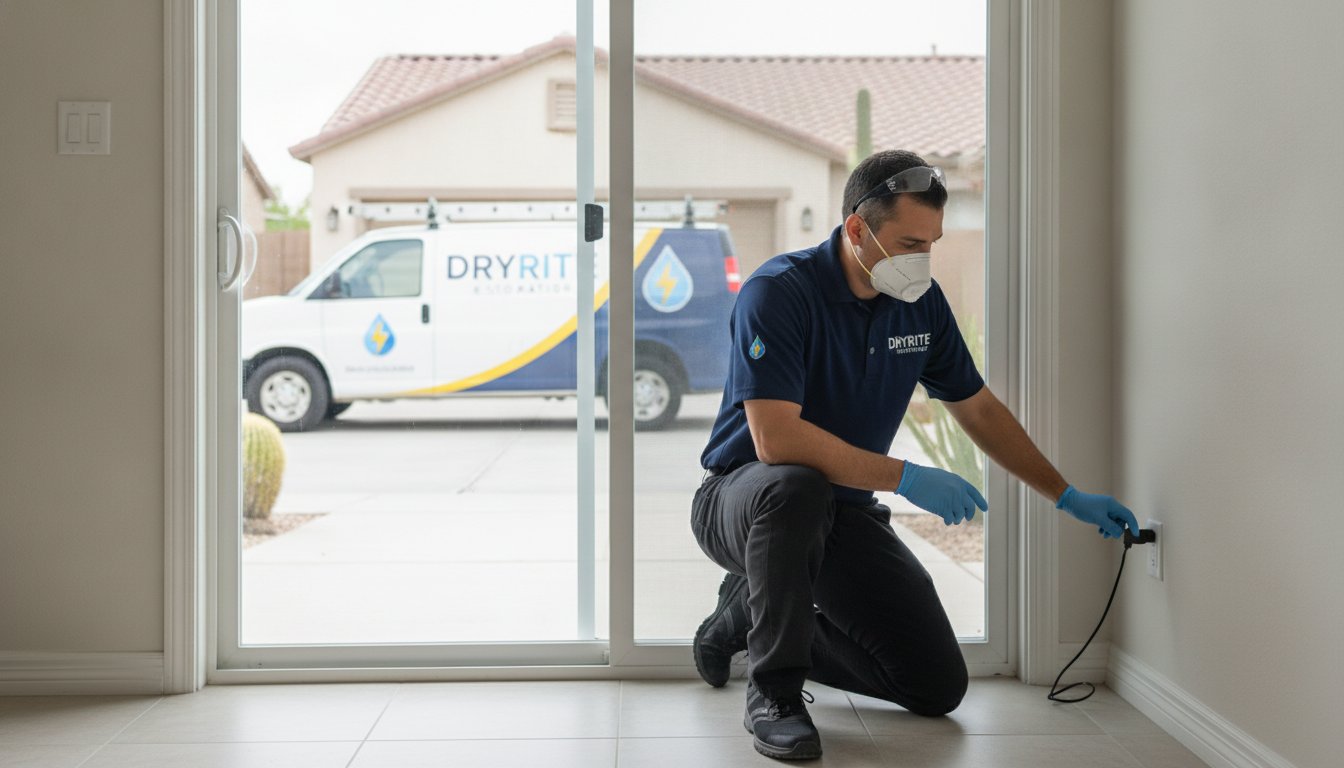
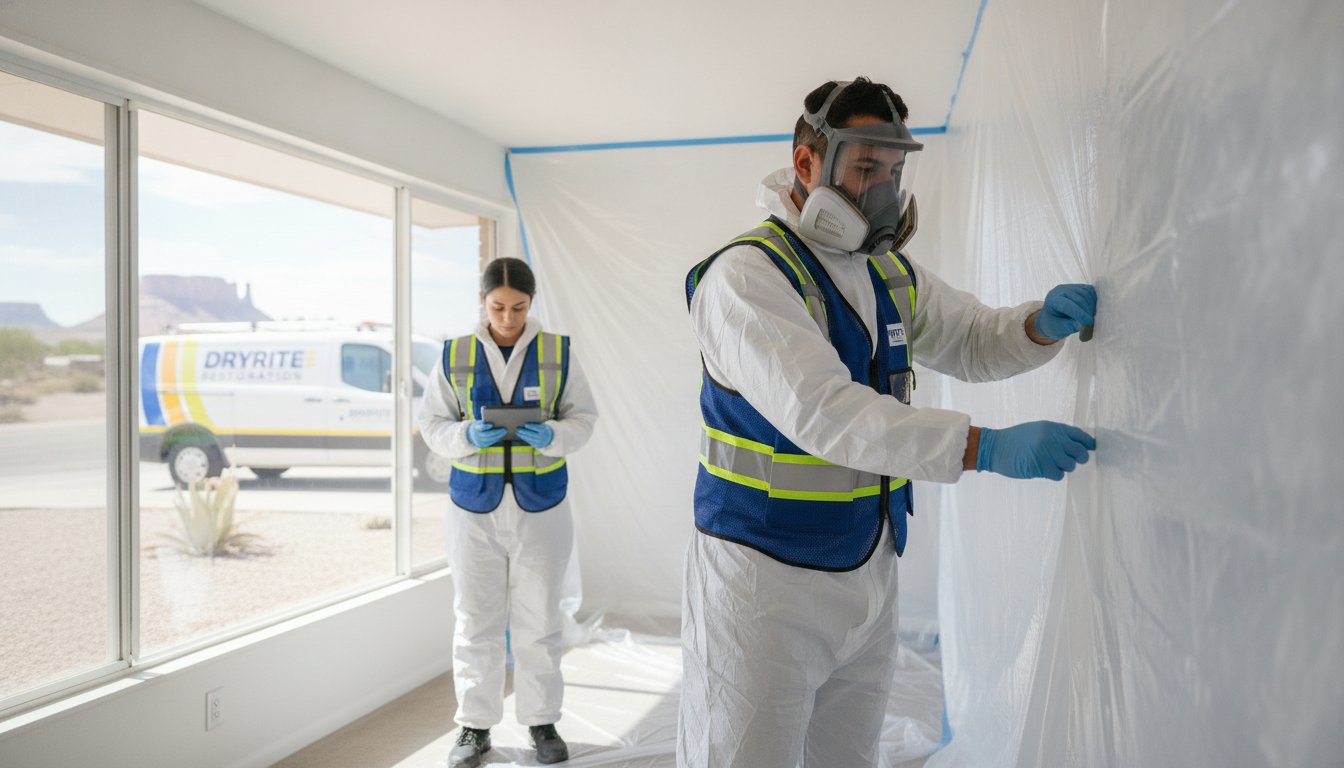
When we answer an emergency call in the Phoenix Valley, we don’t just guess where the damage is. We use advanced diagnostic tools to map out exactly how far the fire’s footprint reached:
-
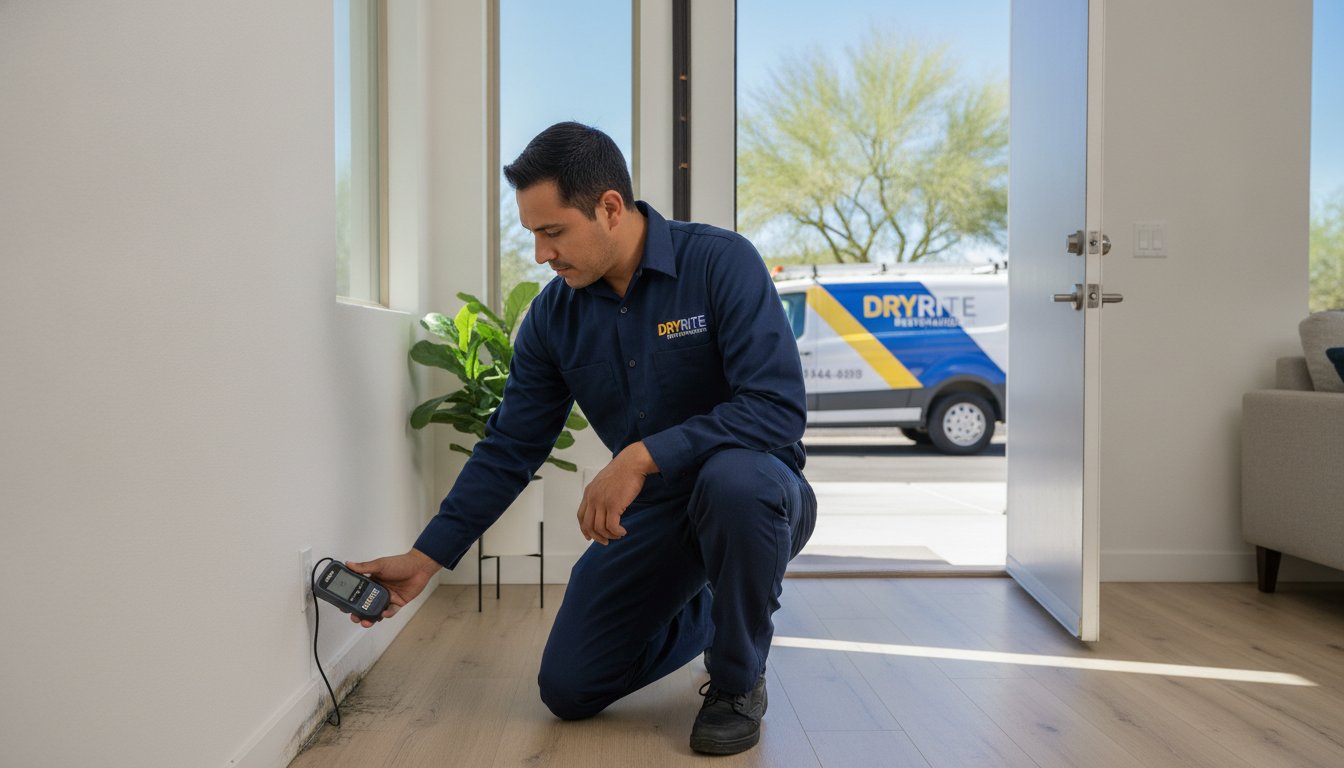
Thermal Imaging & Moisture Meters: Firefighting efforts often require thousands of gallons of water. We immediately check for hidden moisture behind your drywall to ensure you don’t end up with a major mold problem a week later.
-
Molecular Odor Elimination: We don’t use perfumes to hide the smell. We use industrial Hydroxyl machines and thermal fogging to replicate the path the smoke took, neutralizing the odor molecules at a microscopic level.
-
Direct Insurance Coordination: Dealing with adjusters while displaced from your home is incredibly stressful. We handle the heavy lifting, providing the precise documentation, line-item detailing, and direct billing your insurance company needs to process your claim smoothly.
We’re Ready to Help 24/7
Since 2004, Dryrite Restoration has been helping Mesa and Phoenix homeowners navigate the chaos of property damage. We stand behind our work with a 2-year mitigation warranty so you can rest easy knowing your home was restored correctly the first time.
If you’ve experienced a fire, don’t wait for the soot to cause permanent corrosion. Call Dryrite at 480-879-6244 for a 90-minute emergency response.
Frequently Asked Questions
Is it safe to stay in my house if there is lingering smoke and soot?
Generally, no. Even after a small fire, the air can contain fine particulate matter and chemical residues that are hazardous to breathe, especially for children, seniors, or anyone with respiratory issues like asthma. It’s always best to have an air quality check or professional assessment before sleeping there.
How long do I have before soot causes permanent damage?
Corrosion starts immediately. Plastics can yellow within hours, and metals can begin to tarnish. Within 48 to 72 hours, soot can permanently etch into glass, porcelain, and finished woods, turning a restorable item into a total loss.
Why does a kitchen fire smell worse than a fireplace fire?
Kitchen fires usually involve oils, proteins, and fats. This creates “protein soot,” which is a greasy, yellowish residue. It is nearly invisible to the eye but carries an incredibly intense, rancid odor that requires specialized heavy-duty degreasers to remove.