The most expensive threat to your home isn’t the sudden flood you can see; it’s the slow, silent leak you don’t. While a burst pipe demands immediate action, the subtle signs of hidden water damage often go unnoticed until they have caused thousands in structural decay. With 1 in 60 insured homes filing a water damage claim every year, the risk is statistically high, and the stakes for your property and your family’s health are even higher.
It’s natural to feel a sense of dread when you spot a faint yellow stain or catch a lingering musty odor. You’re likely worrying about the rising cost of repairs, the terrifying possibility of mold growth, and the complex headache of navigating insurance coverage. We understand that your home is your sanctuary, and seeing it compromised is deeply stressful. This article will help you regain control by teaching you exactly how to identify red flags before they turn into a full-scale crisis.
You will find a clear checklist of symptoms to monitor, an explanation of why urgency is your best defense, and guidance on when to call in an expert for a professional inspection. You don’t have to face this uncertainty alone. Let’s move from a state of worry to a state of action and get your home back to a place of safety and calm.
Key Takeaways
- Identify visual red flags like yellow discoloration or bubbling paint before they compromise your home’s structural integrity.
- Learn to distinguish between normal house sounds and the subtle auditory signs of hidden water damage occurring behind your walls.
- Understand how Arizona’s unique climate, from monsoon storms to AC condensate failures, creates specific moisture risks for local homeowners.
- Discover how professional thermal imaging detects moisture pockets without the need for invasive or destructive demolition.
- Recognize why immediate action is critical to stop secondary damage and protect your family from the health risks of mold growth.
The Visual Checklist: Spotting Surface Clues Before They Sink In
Your eyes are your first line of defense against property decay. Most homeowners wait for a puddle to form, but the true signs of hidden water damage are often written on your walls in shades of yellow, brown, or copper. These stains aren’t just cosmetic eyesores. They are active indicators of moisture intrusion. When water travels through drywall or wood, it picks up minerals and tannins, leaving behind a tell-tale rust-colored ring as it evaporates. A deeper understanding water damage reveals that these rings act like a history book. Multiple concentric rings often suggest a leak that starts and stops, such as an intermittent roof leak or a failing appliance seal.
Texture changes signal that the structural integrity of your building materials is failing. Bubbling paint occurs when moisture is trapped between the wall and the paint film, creating a pocket of vapor. If the drywall feels soft or crumbles under light pressure, the gypsum core is likely saturated. This is a critical stage. Once drywall loses its rigidity, it cannot be restored and must be removed to prevent mold growth. Watch your ceilings closely. A slight dip or sag represents the weight of accumulated water in attic spaces or between floors. This is a high-stakes situation. It requires immediate intervention before a ceiling collapse occurs.
Walls and Ceilings: The Early Warning System
Scan your surfaces for “spiderweb” cracking patterns. These fine lines in plaster or drywall often indicate that the material is swelling and contracting due to moisture cycles. Check for wallpaper that is peeling at the seams or paint that feels strangely tacky even in dry weather. Don’t forget to look down at your trim. Baseboards that swell, warp, or pull away from the wall are classic signs of hidden water damage often caused by a slow leak in the plumbing behind the vanity or kitchen cabinet.
Flooring Red Flags
Moisture affects every flooring type differently. Hardwood planks may exhibit “cupping,” where the edges are higher than the center, or “crowning,” where the center bulges upward. Laminate flooring is particularly vulnerable. Moisture causes the edges to swell and peel, creating a distinctive ridged appearance. On tile floors, watch for grout that stays dark long after cleaning or tiles that feel loose. A spongy or soft spot in the subfloor that “gives” when you step on it is a final warning that the wood beneath your feet is rotting. We recommend a professional inspection the moment your floor feels “off.”
Sensory and Data Signals: Hearing, Smelling, and Measuring the Invisible
Your eyes aren’t always the first to catch a leak before it compromises your home’s integrity. You must engage your other senses and analyze your household data to find the signs of hidden water damage that hide behind cabinetry and under floorboards. Listen closely when the house is quiet. A rhythmic ticking or a faint splash behind a wall isn’t always just your pipes expanding. Active dripping often has a distinct, consistent cadence that signals a breach in your plumbing system. Trust your instincts when something sounds out of place; sound travels through framing, turning your walls into a sounding board for trouble.
The Smell of Trouble
Odors are frequently the most reliable indicators of a slow-growing moisture problem. A sharp, earthy, or musty scent usually points to an active mold colony thriving in the dark. These smells often concentrate in confined areas like closets, kitchen cabinets, or crawlspaces where airflow is minimal. It’s easy to dismiss a lingering scent as part of the “old house” charm, but many hidden problems in homes stem from moisture that has been trapped for weeks. If you encounter a persistent damp odor that doesn’t dissipate with ventilation, you likely need professional mold remediation to clear the air and protect your health.
Data-Driven Detection
Your monthly utility bill is a powerful diagnostic tool. Sudden spikes in water usage without a change in your household habits are massive red flags. If your bill has climbed while your behavior stayed the same, use the Water Meter Test to confirm your suspicions. This simple DIY process provides the hard evidence needed to move from suspicion to action.
- Step 1: Turn off all water-using appliances, faucets, and irrigation systems in the home.
- Step 2: Locate your water meter, usually found in a box near the street, and record the current reading.
- Step 3: Wait 30 to 60 minutes without using any water, then check the meter again.
Any movement on the dial confirms a leak exists somewhere in the system. If your meter confirms a leak but you can’t find the source, it’s time to request a professional assessment to pinpoint the signs of hidden water damage before the situation escalates into a structural crisis.
Arizona-Specific Hazards: Why Local Climate Masks Hidden Leaks
Arizona’s arid climate creates a dangerous illusion of safety. Many homeowners believe our low humidity will naturally dry out any small spills or minor leaks. In reality, the desert heat often masks the signs of hidden water damage by flash-drying the surface while moisture remains trapped deep within the wall cavity. This creates a perfect, humid incubator for mold to flourish out of sight. You cannot rely on evaporation alone to protect your home’s structural integrity. By the time a stain appears in our dry air, the internal damage is often extensive.
Monsoons and Roof Leaks
The Arizona monsoon season, which officially runs from July to September, presents a unique threat to local properties. These storms bring violent, wind-driven rain that pushes water into attic vents and under roof tiles. Even if you don’t see a drip in your living room, moisture may be accumulating in your insulation. Inspect your attic immediately after any major storm event. Look for damp rafters, matted insulation, or a sudden musty smell. Understanding knowing what to do after a house flood is essential for every desert dweller, as even a brief deluge can lead to long-term structural decay if not mitigated within the first 24 to 48 hours.
HVAC and Plumbing Stress
Our 110-degree summer days force air conditioning units to work at maximum capacity for months at a time. During these peaks, an AC unit can produce several gallons of condensation daily. If the condensate line clogs due to dust or algae, that water has nowhere to go but into your ceiling or attic floor. Additionally, the hard water common in Mesa and the Phoenix Valley leads to significant mineral buildup. This often results in pinhole leaks in older copper pipes. These leaks are tiny, but they can run for months before they are detected by a visual inspection.
Watch for slab leaks, a frequent issue for homes built on concrete foundations in the Phoenix Valley. If you notice unexpected warm spots on your floor or see new cracks in your foundation, your plumbing may be failing beneath the concrete. A water heater that runs constantly without a change in usage is another major red flag. Don’t wait for the floor to buckle. If you suspect a leak beneath your home, schedule a professional moisture inspection today to catch the problem before it requires massive excavation and costly structural repairs.

The Professional Audit: Moving from Detection to Mitigation
You’ve identified the signs of hidden water damage, but suspicion isn’t enough to stop the decay. You need data to confirm the exact extent of the intrusion. We use advanced technology to see what the naked eye misses. This moves you from a state of panic to a state of planned recovery. Our goal is to stabilize your environment and prevent a manageable leak from becoming a total loss.
Advanced Diagnostic Technology
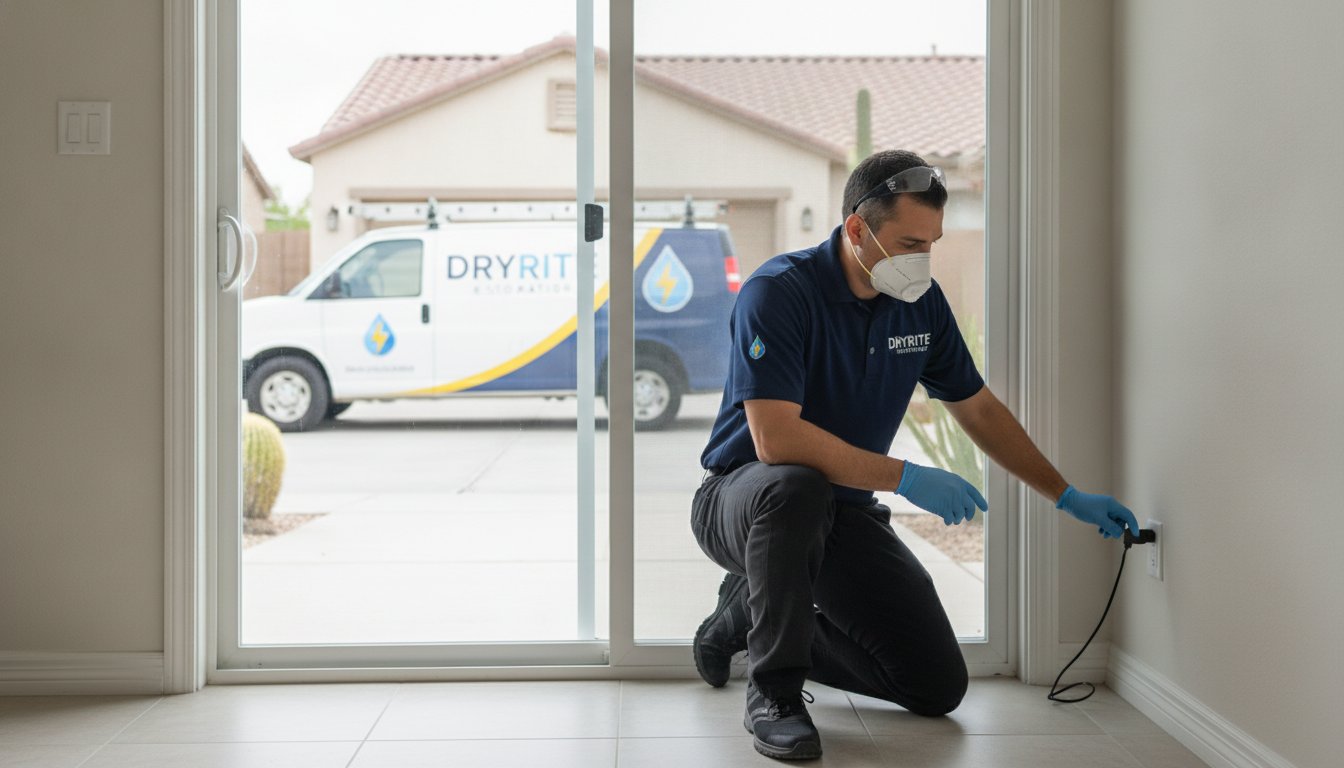
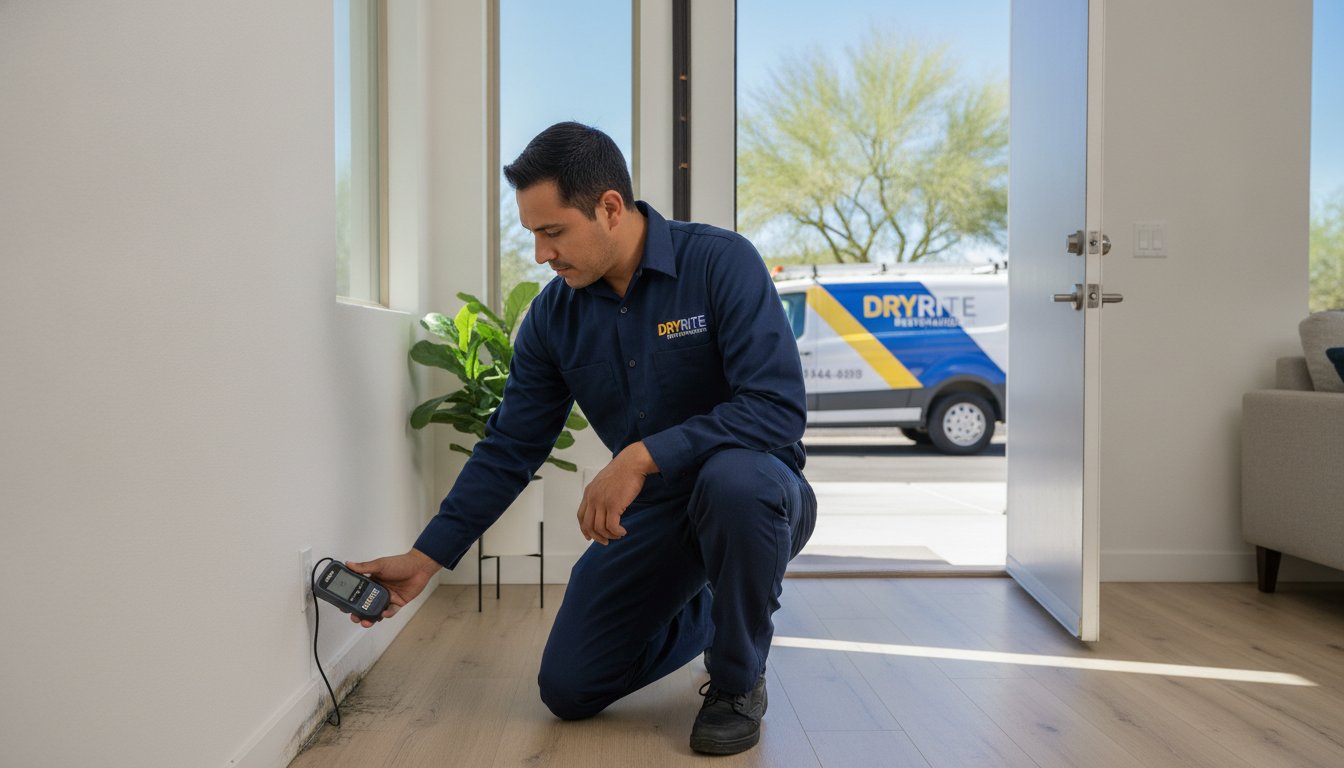
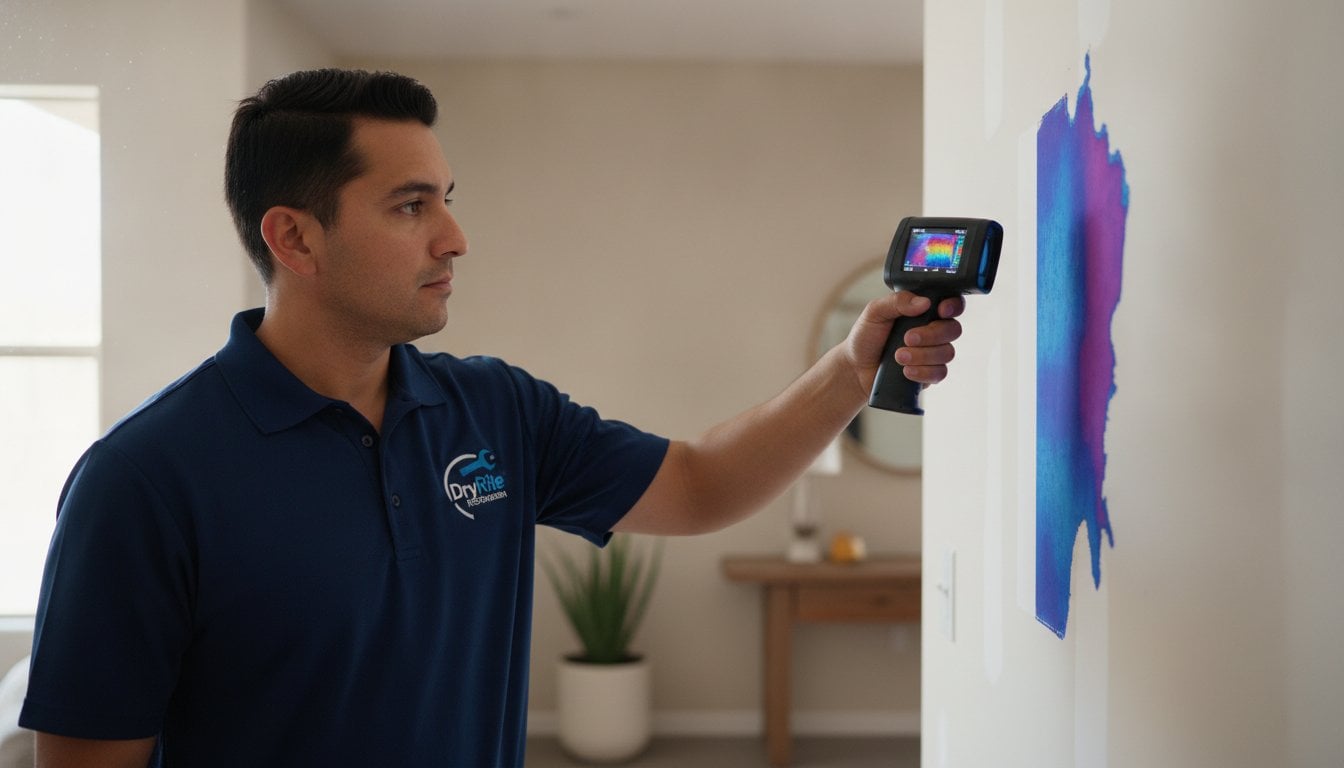
Infrared cameras are our most powerful tools. These devices identify temperature differences caused by evaporative cooling, allowing us to pinpoint moisture pockets behind drywall or under flooring without tearing your home apart. We pair this with professional moisture meters to quantify exactly how saturated your structural materials have become. This precise approach prevents unnecessary “exploratory” demolition. We only remove what is absolutely necessary, saving you time and reducing the overall stress of the restoration process.
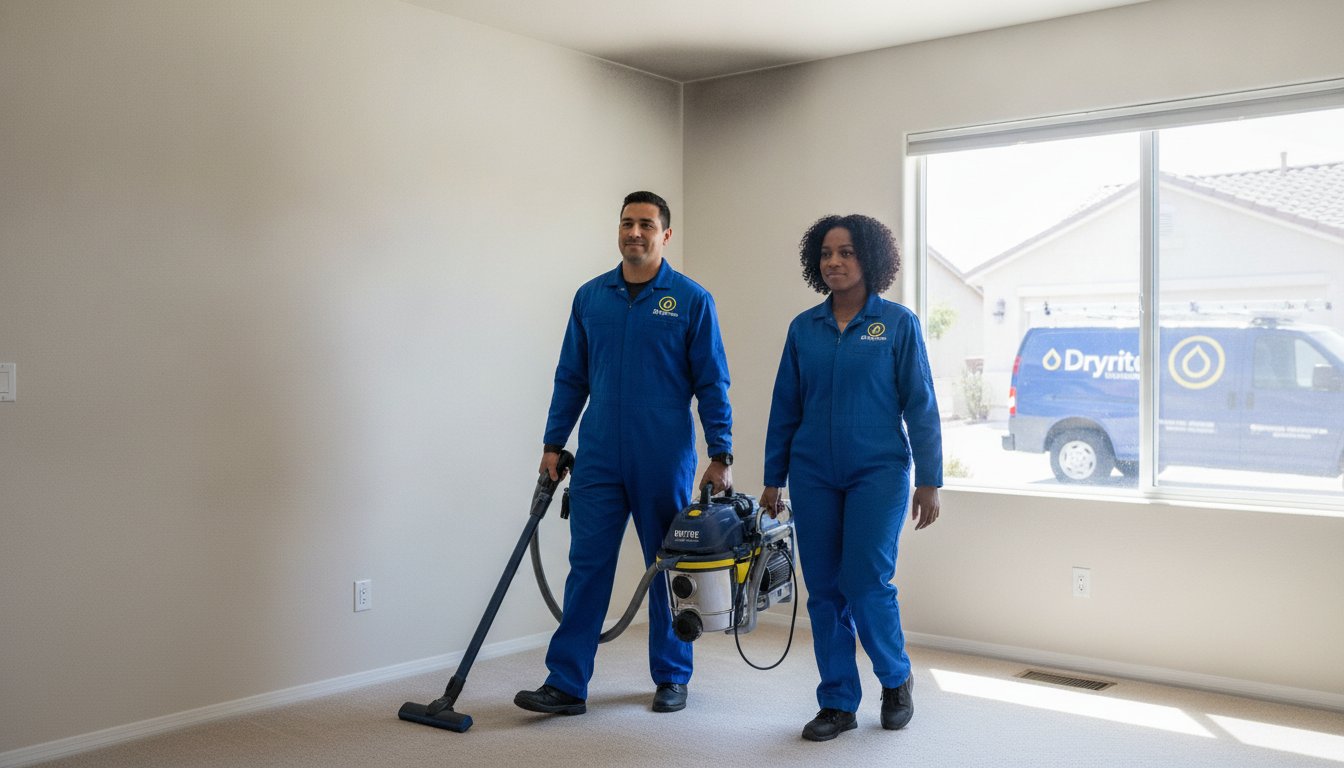
Speed is the only way to beat secondary damage. We operate by the 90-minute rule. Our team arrives rapidly because stagnant water begins to compromise air quality and structural stability within hours. Water damage rarely travels alone. In many Arizona properties, moisture can disturb materials containing asbestos or trigger rapid mold growth. You don’t have time to coordinate three different contractors while your home is at risk. Our team handles water, mold, and asbestos simultaneously. This comprehensive oversight is vital for a successful water damage insurance claim. We provide the detailed documentation and moisture maps your adjuster needs to process your file without friction. Before your adjuster arrives, reviewing a detailed water damage restoration cost estimate will help you understand exactly which variables drive pricing in Arizona and ensure you receive fair, transparent coverage.
The Path to Peace of Mind
Restoration is a science. We use industrial-grade dehumidifiers and high-velocity air movers to pull moisture from the deepest layers of your home’s framing. This process, known as structural drying, is the only way to guarantee your property is truly safe from long-term rot. Understanding the complete water damage drying process helps you set realistic expectations and ensures you can work effectively with your restoration team at every stage of recovery. We are committed to your family’s safety and the longevity of your investment. We stand behind our work with a 2-year warranty on mitigation services, providing the long-term security you deserve.
Don’t wait for a small leak to become a disaster. Contact Dryrite Restoration for an expert inspection and let us restore the tranquility of your home. We bring order to the chaos, ensuring your recovery is fast, transparent, and complete.
Once your home has been professionally dried and the structural integrity is secured, you can begin the process of turning it back into a sanctuary; for unique handmade sun catchers and crystals available online, you can learn more about Luna-Lumen to help refresh your home’s energy and beauty.
Secure Your Property Against Silent Threats
Hidden moisture is a race against time that your home cannot afford to lose. You now know how to identify the yellow stains, musty odors, and utility bill spikes that signal trouble behind your walls. Whether you are dealing with a monsoon-driven roof leak or a stressed AC condensate line, ignoring the early signs of hidden water damage leads to structural rot and mold growth. Your home is your most significant investment; protecting it requires immediate, decisive action.
We provide the stabilizing force you need during a property crisis. Stop hidden damage now—get a professional inspection from Dryrite Restoration. Our team offers a 24/7 emergency response with a guaranteed arrival within 90 minutes. We are fully licensed and insured, providing a 2-year warranty on all mitigation work to ensure your long-term peace of mind. We also manage direct coordination with all major insurance carriers to eliminate administrative friction. You don’t have to face this uncertainty alone. Let us bring order to the chaos and return your home to a state of safety and tranquility.
Frequently Asked Questions
How do I know if water damage is new or old?
You can determine the age of damage by examining the texture and color of the affected material. New damage typically appears as a single dark spot and the surface remains relatively firm to the touch. Old damage often features multiple concentric rings or “bleeding” patterns and the drywall will likely feel mushy or crumble when pressed. Identifying these distinctions helps us understand how long the leak has been active and what structural risks exist.
Can water damage happen behind a wall without any stains?
Yes, moisture can accumulate behind walls without leaving any visible surface stains. In our dry Arizona climate, the exterior of the drywall may stay dry while the internal insulation acts like a sponge, trapping moisture against the wooden wall studs. This is why professional thermal imaging is essential to detect signs of hidden water damage that are completely invisible to the naked eye until the structure begins to fail.
Is a musty smell always a sign of water damage?
A persistent musty odor is a reliable indicator of active moisture and microbial growth. While older homes may have a “settled” scent, a sharp or earthy smell that concentrates in cabinets, closets, or crawlspaces points to a hidden leak. You shouldn’t ignore your nose. A damp smell is a clear signal that a structural or health crisis is developing behind your home’s finished surfaces and requires immediate investigation.
How much water damage does it take to cause mold?
It takes very little moisture to trigger mold growth, often occurring within 24 to 48 hours of the initial leak. You don’t need a massive flood to start a colony. A slow, consistent drip provides enough humidity for spores to thrive in dark, unventilated spaces. This rapid growth is why we prioritize a 90-minute arrival time to stabilize your home’s environment before the situation escalates into a health hazard.
Will my homeowner’s insurance cover hidden water leaks?
Most homeowner’s insurance policies cover hidden water leaks if they are “sudden and accidental” and were not discoverable by reasonable maintenance. If a pipe bursts deep inside a wall, it is typically covered. However, damage from long-term neglect may be denied. We coordinate directly with major carriers and provide the technical documentation required to support your claim and ensure you receive the necessary resources for a full property recovery.
What should I do if I find a soft spot on my floor?
You must stop using that area immediately and schedule a professional moisture audit to find the signs of hidden water damage beneath the surface. A soft spot is a critical warning that your subfloor is saturated and the structural wood is likely rotting. This creates a significant risk of collapse or severe mold infestation. The longer you wait, the more expensive the restoration becomes. Once the source is confirmed, following a structured water damage drying process is essential to fully extract moisture from your subfloor and prevent long-term structural decay. Understanding your potential water damage restoration cost estimate before work begins helps you plan financially and ensures you’re prepared to act quickly. Take action before the damage spreads to adjacent rooms.