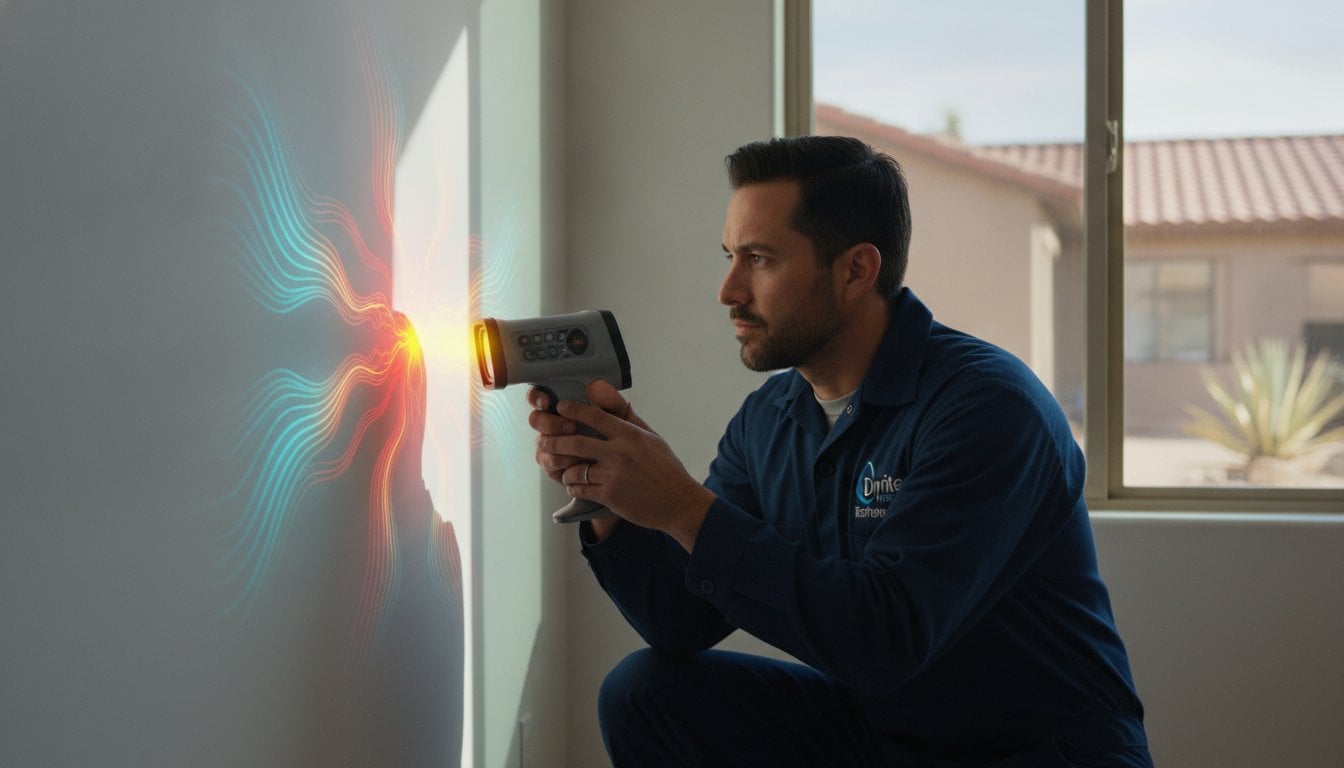
What if the most destructive threat to your Phoenix home is currently invisible to the naked eye? You’ve noticed the utility bill creeping up, or perhaps there’s a lingering scent of dampness that shouldn’t exist in our desert climate. It’s stressful to think about tearing down drywall just to hunt for a phantom drip. We understand that your home is your sanctuary. The thought of invasive demolition only adds to the chaos of a potential pipe failure. That’s why professional thermal imaging leak detection phoenix services are the modern standard for property protection.
We agree that you shouldn’t have to choose between a hidden leak and a wrecked living room. Every second a leak remains hidden, it risks wasting thousands of gallons of water and inviting toxic mold growth into your walls. In this guide, you’ll discover how advanced infrared technology acts as a diagnostic shield, identifying moisture trapped behind surfaces before it turns into a structural disaster. We’ll explain how this non-invasive approach pinpoints the exact source of trouble, minimizes your repair costs, and restores your peace of mind by stopping damage in its tracks.
Key Takeaways
- Understand how infrared cameras detect temperature variations to uncover hidden moisture without tearing down your drywall.
- Identify the red flags of a phantom leak, including sudden spikes in your Phoenix water bill and the faint, earthy odor of mold.
- Secure your property with professional thermal imaging leak detection phoenix to pinpoint the exact source of water damage before it compromises your home’s structure.
- Learn how thermal technology monitors the drying process to guarantee every hidden pocket of moisture is eliminated during restoration.
- Minimize your total repair costs by catching invisible plumbing failures early, preventing the need for extensive mold remediation or structural repairs.
What is Thermal Imaging Leak Detection and Why is it Essential in Phoenix?
Traditional leak hunting often involves a “guess and check” method. Plumbers might tear out sections of your drywall or floorboards just to find a single pinhole leak. This destructive approach adds unnecessary stress and repair costs to an already chaotic situation. Professional thermal imaging leak detection phoenix services replace the hammer with high-tech sensors. It’s a non-invasive diagnostic tool that identifies the precise location of moisture without a single hole in your wall.
It’s a common misconception that these cameras see through solid objects like X-ray machines. Instead, they detect minute temperature variations on the surface of your walls, floors, and ceilings. Since water changes the way materials absorb and release heat, a hidden leak leaves a distinct thermal footprint that our specialists can read instantly. This technology allows us to see the problem before it becomes a catastrophe.
The Invisible Threat: Hidden Water Damage
Water rarely stays where it starts. It travels along structural beams and wall studs, often pooling far from the actual pipe failure. By the time you see a visible stain or a bulging piece of drywall, the damage is already extensive. The human eye is simply not equipped to detect the early stages of moisture intrusion behind finished surfaces. To understand the physics behind this, we look at The Science of Infrared, which explains how we measure the thermal energy emitted by objects to find anomalies. Infrared thermography is the measurement of thermal energy emitted by objects.
Why Phoenix Homeowners Need Infrared Technology
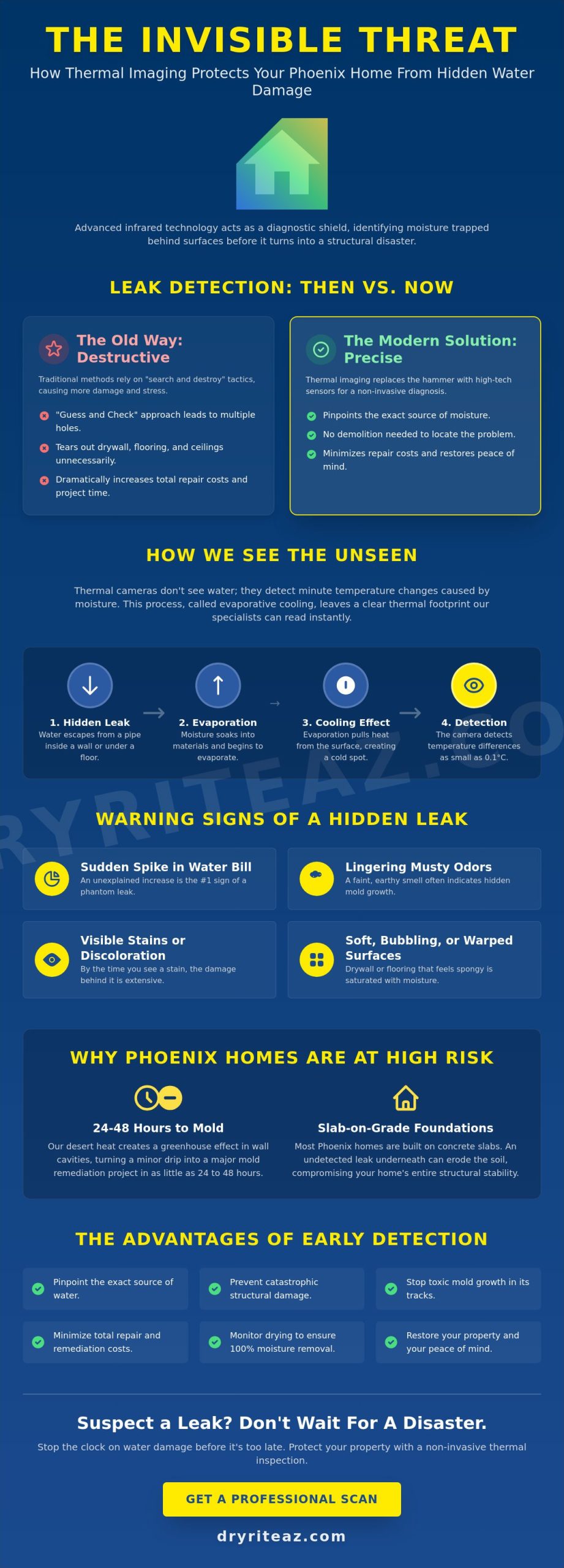
Phoenix homes face unique structural challenges. Most residences in Mesa, Scottsdale, and Gilbert are built on slab-on-grade foundations. A leak under the concrete can go undetected for months, slowly eroding the soil and compromising your home’s stability. In our desert climate, the 24/7 heat accelerates secondary damage. High temperatures and trapped moisture create a greenhouse effect inside wall cavities. This turns a minor drip into a major mold remediation project in as little as 24 to 48 hours. Using thermal imaging leak detection phoenix allows us to act as your property’s protector. We stop the clock on damage before it becomes a disaster.
The Science of Infrared: How Thermography Finds Hidden Water
Finding a leak in the desert shouldn’t feel like a guessing game. While a standard photograph captures visible light, a thermograph captures heat energy. Every object in your home has a specific thermal signature. When water enters the equation, it disrupts these signatures in predictable ways. Modern FLIR (Forward-Looking Infrared) technology is so precise it can detect temperature differences as small as 0.1 degrees Celsius. This level of detail is what makes thermal imaging leak detection phoenix the most reliable way to protect your property from invisible threats.
The real secret to finding hidden water lies in the process of evaporative cooling. As moisture moves through drywall or wood, it begins to evaporate into the air. This process requires energy, which it pulls from the surrounding surface. This creates a “cold spot” that stands out clearly against the warmer, dry materials. By understanding how thermographic inspections work, our technicians can identify exactly where a leak is active based on these specific cooling patterns. It isn’t just about seeing a color change; it’s about interpreting the data to find the source.
Temperature Differentials and Moisture
Wet materials have a higher thermal mass than dry ones. This means they hold onto heat or cold much longer. In the Phoenix heat, a wet wall will stay cooler than a dry one as the sun goes down, creating a distinct temperature gradient. We use these gradients to map the moisture plume, tracing the water from its furthest point back to the original pipe failure. The camera doesn’t see the water itself. It detects the heat energy anomalies that the water creates. If you suspect a hidden leak is driving up your bills, getting a professional inspection can save you from catastrophic repairs later.
Non-Invasive Diagnostics: Saving Your Drywall
Traditional plumbing methods often rely on “search and destroy” tactics. Technicians might cut multiple holes in your ceiling or walls just to follow a damp trail. Infrared diagnostics eliminate this destructive phase. We can pinpoint the exact square inch of a leak before a single tool touches your wall. This targeted approach saves you thousands in restoration costs. Instead of replacing an entire room’s worth of drywall, you only repair the small section where the leak actually exists. It brings order to a chaotic situation and keeps your home intact.
Warning Signs: When to Schedule a Thermal Scan in Arizona
Identifying a leak early is the difference between a quick dry-out and a total property loss. In the Valley, many leaks remain hidden behind heavy textures or under concrete slabs for months. You might not see a puddle, but your home is signaling for help. If you notice a sudden, unexplained spike in your monthly city statement, you likely have a “silent” leak. A single dripping faucet can waste 3,000 gallons annually, but a hidden pipe burst can lose over 10,000 gallons in the same timeframe. Professional thermal imaging leak detection phoenix technology finds these ghosts before they destroy your foundation.
Pay attention to your nose. Even in our arid climate, moisture trapped in wall cavities creates a localized greenhouse effect. This leads to a faint, earthy, or musty odor that persists despite cleaning. If one room smells different than the rest, mold is likely already colonizing the space. Another critical sign is a “hot spot” on your floor. If a specific patch of tile or laminate feels unusually warm underfoot, you are likely standing over a hot water line slab leak. These thermal anomalies are invisible to the eye but scream for attention on an infrared screen.
The Phoenix Water Bill Red Flag
Most Phoenix residents use about 120 gallons of water per day. If your usage jumps without a change in habits, check your water meter immediately. Turn off every faucet and appliance in the house, then look at the flow indicator on the meter. If it’s still moving, water is escaping your system. Don’t wait for the bill to double next month. If you find yourself facing an active flood or a suspicious meter reading, you need water damage restoration Mesa AZ experts to stabilize the situation and prevent structural rot.
Monsoon Damage and Hidden Roof Leaks
Arizona monsoons bring intense wind and horizontal rain that drives water into roof-to-wall transitions. You won’t always see a drip on your ceiling. Instead, the water saturates the insulation and sits on the back of the drywall, slowly weakening the material. Using thermal imaging leak detection phoenix allows us to see this hidden moisture plume before the ceiling collapses under the weight. We prioritize speed during storm season, arriving quickly to prevent secondary rot. Catching these leaks early keeps the recovery process simple and your family safe. If you’re worried about a hidden leak after a storm, schedule a professional scan today to protect your investment.
The Dryrite Restoration Advantage: Professional Leak Detection and Restoration
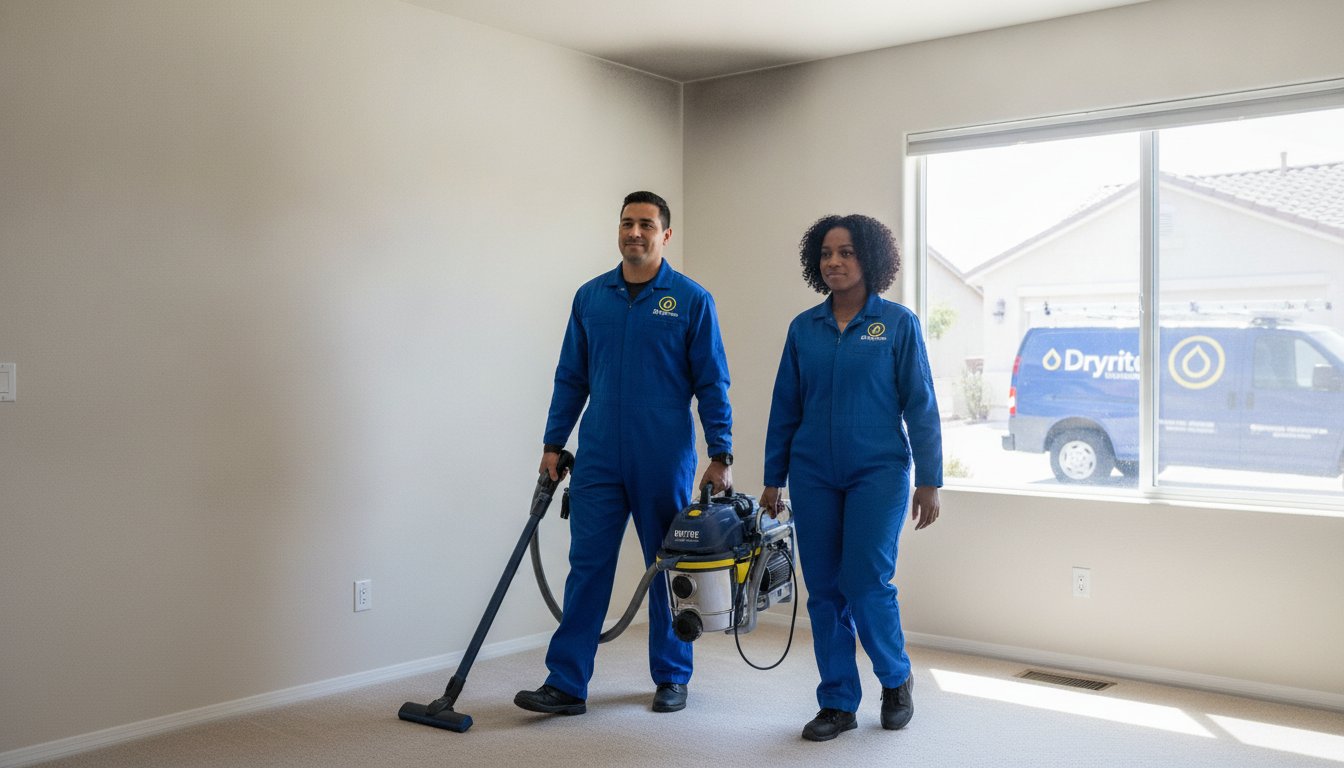
Finding the leak is only half the battle. If moisture remains trapped in your subfloor or wall cavities, the threat to your home continues to grow. We utilize thermal imaging leak detection phoenix as a continuous monitoring tool, not just an initial diagnostic. This allows us to track the movement of moisture in real-time. We adjust our strategy to protect your property’s structural integrity. Many services find the drip and walk away, but Dryrite Restoration stays until your home is verified dry and safe.
Our commitment to your recovery goes beyond simple detection. We provide a comprehensive solution that moves from crisis to calm. Dryrite Restoration stands behind our expertise with a 2-year warranty on all mitigation work. This guarantee reflects our confidence in our technology and our technicians. You deserve a partner who takes full responsibility for the restoration of your sanctuary. We bring order to the chaos by managing the entire project under one roof.
From Detection to Restoration
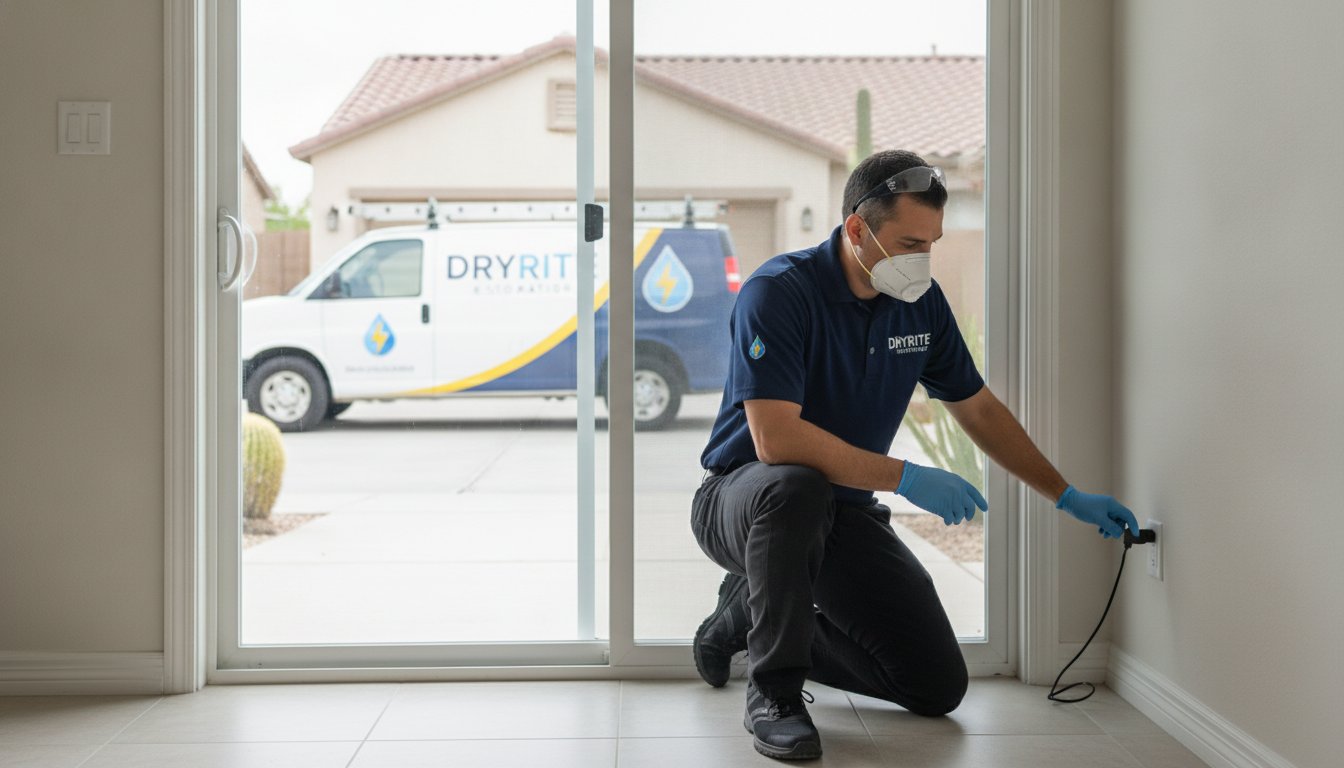
The transition from finding a leak to structural drying must be immediate. We use infrared technology to monitor the water damage drying process, ensuring that every structural element reaches its dry standard. Our team deploys industrial-grade air movers and high-capacity dehumidifiers to stabilize the environment. As your Experienced Protector, we don’t guess if a wall is dry; we prove it with data. This rigorous approach prevents the secondary rot that often follows a poorly managed restoration.
Insurance Coordination and Peace of Mind
Documentation is your best defense when dealing with insurance adjusters. Thermal images provide undeniable, timestamped proof of the hidden damage that a standard camera cannot capture. Dryrite Restoration coordinates directly with your insurance provider to manage the evidence and streamline your claim. This proactive handling reduces your stress and helps you avoid the costs of mold remediation Mesa AZ. By choosing thermal imaging leak detection phoenix through a full-service restorer, you ensure that every communication gap is closed. We act fast to protect your health, your home, and your financial interests.
Secure Your Property Against Invisible Water Damage
Your Phoenix home deserves a protector that sees what the human eye misses. By utilizing advanced infrared technology, you eliminate the guesswork and avoid the unnecessary demolition of your living space. We have explored how early detection stops the spread of mold and provides the undeniable evidence needed for successful insurance claims. Professional thermal imaging leak detection phoenix is your first line of defense against the unique structural threats of the desert.
Don’t wait for a damp spot to become a disaster. We provide a 24/7 emergency response and arrive within 90 minutes to stabilize your property. Our team is fully licensed, bonded, and insured; we handle direct insurance billing and coordination to lower your stress levels immediately. We are here to bring order to the chaos and ensure your home remains a safe sanctuary.
Stop the Damage Now—Request Your 24/7 Thermal Leak Scan. Let us restore your peace of mind today.
Frequently Asked Questions
Does thermal imaging see through walls?
No, thermal imaging cameras do not see through solid objects like X-ray machines. Instead, they detect minute temperature variations on the surface of your walls, floors, or ceilings. Moisture trapped behind these surfaces creates a distinct thermal signature that the camera visualizes. This allows us to map the exact path of the water without tearing into your drywall first.
How accurate is infrared for finding water leaks?
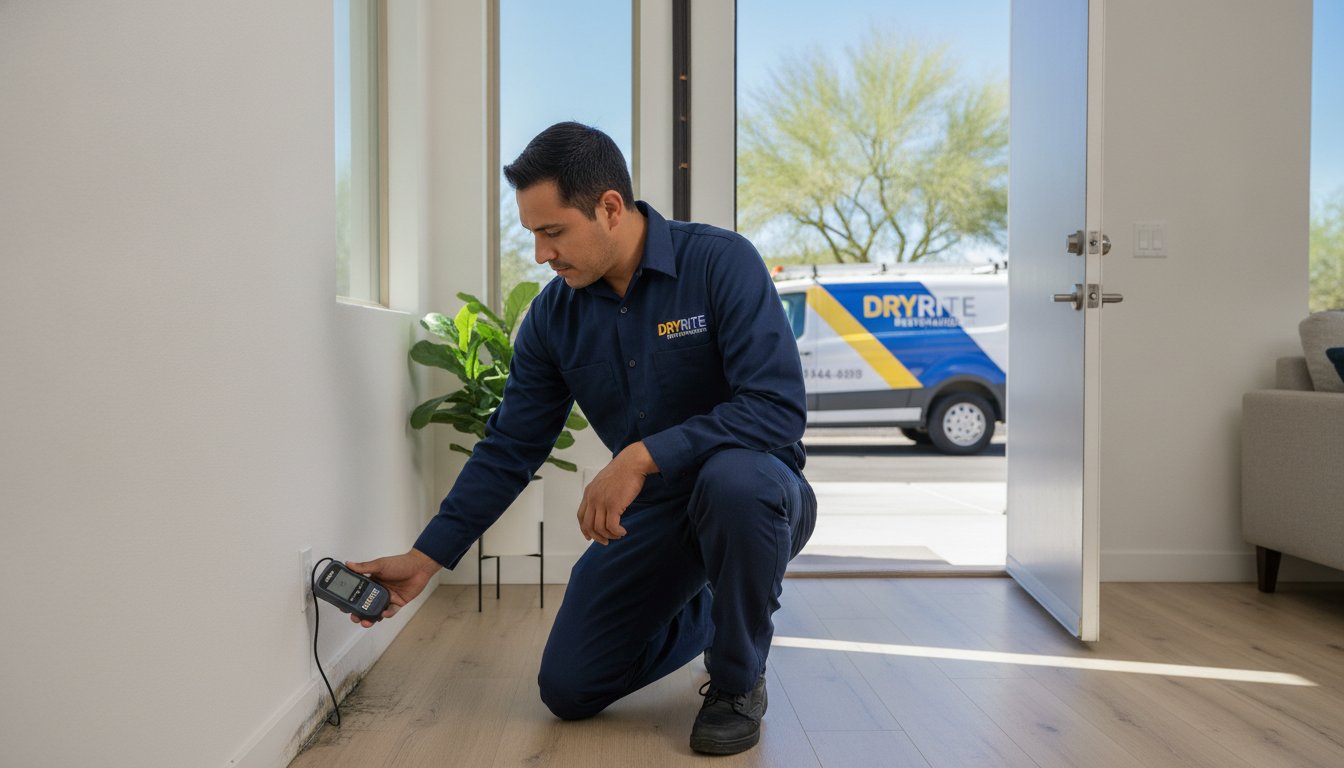
Infrared technology is exceptionally accurate for pinpointing moisture anomalies that are invisible to the naked eye. When used by an experienced technician, it can identify temperature differences as small as a fraction of a degree. We combine these scans with moisture meters to verify the findings. This ensures we identify the exact source of the leak within a very small margin of error.
Will my insurance pay for thermal imaging leak detection?
Most homeowners insurance policies cover the cost of leak detection when it’s part of an active, accidental water damage claim. Because this technology prevents secondary issues like mold and structural rot, adjusters typically recognize it as a necessary mitigation step. We provide the infrared documentation and timestamped reports your insurance company needs to process your claim efficiently.
Can thermal imaging find leaks under a concrete slab?
Yes, infrared technology is a vital tool for identifying slab leaks in Arizona’s slab-on-grade homes. The camera detects the heat plume from escaping hot water or the cooling effect of moisture saturating the soil beneath your foundation. This makes thermal imaging leak detection phoenix essential for finding underground pipe failures without the need to jackhammer your floors based on a guess.
What happens if the thermal scan finds a leak in my Phoenix home?
We move immediately into the stabilization and restoration phase to stop the damage from spreading. Our team uses the scan data to place drying equipment precisely where the moisture is concentrated. We document every finding for your records and coordinate directly with your insurance provider. Choosing thermal imaging leak detection phoenix ensures that your recovery process is data-driven and professionally managed from the start.
How long does a professional thermal imaging inspection take?
A professional inspection typically takes between 30 and 90 minutes to complete. The exact timeframe depends on the square footage of your property and the complexity of the suspected leak. It’s a fast and non-invasive process that provides immediate answers. You’ll receive a clear picture of the situation before we begin any restoration work.