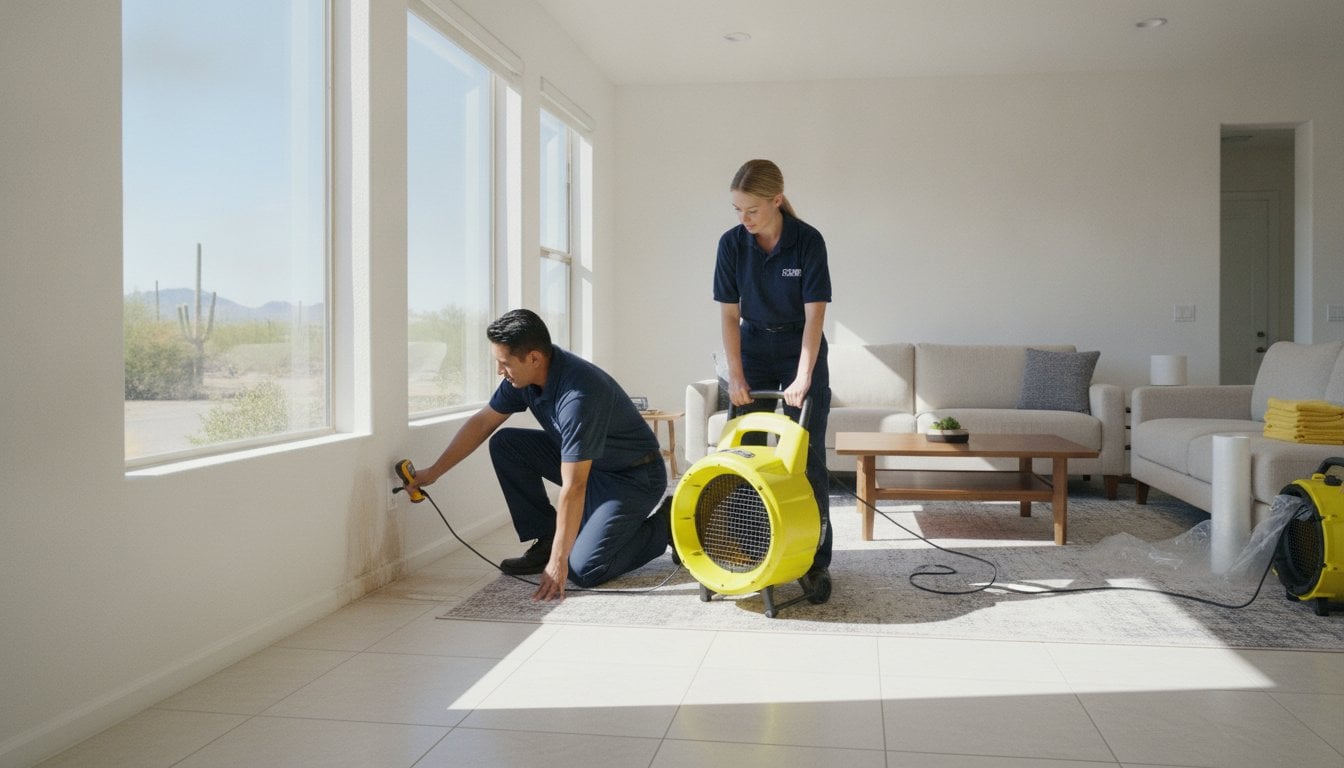
You don’t have days to decide your next move after a leak; you have exactly 24 to 48 hours before spores begin colonizing your home. Learning how to prevent mold after water damage is a high-stakes race against a biological clock that never stops. Every minute moisture sits in your floorboards, the risk of toxic growth and structural rot increases. It is a stressful situation that demands immediate, professional-grade action to protect your property and your health.
It’s overwhelming to stand in a damp room worrying about is black mold dangerous or the massive repair bills that follow a denied insurance claim. You’re likely feeling the pressure of whether to call a plumber or your insurance agent first while the water seeps deeper into your walls. We understand this chaos and are here to act as a stabilizing force to help you regain control of your environment.
This guide provides the professional blueprint to stop mold before it starts, ensuring your home is bone-dry and your family is protected. We’ll walk you through the latest ANSI/IICRC S520-2024 standards for sanitization, critical moisture extraction steps, and how to stabilize your property before secondary damage takes hold. You will gain the peace of mind that comes from following a proven, expert-led recovery plan.
Key Takeaways
- Act within the critical 24 to 48 hour window to stop mold spores from colonizing your home’s structural materials.
- Learn the essential extraction and sanitization steps for how to prevent mold after water damage before secondary issues like rot or health risks emerge.
- Discover why Arizona’s slab-on-grade foundations and monsoon humidity require specialized drying techniques to reach moisture trapped under luxury flooring.
- Understand why household fans are insufficient and how professional grade air movers use psychrometry to achieve a bone dry environment.
- Identify the “Rule of Thumb” for when DIY efforts are no longer safe and professional intervention becomes necessary for areas larger than 10 square feet.
Understanding the 24-Hour Mold Growth Window
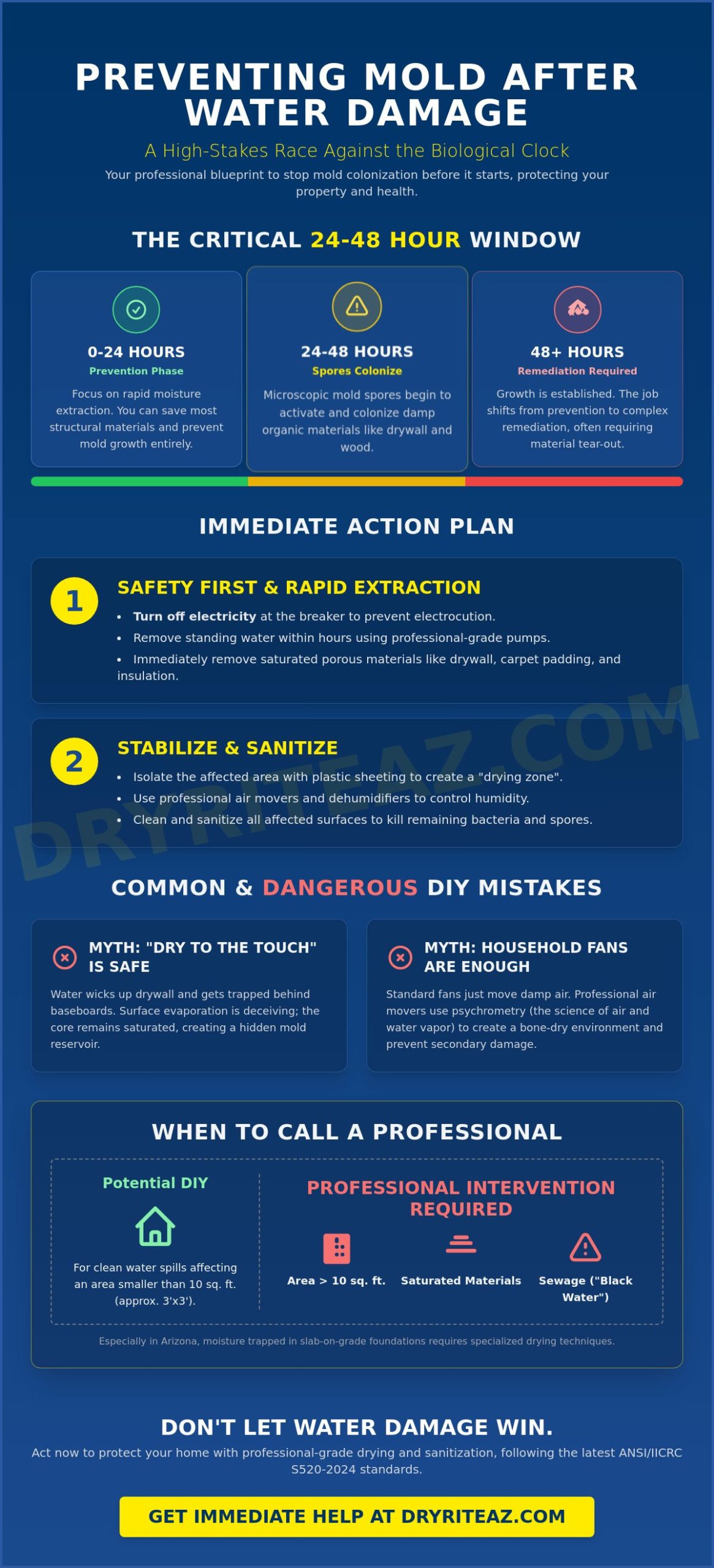
Time is your greatest enemy. Mold spores are microscopic and omnipresent, simply waiting for a catalyst to begin their destructive cycle. When water meets organic materials like drywall or wood, it creates a “perfect storm” for rapid growth. Stagnant air acts as an accelerator. It allows spores to settle and colonize surfaces without interruption. Understanding Water Damage categories is vital to your response speed. Clean water from a supply line gives you a small grace period. However, “black water” from sewage contains high organic loads that can trigger mold growth almost instantly. You must act before the biology takes over and compromises your home’s air quality.
The first 24 hours represent a critical threshold for your property. During this window, your focus is entirely on prevention. If you extract moisture and stabilize the environment within this timeframe, you can often save your structural materials and avoid expensive tear-outs. Once you cross the 48-hour mark, the situation changes. You are no longer looking at how to prevent mold after water damage; you are likely entering the territory of professional mold remediation. This transition happens quietly behind walls and under floors. Speed is your primary defense. Every hour of delay increases the likelihood of a massive repair bill and potential health risks for your family.
The Biological Clock: From Spore to Colony
Spores activate the moment they hit moisture. They don’t need much to thrive. The incubation period for common household molds like Aspergillus typically ranges from 24 to 72 hours under ideal conditions. This biological clock affects more than just the wet zone. High indoor humidity causes “secondary damage,” where mold grows on furniture and ceilings that never touched the flood water. It is a chain reaction that only professional drying can stop.
Why ‘Dry to the Touch’ is a Dangerous Myth
Don’t trust your hands to detect moisture. Surface evaporation makes materials feel dry while the core remains saturated. Water trapped behind baseboards or inside wall studs creates a hidden mold reservoir. Through wicking, drywall pulls water several inches above the flood line like a sponge. This hidden moisture is why DIY drying often fails, leaving mold to thrive in dark, unseen spaces while you assume the danger has passed.
Immediate Steps to Dry and Sanitize Your Property
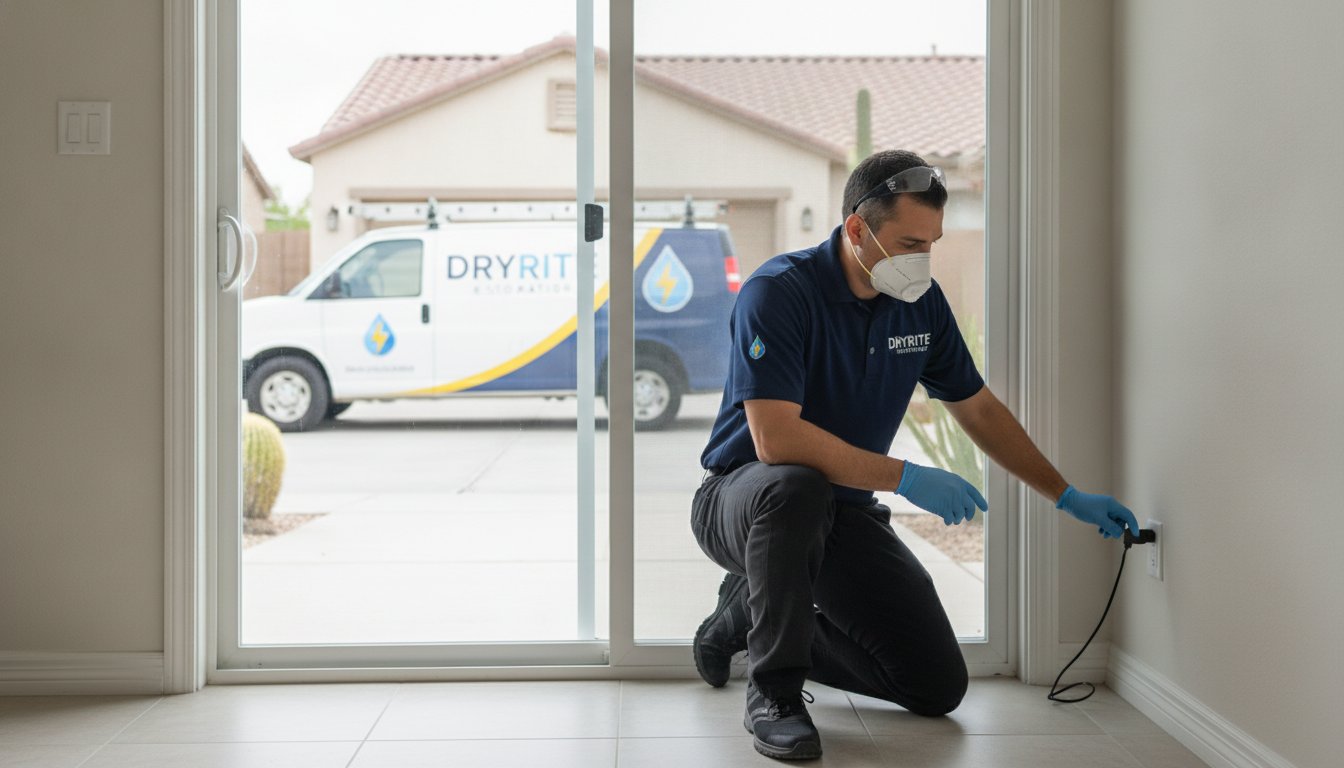
Safety is your first priority. Before you step into a flooded room, turn off the electricity at the breaker to avoid the risk of electrocution. Check for sagging ceilings or compromised floorboards that could collapse under your weight. Once the area is safe, the 90-minute rule begins. This is the window where professional extraction provides the highest success rate for how to prevent mold after water damage. Speed is the only way to beat the biological clock and protect your investment.
You must sort your belongings immediately to minimize loss. Carpet padding acts as a giant sponge and is almost never salvageable. It holds moisture against the subfloor, creating a hidden breeding ground for bacteria. Area rugs, however, can often be saved with professional cleaning if removed quickly. Focus on creating a “drying zone” by using heavy plastic sheeting to isolate the affected room. This prevents moisture from migrating to other parts of the house and allows your equipment to work more efficiently. Following expert advice on preventing mold in your home ensures you aren’t just moving the problem from one room to another.
If the scope of the damage feels beyond your control, reaching out for professional water damage restoration can stop the clock before permanent damage sets in.
Step 1: Rapid Water Extraction
Standing water must be removed within hours, not days. A standard wet-dry vacuum is fine for small spills, but industrial submersible pumps are required for major floods. These machines move hundreds of gallons per minute, which is vital for structural stability. You also need to remove saturated porous materials like drywall and insulation immediately. These items trap water internally and won’t dry fast enough to prevent colony formation. Removing these materials is a cornerstone of how to prevent mold after water damage when the saturation is deep.
Step 2: Cleaning and Sanitization
Once the water is gone, you must sanitize the area. Apply EPA-approved antimicrobials to all remaining surfaces to inhibit fungal growth. Many homeowners reach for bleach, but it’s often ineffective on porous wood and drywall. Bleach kills surface growth but doesn’t penetrate to the roots, allowing the mold to return days later. Handle contaminated items with care. Use sealed bags to move debris through the house so you don’t accidentally spread spores into clean rooms. If toxic growth has already taken hold, understanding the professional protocols for black mold remediation in Phoenix can help you determine the right course of action for your property.
Identifying Hidden Moisture Traps in Arizona Homes
Arizona homes present unique structural challenges that can hide moisture from the naked eye. Slab-on-grade foundations, common in Mesa and Phoenix, often trap water under luxury vinyl plank (LVP) or tile flooring. When a leak occurs, water migrates into the tiny gaps between the flooring and the concrete. This creates a sealed, dark environment where mold thrives undisturbed. You might think the floor is dry because the surface feels fine, but the subfloor remains saturated. Use the EPA guide to mold and moisture to understand why controlling these hidden pockets is the only way to protect your property value.
Don’t rely on desert heat to dry your home during a crisis. The “Monsoon Factor” changes everything. During high-humidity months, outdoor moisture levels prevent natural indoor evaporation. Opening your windows can actually introduce more moisture, accelerating spore colonization instead of stopping it. To master how to prevent mold after water damage in the Southwest, you must use specialized tools. We utilize thermal imaging leak detection to find cold spots behind stucco and under cabinetry. This technology reveals exactly where the water is hiding so we can target it before it turns into a toxic problem.
The HVAC and Air Duct Danger Zone
Your cooling system is a high-risk area for mold. Water damage occurring near air returns can pull moisture directly into your ductwork. Once moisture enters the system, it settles on AC coils and inside vents, leading to “Sick Building Syndrome.” This condition causes respiratory distress for your family every time the air kicks on. If your HVAC system was exposed to a leak, you should invest in professional air duct cleaning. Sanitizing these components ensures that your home’s air remains clean and free of circulating spores.
Wall Cavities and Insulation
Moisture often travels in ways you wouldn’t expect. The “chimney effect” pulls water up through wall voids via capillary action, reaching heights far above the initial flood line. Wet fiberglass insulation is a critical hazard. It loses its R-value and becomes a permanent moisture reservoir that cannot be dried effectively. It must always be removed and replaced. We identify the true “high-water mark” behind your drywall to ensure no dampness remains. Finding these hidden traps is a fundamental part of how to prevent mold after water damage and ensuring your home is truly safe.
Advanced Drying Techniques: Why Household Fans Often Fail
Pointing a household fan at a wet wall is like trying to empty a swimming pool with a teaspoon; it provides the illusion of progress without addressing the core problem. Professional restoration relies on the science of Psychrometry. This field of study focuses on managing temperature, airflow, and humidity to create the optimal environment for evaporation. When you’re looking for how to prevent mold after water damage, you can’t rely on simple air circulation. You need a system that actively pulls moisture out of structural materials and removes it from the building entirely. Without this scientific approach, you’re simply moving damp air around the room while mold colonies begin to form behind your baseboards.
Centrifugal air movers are the workhorses of this process. Unlike standard fans, these machines are designed to produce high-velocity airflow and static pressure. This pressure is measured in Cubic Feet per Minute (CFM), and it’s what forces air into the pores of wood and drywall. High CFM ratings are essential because they break the boundary layer of saturated air sitting on the surface of your walls. Choosing the right equipment is the difference between success and failure when researching how to prevent mold after water damage. If the air isn’t moving with enough force, the drying process stalls, and the 48-hour mold window closes on your property.
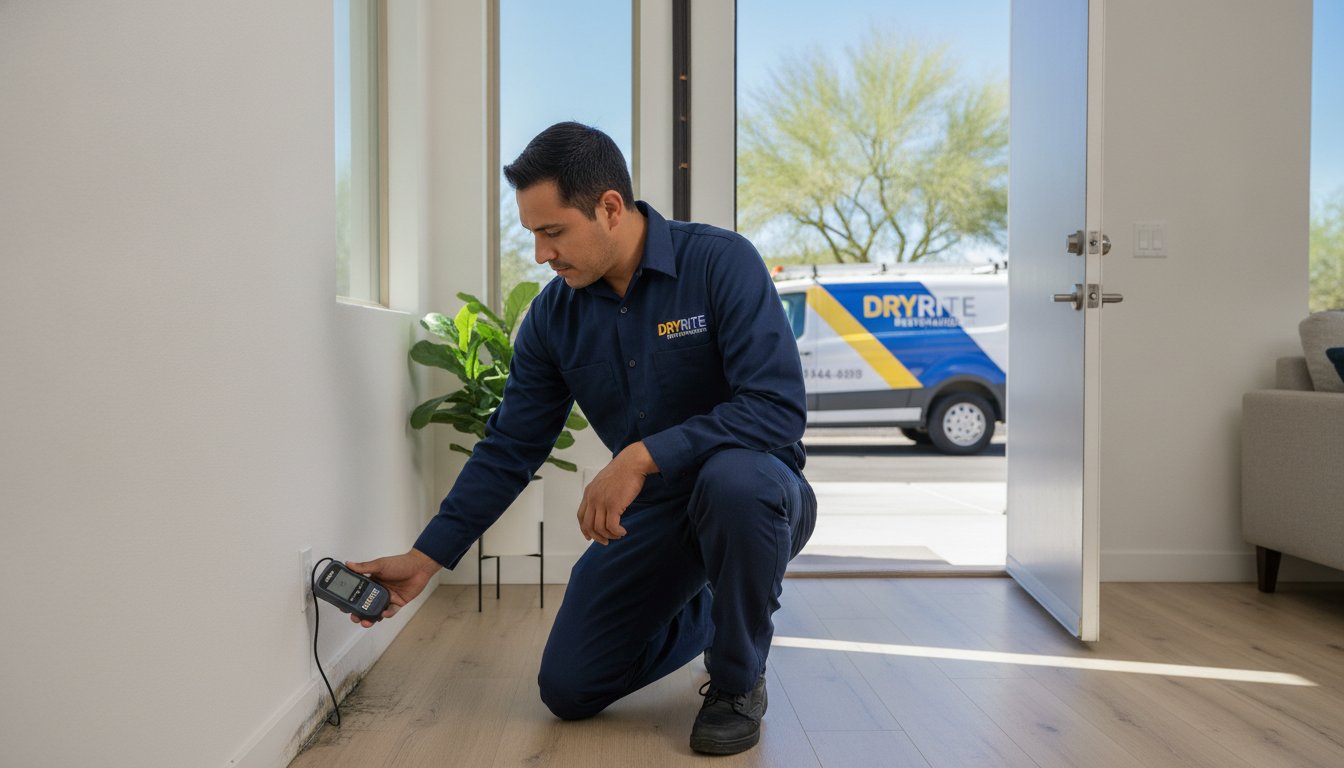
Airflow alone isn’t enough; you also need to control the grains of moisture in the air. We use Low Grain Refrigerant (LGR) dehumidifiers to pull moisture from deep structural wood and subfloors. These industrial units are far more powerful than anything found in a hardware store. They can remove dozens of gallons of water per day even in low-humidity environments. To ensure the process is working, we use professional moisture meters to track progress. These tools are the only way to know if a home is truly dry. We don’t stop until the meters confirm that every material has returned to its “dry standard.”
If you are facing a saturation crisis, request professional moisture extraction to secure your home’s structure before mold takes root.
Vapor Pressure and Evaporation
High-speed airflow creates a pressure differential that forces water molecules to move from a high-pressure state within the material to a lower-pressure state in the air, effectively pulling moisture out. Heat can be a valuable tool in this process, but it’s dangerous if used incorrectly. Adding heat without industrial dehumidification creates a “mold sauna” that accelerates spore growth. In the Arizona climate, we typically utilize a “closed drying” method. This involves sealing the affected area and using LGR units to create an ultra-dry microclimate that outperforms the humid outdoor air during monsoon season.
Structural Drying vs. Surface Drying
Modern restoration allows us to dry “in place,” which saves expensive hardwood floors and custom cabinetry that would otherwise be torn out. We use specialized “injectidry” systems to push warm, dry air directly into wall cavities through small, unobtrusive holes. This targeted approach addresses the hidden moisture that surface fans can’t reach. You can read more about these advanced methods in our guide to the science of structural drying. By stabilizing the structure immediately, we eliminate the food source that mold needs to survive, providing a long-term solution rather than a temporary fix.
Professional Mold Prevention and Restoration in Mesa
Knowing when to transition from DIY efforts to professional intervention is a critical decision for any homeowner. The industry “Rule of Thumb” is clear: if the water-damaged area exceeds 10 square feet, you should stop and call a specialist. Small spills are manageable, but larger saturations often hide moisture deep within the subfloor and wall cavities. Attempting to handle major flooding without industrial-grade equipment often leads to failure. When you’re focused on how to prevent mold after water damage, you can’t afford to leave hidden dampness behind. Professional moisture meters and thermal imaging are the only tools that provide the certainty you need to protect your family’s health.
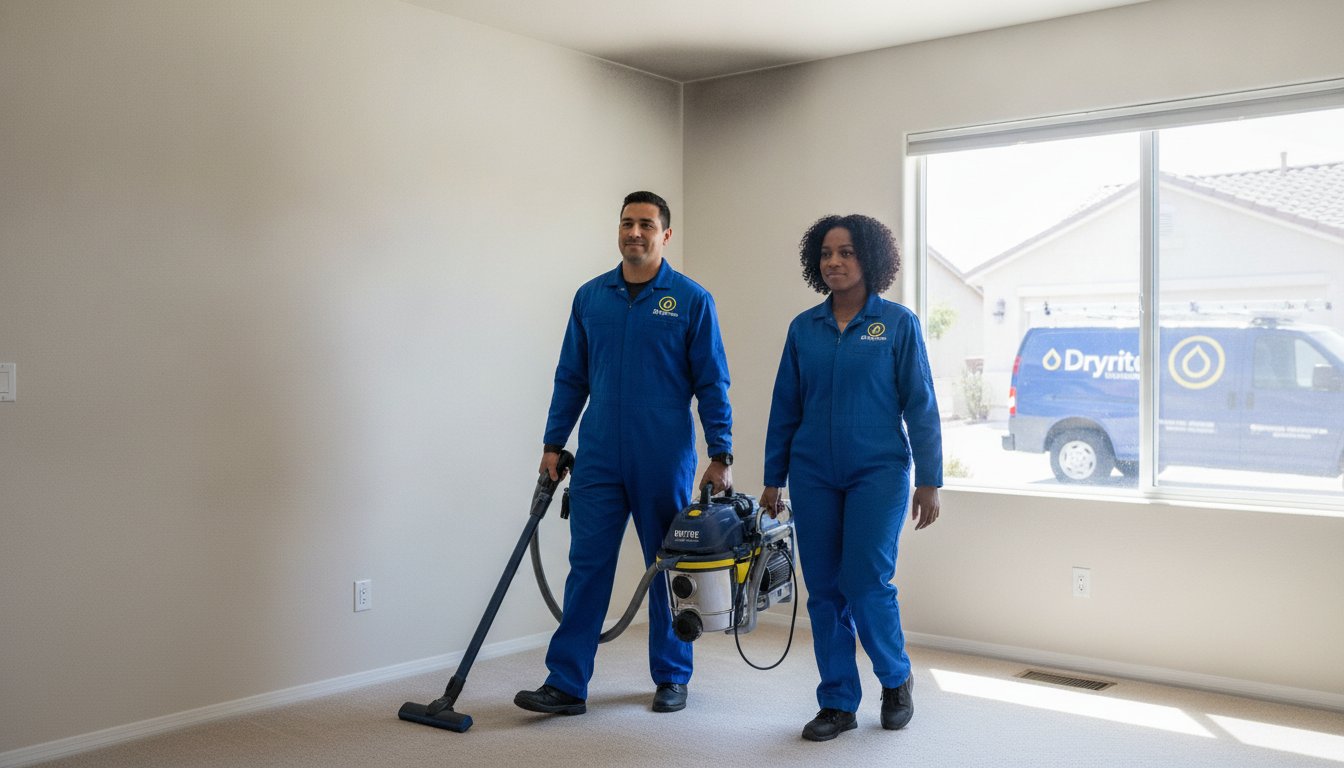
Dryrite Restoration provides a stabilizing force when your home is in chaos. We offer a 24/7 emergency response with a specific promise of a 90-minute arrival time anywhere in the Phoenix Metro area. Speed is the primary factor in successful mitigation. Our team arrives ready to deploy high-capacity extraction units and LGR dehumidifiers immediately. We don’t just dry the surface; we stabilize the entire structure. Choosing a partner who understands how to prevent mold after water damage is essential for a successful recovery. To give you long-term peace of mind, we provide a 2-year warranty on all mitigation work. This ensures that your home remains bone-dry long after the initial crisis has passed.
Mesa’s Trusted Experienced Protectors
We bring over 20 years of local experience to every project in Mesa, Gilbert, and Chandler. Our technicians are IICRC-certified, meaning they follow the highest industry standards for property recovery and hazardous material handling. We understand the specific construction styles of the Southwest and how they interact with moisture. If you already suspect that spores have begun to colonize your property, review our pillar on professional mold remediation mesa az. We act as your seasoned partner, guiding the recovery process with quiet strength and technical expertise.
Seamless Insurance Coordination
The administrative side of a flood can be just as stressful as the physical damage. We eliminate this friction by managing the entire insurance claim process for you. Our team documents every step of the drying process, providing adjusters with the data they need to approve your claim quickly. We use direct billing to insurance companies, which significantly reduces your out-of-pocket stress. This transparency ensures there are no communication gaps between you, your carrier, and our restoration team. Don’t wait for mold to take hold. Contact Dryrite Restoration now for a 90-minute emergency response and let us restore your peace of mind.
Secure Your Property and Your Peace of Mind
The race against mold is won in the first few hours. You now understand that surface drying is a myth and that Arizona’s unique construction requires specialized thermal detection to find hidden moisture traps. Mastering how to prevent mold after water damage isn’t just about removing standing water. It’s about stabilizing the environment with professional-grade equipment before biology takes over and compromises your home’s structure.
Don’t let a leak turn into a long-term health crisis or a massive financial burden. Our IICRC-certified technicians are ready to act as your experienced protectors. We offer a 90-minute emergency response to stop damage in its tracks. With direct insurance billing and a 2-year warranty on mitigation, we handle the administrative turmoil so you can focus on returning to tranquility. Save Your Home from Mold—Call Dryrite Restoration for 24/7 Emergency Service. Your home can be bone-dry and safe again. Take the first step toward a full recovery today.
Frequently Asked Questions
How long after water damage does mold start to grow?
Mold begins to grow within 24 to 48 hours of moisture exposure. This is why immediate action is the most important factor in how to prevent mold after water damage. Spores are always present in the air and only require a water source to activate. Once they settle on organic materials like drywall or wood, colonies can begin to form before you even notice a musty smell.
Can I prevent mold myself after a small leak?
You can manage minor spills yourself if the affected area is smaller than 10 square feet. Use a high-capacity wet-dry vacuum to remove standing water and position heavy duty fans to increase airflow. However, you must ensure the moisture hasn’t seeped behind baseboards or under cabinets. If the area feels damp after 24 hours, professional stabilization is necessary to avoid deep structural colonization.
Does home insurance cover mold prevention after a pipe burst?
Standard homeowners insurance typically covers drying services to prevent mold after a sudden, accidental event like a burst pipe. Carriers categorize this as “mitigation” because it prevents more expensive secondary damage. It is much easier to get coverage for professional drying than for mold remediation after the growth has already occurred. We provide direct insurance billing to handle the documentation and stress for you.
Should I use bleach to prevent mold on wet drywall?
You should never use bleach on porous surfaces like drywall or wood. Bleach is a surface-level cleaner that doesn’t penetrate the material to kill the roots of the mold. Instead, it can actually introduce more moisture into the drywall, potentially making the problem worse. Use EPA-approved antimicrobials designed specifically for property restoration to ensure the area is properly sanitized and protected.
Is it safe to stay in my house while it’s being dried out?
It is usually safe to stay in your home during the drying process unless the water source was contaminated sewage. However, industrial air movers and dehumidifiers are quite loud and generate significant heat as they pull moisture from the air. If the damage is extensive, the noise and increased indoor temperature may make it difficult to sleep or work comfortably until the equipment is removed.
What are the first signs of mold growth after water damage?
The first signs of growth are usually a persistent musty odor and subtle discoloration on surfaces. You might see “fuzzy” white or green spots, or dark, water-stained rings on your ceiling and walls. If you notice these signs, the window for prevention has likely closed. At this stage, you need a professional assessment to determine if you require remediation rather than just simple drying. Understanding whether black mold is dangerous and what recovery steps to take can help you act quickly and protect your family’s health.
How do professionals know when a wall is completely dry?
Professionals use calibrated moisture meters and thermal imaging cameras to confirm a material is truly dry. We establish a “dry standard” by taking readings from an unaffected area of your home and then monitoring the wet materials until they match that baseline. This scientific approach is the only way to guarantee the structure is safe. Surface feel is never an accurate way to determine how to prevent mold after water damage.
Does Arizona’s dry heat help prevent mold naturally?
Arizona’s dry heat isn’t a reliable solution for preventing mold, especially during the high-humidity monsoon season. While the air outside may feel dry, moisture often becomes trapped in slab foundations or behind stucco where natural evaporation can’t reach it. Without mechanical extraction and industrial dehumidification, this trapped water remains a constant threat to your home’s structural integrity and your family’s health.