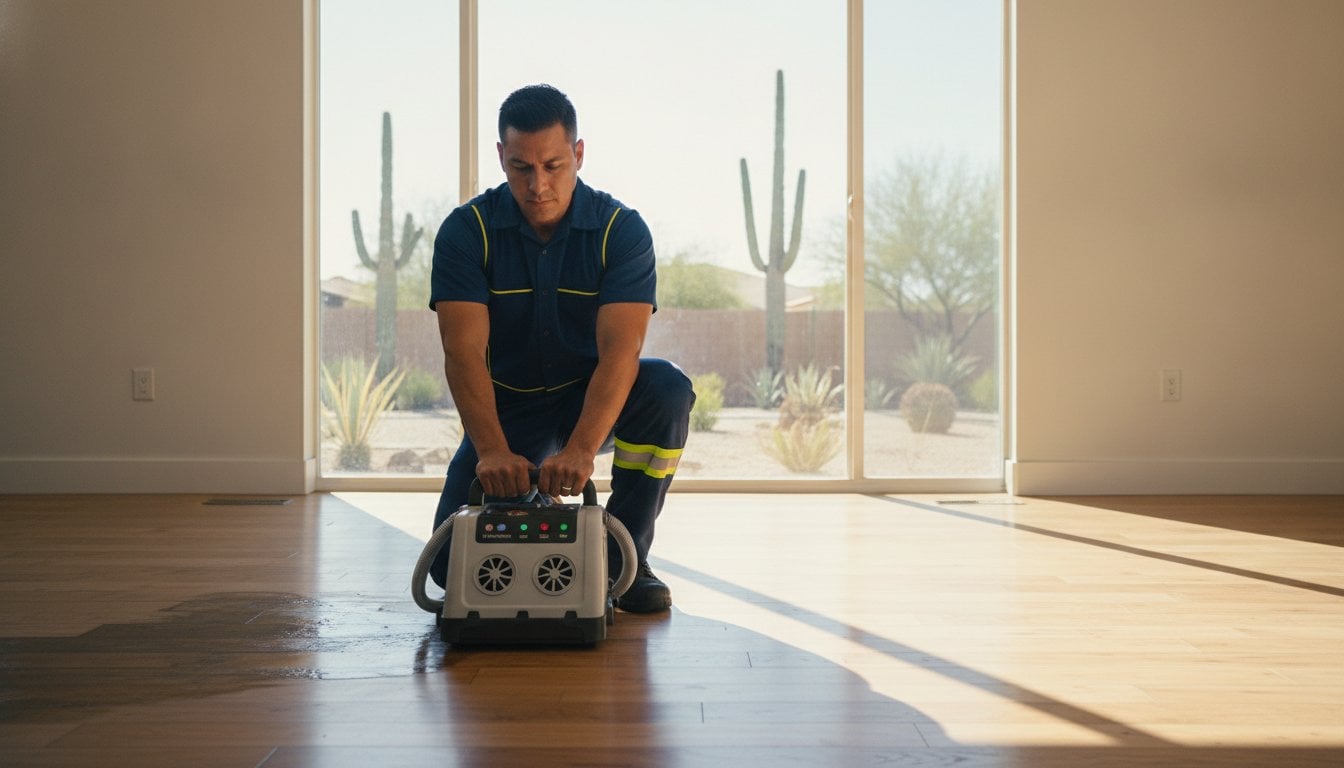
What if the true cost of your floor damage isn’t the wood itself, but the minutes ticking away while moisture seeps into your subfloor? Seeing your beautiful boards cup or buckle is gut-wrenching, and the fear of permanent warping or hidden mold growth is enough to keep any homeowner awake at night. You want answers, not generic estimates, and you need to know if your insurance will actually step up when you need it most.
We understand the high stakes of property damage in our desert climate. This guide breaks down the real-world cost to repair water damaged hardwood floor Mesa residents can expect in 2026, covering everything from emergency moisture extraction to full structural restoration. We’ll explore how Mesa’s updated building codes impact your project and provide a clear roadmap for successful insurance claims. Acting fast is the only way to protect your investment. By focusing on rapid mitigation and our 90-minute arrival guarantee, we aim to save your original flooring and restore your peace of mind before the damage becomes permanent.
Key Takeaways
- Determine how water category and affected square footage influence the total cost to repair water damaged hardwood floor Mesa homeowners encounter.
- Identify the vital differences between mitigation and reconstruction to save your original boards within the critical 48-hour window.
- Learn how Mesa’s specific desert climate affects drying times and why specialized equipment is necessary to prevent over-drying.
- Get professional tips on documenting damage and coordinating with insurance adjusters to maximize your claim coverage.
- See how a 90-minute emergency arrival and a 2-year mitigation warranty provide a seamless, guaranteed path to recovery.
Average Cost to Repair Water Damaged Hardwood Floor in Mesa
The total cost to repair water damaged hardwood floor Mesa homeowners face depends on more than just the size of the room. While square footage provides a baseline, the depth of moisture penetration and the type of wood dictate the final scope. In our desert climate, a quick response determines whether you’re looking at a minor drying project or a full-scale floor replacement. Water damage often hides beneath the surface, meaning the visible warping is just the beginning of the story.
Cost Factors: Material, Labor, and Damage Depth
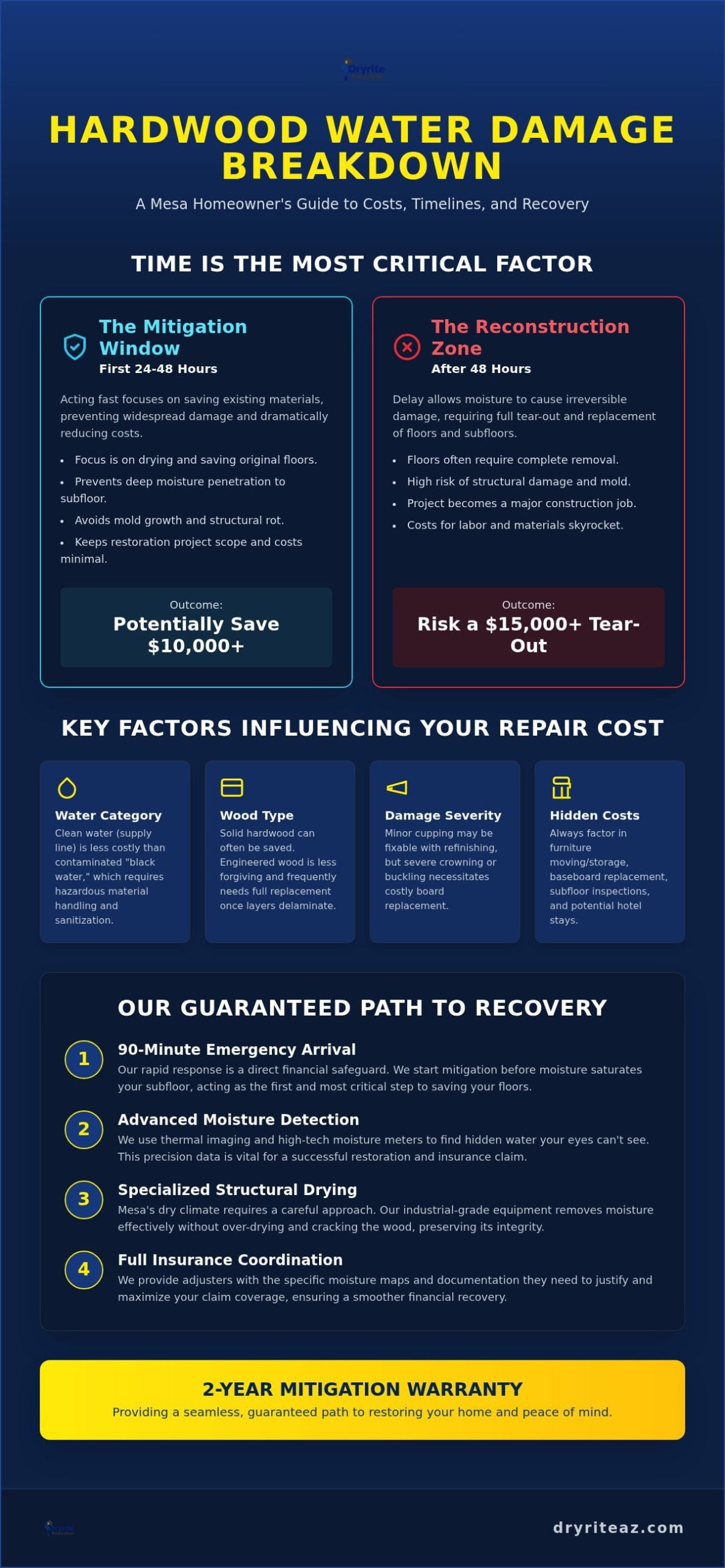
Solid hardwood is resilient and can often be saved through specialized drying techniques. Engineered wood is less forgiving; once the layers delaminate, replacement is almost always necessary. Labor rates across the Phoenix Metropolitan Area reflect the specialized skill needed for moisture mapping and structural drying. The water category also shifts the budget. Clean water from a supply line is manageable, but contaminated “black water” requires hazardous material handling and intensive sanitization, which increases the labor hours required for a safe restoration.
Refinishing vs. Board Replacement Costs
When the wood is structurally sound but the finish is ruined, you’ll pay for professional sanding and staining. However, if the boards cup or crown significantly, replacement is the only path forward. This is where hidden expenses surface. Mesa’s 2024 building codes may require specific subfloor inspections or asbestos testing in homes built before certain regulations took effect. Beyond the wood itself, you must factor in the price of operating industrial-grade dehumidifiers and high-velocity air movers. Other often-overlooked costs include:
- Moving and storing heavy furniture to clear the work area.
- Removing, documenting, and replacing baseboards.
- Potential hotel stays if the drying equipment is too loud for overnight use.
Speed is the ultimate cost-saver. Our 90-minute arrival guarantee ensures that professional drying begins before the water reaches the subfloor, potentially saving you thousands in reconstruction expenses later. By acting immediately, you shift the project from a total loss to a manageable repair.
Mitigation vs. Reconstruction: How Speed Saves Money
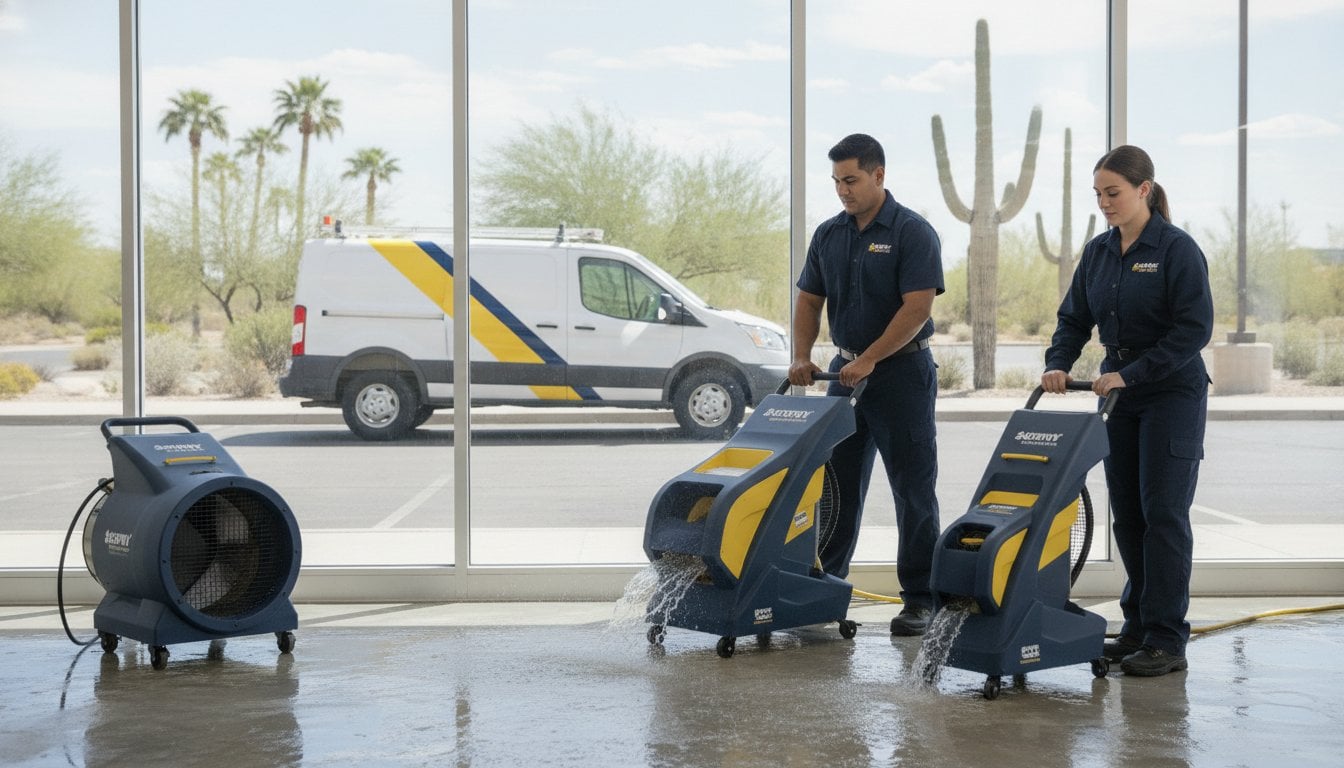
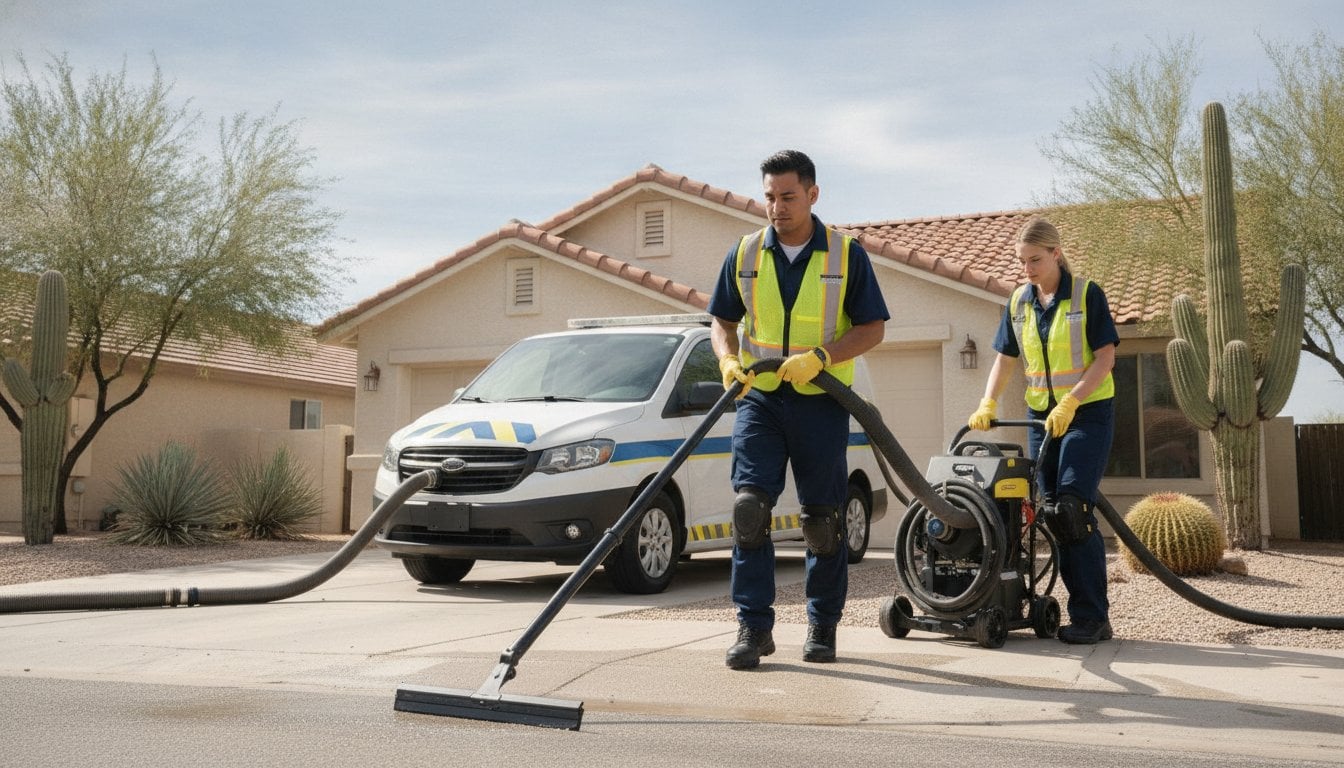
Time is the most expensive variable in property restoration. If you act within the first 24 to 48 hours, you’re performing mitigation, which focuses on saving existing materials. Structural drying is the use of specialized equipment to remove deep-tissue moisture from building materials. This process is the vital line of defense between a controlled dry-out and a massive financial burden. When you ignore the clock, the cost to repair water damaged hardwood floor Mesa homeowners face can skyrocket as water seeps into the subfloor and compromises the home’s integrity.
Our 90-minute arrival guarantee acts as a direct financial safeguard for your property. By stopping the spread of moisture before it saturates the core of your planks, we often prevent the need for $10,000 or more in reconstruction costs. Rapid action keeps the project in the mitigation phase, where expenses are significantly lower and the original wood remains salvageable.
The Cost of Delay: Cupping, Crowning, and Buckling
Hardwood is highly porous. When moisture hits the core of the wood, the planks begin to deform physically. Cupping occurs when the edges of the boards rise higher than the center, while crowning happens when the center bulges upward. If left too long, the floor will buckle and pull away from the subfloor entirely. Many homeowners assume their floor is safe because it’s dry to the touch, but this is a dangerous mistake. Moisture trapped underneath will continue to rot the structure. A simple leak can evolve from a minor dry-out into a $15,000 total tear-out if you wait even a few days to address the hidden saturation.
Professional Moisture Monitoring
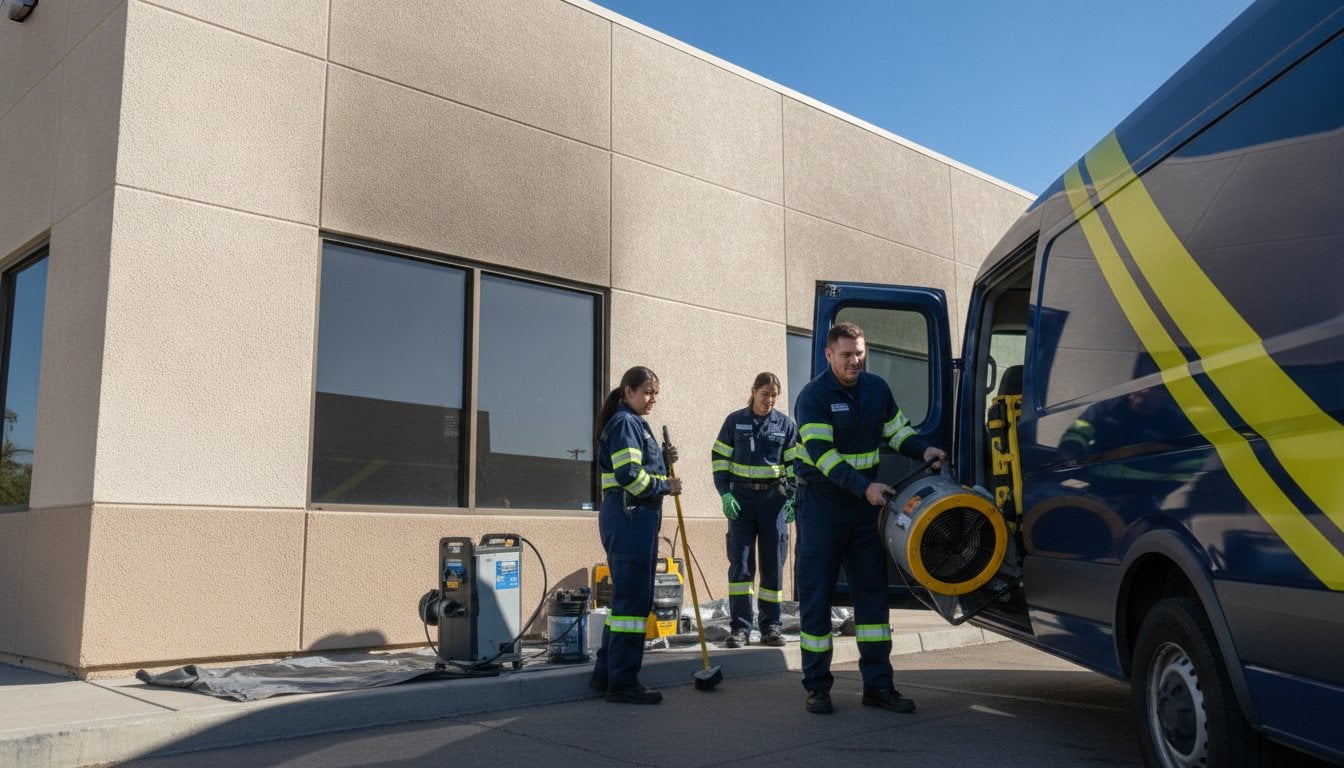
We use thermal imaging and high-tech moisture meters to see what your eyes cannot. This precision is vital for your financial recovery. Does Homeowners Insurance Cover Water Damage? Often, the answer depends on the quality of the documentation provided to your adjuster. We provide the specific data and moisture maps adjusters need to justify the full scope of your claim. We also utilize HEPA filtration to prevent secondary mold growth, which can add thousands to your cleanup budget. If you suspect hidden moisture, it’s best to get a professional assessment immediately to keep your restoration costs under control and your home safe.
Mesa’s Climate and Hardwood Restoration
Mesa’s environment presents a unique paradox for floor recovery. While our signature low humidity helps some materials dry, it can be a liability for saturated hardwood. If you dry wet planks too aggressively in 10% humidity, the wood fibers can shrink and crack, causing permanent structural failure. Our technicians constantly monitor outdoor dew points to adjust drying protocols in real time. This level of precision is the only way to manage the cost to repair water damaged hardwood floor Mesa residents face without causing further damage to the wood through over-drying.
Monsoon Flooding and Emergency Response
The monsoon season between July and September brings sudden flash floods that threaten ground-level hardwood. These waters often carry silt and desert debris that can act like sandpaper against your floor’s finish. Regional expertise is critical when dealing with these contaminants. We focus on bringing order to the chaos of a storm. Our 90-minute arrival guarantee is a recurring trust signal that we’ll be there to stop the spread of floodwater before it destroys your subfloor. For rapid relief during a storm, trust our Water Damage Restoration Mesa AZ: 24/7 Emergency Response & Peace of Mind services.
Asbestos and Mold in the Desert
Many Mesa neighborhoods feature homes built before 1980, where asbestos was common in floor adhesives and subfloor materials. Arizona regulations require specific testing before we can remove these materials. Ignoring these rules can lead to massive legal fines and long-term project delays. Even while the Arizona sun is shining, mold can thrive in the dark, wet subfloors hidden beneath your boards. We manage all aspects of your project internally to avoid third-party complications. This ensures your home transitions from turmoil to tranquility quickly and safely. Since we’ve been licensed and insured since 2004, we have the experience to handle these hazards without compromising your timeline. If you’re worried about hidden growth or hazardous materials, schedule a professional moisture inspection to secure your home’s future.
Navigating Insurance for Hardwood Repair Costs
Managing an insurance claim is just as critical as managing the water itself. When calculating the cost to repair water damaged hardwood floor Mesa homeowners must consider how their policy language dictates the final payout. We act as a stabilizing force during this process, coordinating directly with adjusters to justify every necessary repair. Our team provides the technical moisture maps and structural data required to prove that “dry to the touch” isn’t enough. We ensure your carrier understands the complexity of Arizona’s climate and the specific restoration needs of your flooring.
One often overlooked aspect of a claim is “loss of use” coverage. Major hardwood projects involve loud industrial dehumidifiers and restricted access to living spaces. This coverage can pay for temporary housing while we restore your home to tranquility. For a deeper dive into the administrative side of recovery, review our Water Damage Insurance Claim Help Arizona: A Homeowner’s Guide to Successful Recovery. We help you navigate these hurdles so you can focus on your family’s well-being instead of paperwork.
Filing a Claim: A Step-by-Step Checklist
Protect your interests by following a disciplined documentation process. Insurance companies require clear evidence of the “sudden and accidental” nature of the leak. Use this checklist to stay organized:
- Document everything immediately. Take high-resolution photos and videos of the standing water and visible warping before any boards are moved.
- Identify your deductible. Know your out-of-pocket limit versus the total restoration estimate to avoid financial surprises.
- Avoid premature settlements. Never sign a final release until the floor is fully dry and all hidden moisture is accounted for.
The Dryrite Advantage: Direct Insurance Billing
We eliminate out-of-pocket stress by offering direct insurance billing. This means we handle the financial communication with your carrier, preventing communication gaps that lead to claim denials. Our 90-minute response time isn’t just about saving wood; it’s about meeting the “duty to mitigate” requirement found in most Arizona policies. By arriving fast, we provide the immediate action your insurer expects. We also back our mitigation work with a 2-year warranty, giving you and your insurance provider long-term peace of mind. Stop the damage and start your recovery today. Get a Professional Cost Estimate and Insurance Help Now.
Secure Your Home’s Future and Restore Your Peace of Mind
Every minute water sits on your hardwood, the restoration complexity and expense grow. We’ve explored how rapid mitigation within the first 48 hours prevents massive reconstruction costs and how Mesa’s unique desert climate requires precise drying protocols. Understanding the cost to repair water damaged hardwood floor Mesa residents encounter is the first step in protecting your investment. You don’t have to navigate this crisis alone or guess at the final bill.
We act as a stabilizing force for your property. Our team provides 24/7 emergency service and a 90-minute arrival guarantee to stop moisture in its tracks. We eliminate administrative friction through direct insurance billing and back our work with a 2-year warranty on mitigation. This commitment to calm competence ensures your home transitions from turmoil back to tranquility as quickly as possible. Don’t let a leak become a total loss. Request a 90-Minute Emergency Response and Free Estimate today to save your floors and your sanity. Your home is in expert hands.
Frequently Asked Questions
Is it cheaper to repair or replace water-damaged hardwood?
Repairing is significantly more cost-effective than a full replacement. Mitigation involves extracting water and structural drying to save your original boards. Replacement adds the expense of demolition, new material procurement, and intensive labor for installation. By utilizing our 24/7 emergency service, you increase the chances of a successful repair. This proactive approach helps minimize the total cost to repair water damaged hardwood floor Mesa residents face by avoiding the reconstruction phase entirely.
How long does it take for hardwood floors to dry after a leak?
Professional structural drying generally requires three to five days for complete stabilization. Hardwood is a dense material that holds moisture deep within its fibers and the subfloor beneath. We use industrial dehumidifiers and specialized air movers to extract this moisture safely. Technicians in Mesa must balance the drying speed to prevent the wood from cracking in our low-humidity environment. We monitor these levels daily to ensure the floor returns to its dry standard.
Will my insurance pay for the entire floor if only part is damaged?
Insurance carriers often pay to replace a larger area if they cannot find a reasonable match for the damaged boards. This is frequently referred to as the “uniformity” or “line of sight” rule. If your kitchen floor is damaged and flows into the living room, you may be entitled to a full floor restoration. We work directly with insurance adjusters to provide the documentation needed to cover the cost to repair water damaged hardwood floor Mesa claims.
Can I save my hardwood floors if they have started cupping?
You can often save cupped floors if professional drying begins before the wood fibers are permanently damaged. Cupping happens when moisture levels are higher at the bottom of the board than the top. We use high-pressure drying mats to pull moisture out from underneath the planks. Once the wood reaches a balanced moisture content, the boards typically settle back into their original flat position. Rapid intervention is the key to avoiding a full tear-out.
How do I know if there is mold under my hardwood floor?
Look for signs like musty smells, dark stains appearing between planks, or boards that feel soft or spongy. Mold can grow in the hidden space between your hardwood and the subfloor within 48 hours of a leak. We use thermal cameras and moisture probes to locate these hidden damp spots without tearing up your floor. If you detect a damp odor in your Mesa home, professional mold remediation is necessary to ensure your indoor air quality and safety.
What should I do in the first hour after water hits my wood floor?
Stop the water source immediately and move any furniture or area rugs off the wet surface. Blot up as much standing water as possible with clean towels to prevent further seepage into the grain. Don’t use a household vacuum on wet floors because of the shock hazard. Call for professional assistance right away. Our 90-minute arrival guarantee ensures that we can begin moisture extraction before the water reaches your subfloor and causes permanent structural warping.