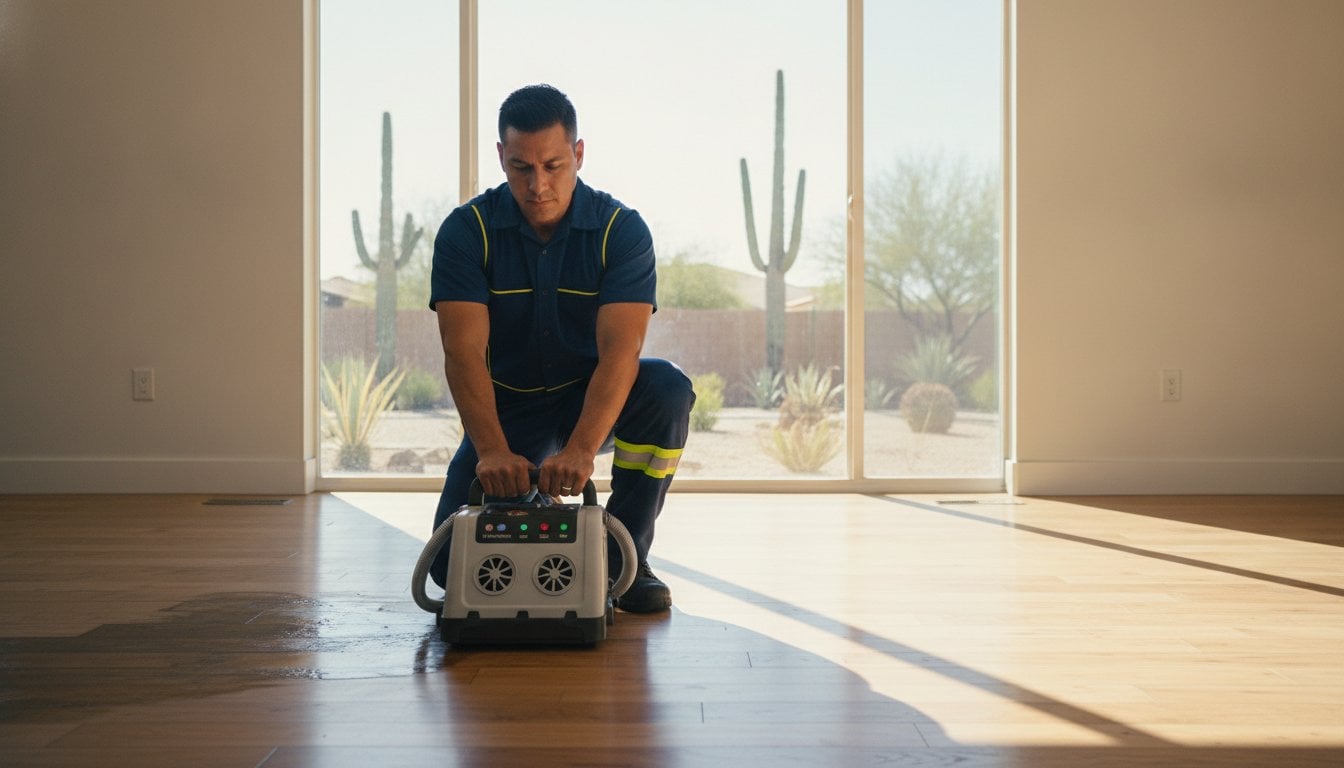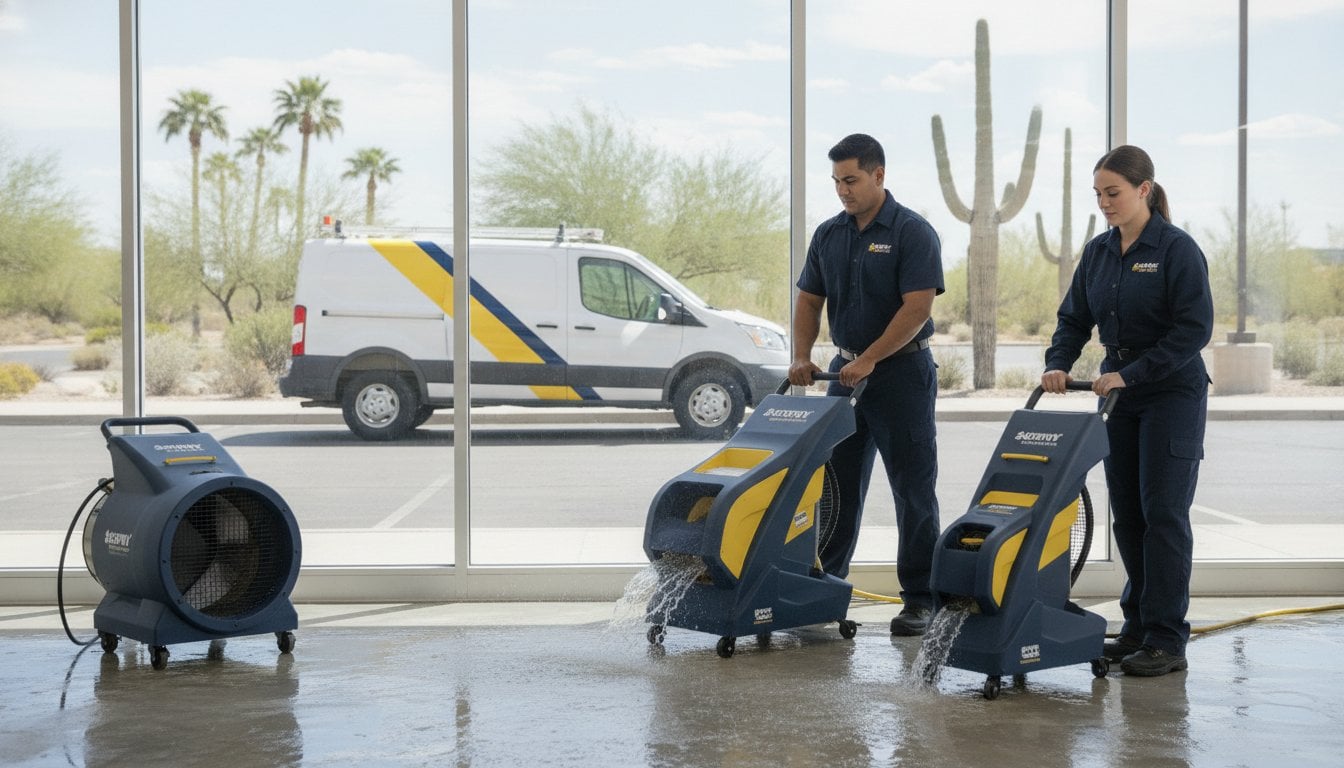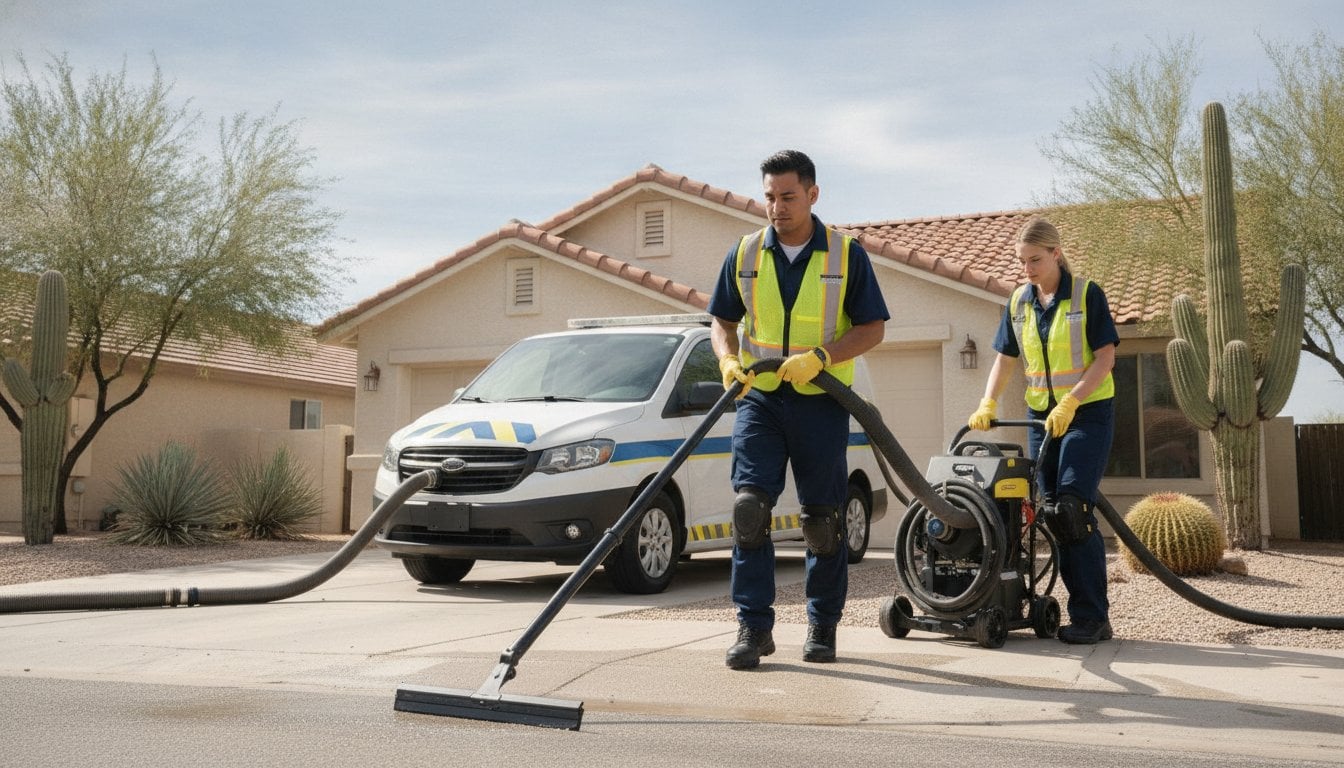
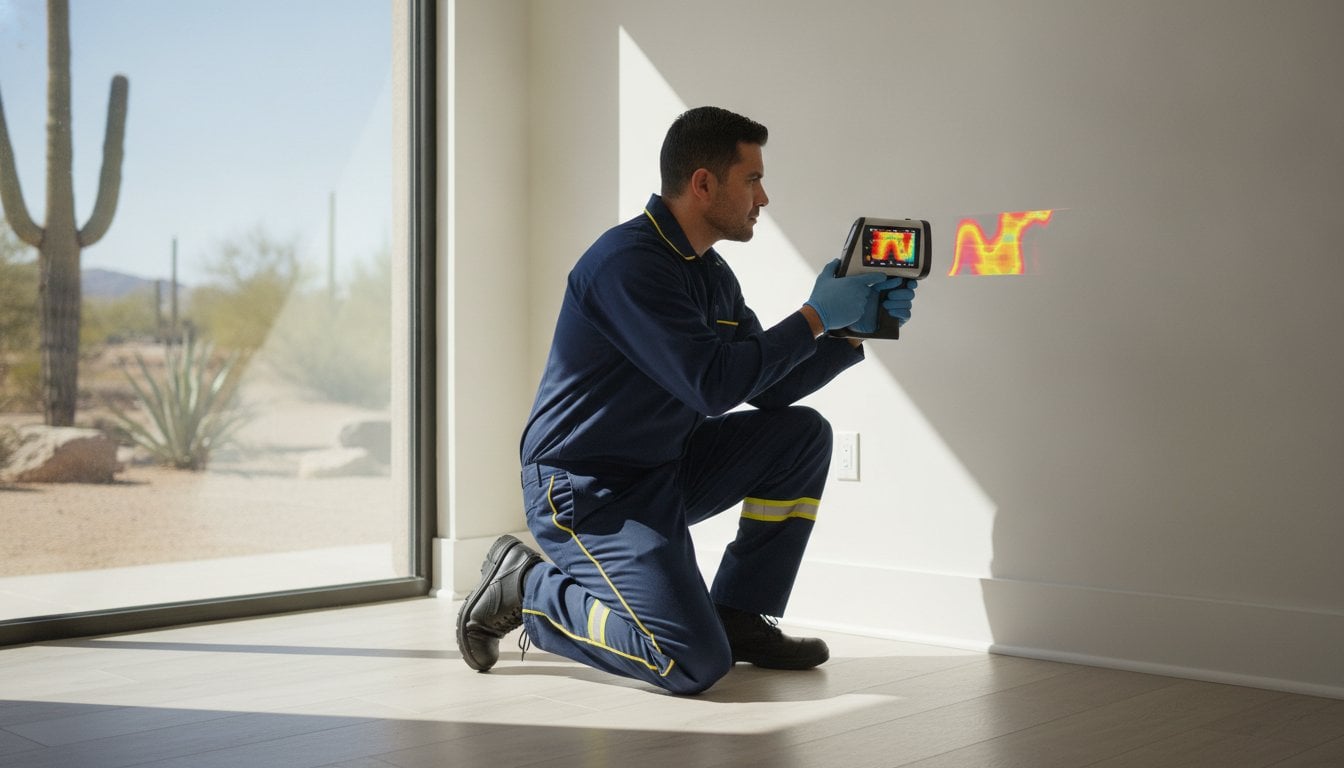
What if the most expensive threat to your Mesa home is the moisture you can’t even see? After a sudden pipe burst or a heavy monsoon downpour, the clock starts ticking against your property and your health. You need more than a quick look and a vague quote. A professional water damage assessment is a forensic deep dive designed to uncover hidden threats before mold takes hold. We arrive within 90 minutes to stabilize the chaos, using advanced thermal imaging to track moisture paths that stay invisible to the naked eye.
We know the anxiety of facing a skeptical insurance adjuster or worrying about “storm chasers” who might cut corners. It’s stressful to feel like your home’s safety is a guessing game. This guide provides a clear roadmap of the restoration process so you can regain control. You’ll learn how experts categorize risks according to current IICRC S500 standards and create the precise documentation required to secure your claim under Arizona’s 2026 insurance laws. We’re here to replace uncertainty with a proven plan for your home’s total recovery.
Key Takeaways
- Act within the first 90 minutes of discovery to prevent a minor leak from escalating into a high-class loss.
- Discover how thermal imaging identifies hidden moisture paths behind your walls before mold has a chance to grow.
- Learn why a professional water damage assessment is the most critical piece of evidence for securing your insurance claim.
- Understand the unique risks of Arizona’s post-tension slabs and how monsoon humidity affects the structural drying process.
- Gain peace of mind with a restoration plan backed by a 2-year warranty on all mitigation work.
The Anatomy of a Professional Water Damage Assessment
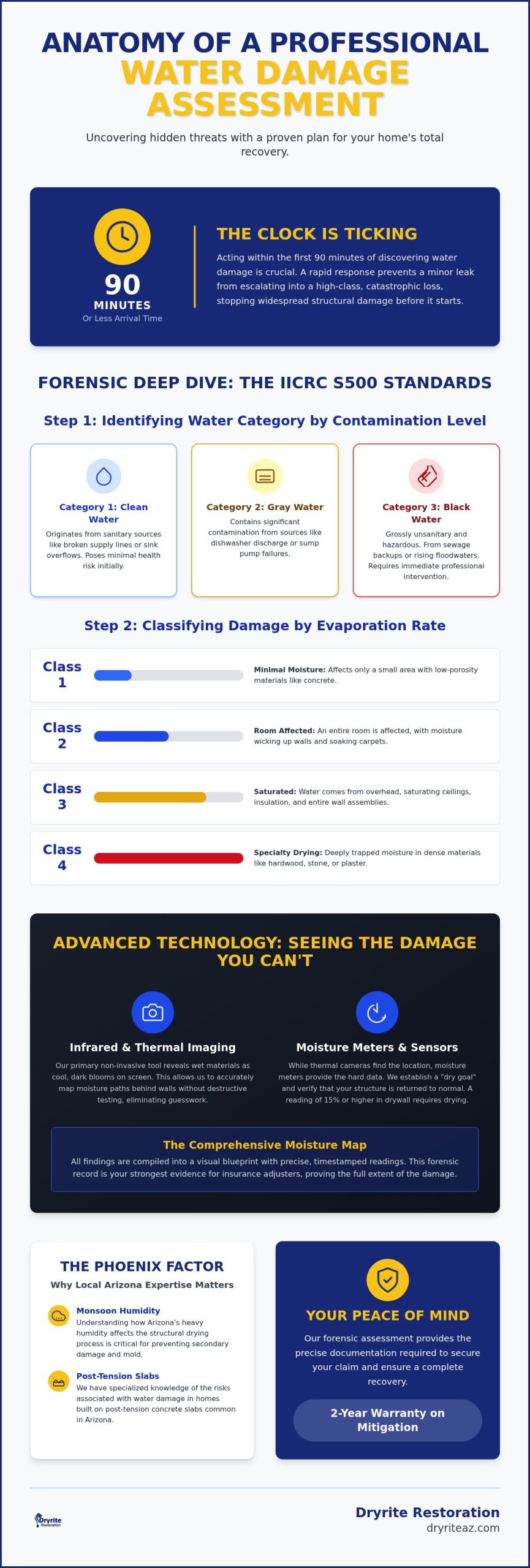
A professional water damage assessment is the critical foundation for the entire water damage restoration mesa az process. It isn’t just a quick look around; it’s a technical deep dive into your home’s structural integrity. We arrive within 90 minutes because the first two hours are vital for understanding water damage and how it spreads. Rapid response stops a minor leak from escalating into a full-scale disaster. Our technicians act as your experienced protectors, bringing order to the chaos by identifying exactly where the water has traveled.
Many homeowners fear dishonest contractors who might exaggerate damage to inflate costs. We eliminate this anxiety by strictly following the IICRC S500 standards. This industry benchmark ensures every water damage assessment is objective, transparent, and forensic. We stand by our findings with a 2-year warranty on mitigation work. A visual inspection only sees surface puddles, but a forensic assessment uses specialized tools to find moisture trapped inside wall cavities and subfloors that the eye cannot see.
Identifying the Source and Water Category
Technicians first determine the “Category” of water based on its contamination level. This step dictates the specific safety protocols required to protect your family’s health.
- Category 1 (Clean): Originates from sanitary sources like broken supply lines or sink overflows.
- Category 2 (Gray): Contains significant contamination, such as dishwasher discharge or sump pump failures.
- Category 3 (Black): Grossly unsanitary water from sewage backups or rising floodwaters.
Category 3 water is a severe biohazard requiring immediate professional intervention to prevent serious health risks.
Classifying the Extent of Liquid Absorption
We also assign a “Class” to the damage. This measures the evaporation rate needed for successful drying and determines the equipment required for the job.
- Class 1: Minimal moisture is present, affecting only a small portion of a room with low-porosity materials.
- Class 2: An entire room is affected, including carpets and cushions, with moisture wicking up the walls.
- Class 3: Water comes from overhead, saturating ceilings, insulation, and entire wall assemblies.
- Class 4: This involves specialty drying for materials like hardwood, stone, or concrete that trap deep moisture.
Advanced Technology: Seeing the Damage You Can’t
Standing water on your floor is only the visible part of a much larger problem. Water naturally follows the path of least resistance. It wicks up porous drywall, seeps behind baseboards, and flows under heavy kitchen cabinets where it can sit for weeks undetected. Without the right tools, these hidden pockets become breeding grounds for mold and structural decay. A modern water damage assessment relies on high-tech diagnostic equipment to find every drop of moisture before it causes permanent failure.
Infrared and Thermal Imaging
We use thermal imaging leak detection as our primary non-invasive tool. Thermal cameras detect minute temperature differences on surfaces. Because wet materials are typically cooler due to evaporative cooling, they appear as dark blooms on our screens. This technology allows us to see through walls without the need for destructive testing. We won’t tear down your drywall prematurely just to check for moisture. It provides an honest, accurate scope of work that eliminates guessing and ensures we only remove what’s truly necessary.
Moisture Meters and Sensors
While thermal cameras find the location, moisture meters provide the hard data. We use both non-penetrating sensors for delicate surfaces and penetrating pin-type meters for deep structural checks. These tools help us establish a “dry goal” for your property. We begin by measuring unaffected materials in a dry part of your home to determine what “normal” looks like for your specific environment. A moisture meter reading of 15% or higher in drywall usually indicates a need for structural drying services. If you’re concerned about hidden leaks, requesting a professional inspection for a sensor check can prevent long-term rot.
We compile all our findings into a comprehensive moisture map. This visual blueprint outlines the entire affected area with precise, timestamped readings captured during the water damage assessment. It functions as a forensic record for insurance adjusters, proving the damage exists where the eye cannot see. This level of detail is your strongest defense against claim denials. It confirms that your home has reached the necessary dry standards before we finalize the restoration.
Securing Your Insurance Claim Through Documentation
Your insurance company requires proof of loss before they issue a payment. In the restoration industry, your initial water damage assessment serves as the primary piece of evidence. Without a detailed report from a certified professional, you risk having your claim undervalued or denied entirely. We specialize in providing the forensic data that water damage insurance claim help experts need to advocate for your full recovery. Our technicians act as your experienced protectors, ensuring every technical detail is captured from the moment we arrive.
Don’t make the mistake of waiting for an insurance adjuster to visit before starting the assessment. Arizona insurance policies typically require homeowners to give “prompt notice” and take immediate action to prevent further loss. Waiting 48 hours for an adjuster can lead to secondary damage, like mold growth or structural warping. If the carrier determines you didn’t act quickly, they may deny the claim for negligence. We arrive within 90 minutes to document the initial state of your home, ensuring you meet your policy’s requirements from the start. If you need immediate assistance with your filing, contact us for expert claim support.
We handle the administrative friction by coordinating directly with your insurance carrier. Our team understands the “sudden and accidental” rule that governs most Arizona policies. This means if a pipe bursts unexpectedly, you’re likely covered. However, slow leaks or seepage that occurs over weeks might be excluded. Our assessment identifies the specific cause to help clarify coverage early. Arizona Senate Bill 1206, passed in 2026, reinforces the need for this objective documentation by strictly separating the roles of adjusters and contractors to protect your interests.
The Essential Assessment Checklist for Claims
- Step 1: Visual Proof. We capture high-resolution photo and video documentation of the source and all standing water.
- Step 2: Technical Logs. We maintain detailed moisture logs that track the daily progression of the water damage drying process.
- Step 3: Content Inventory. Our team creates a professional inventory of non-salvageable items to ensure you’re reimbursed for lost belongings.
Preventing Secondary Damage Denials
A professional water damage assessment proves you took reasonable steps to mitigate damage, a core requirement of your insurance contract. If you fail to assess hidden moisture within the first 24 hours, mold can begin to colonize. Most standard policies have limited mold coverage, and carriers often deny these claims if they believe the homeowner delayed the mitigation. We provide a 2-year warranty on all mitigation work, which acts as a signature of our professional accountability and an assurance to your adjuster that the job was done right.
The Phoenix Factor: Why Local Arizona Assessment Matters
Arizona homes present unique challenges that generic restoration companies often overlook. Most Mesa properties feature post-tension slabs. These slabs contain high-strength steel cables under extreme tension. A water damage assessment must identify if water has seeped beneath the slab, as trapped moisture can corrode these cables or cause the soil to shift. We understand these local structural nuances and use specialized sensors to track sub-slab intrusion without damaging your foundation.
Many residents fall for the “dry heat” myth. They believe that opening windows in the Mesa summer will dry out a flood. During the official monsoon season, which runs from June 15 to September 30, outdoor humidity levels spike. The 2026 monsoon outlook predicts above-normal rainfall, meaning the air is often too saturated to help. In fact, opening your home can introduce more moisture and desert dust. Our 90-minute response time is a local necessity. The combination of intense heat and moisture allows mold to colonize in as little as 24 hours.
Monsoon Storm Damage vs. Plumbing Leaks
Storm-driven flooding is fundamentally different from a burst pipe. When heavy rains overwhelm your yard, the runoff entering your home is classified as Category 3 “black water.” This runoff carries bacteria, silt, and contaminants from the street. We assess your home’s exterior drainage, checking for clogged roof scuppers and silt-filled gutters that often fail during haboobs. Dryrite manages large-scale storm responses across Mesa and Gilbert, providing the specialized equipment needed to handle biohazard-level flooding.
Slab Leaks and Hard-Surface Assessments
Phoenix homes frequently feature tile and stone floors. These materials are beautiful but deceptive. Water can hide in the thick mortar bed beneath the tile for weeks, even if the grout looks dry. A professional water damage assessment uses deep-sensing moisture probes to find these hidden reservoirs. Without this data, you might experience floor failure or mold growth months later. We use specialty injection-drying systems specifically designed for Arizona’s common building materials to save your floors. If you suspect a leak, Request a professional assessment from Dryrite Restoration now.
Take Control of Your Home’s Recovery Today
Facing the aftermath of a flood is overwhelming, but you don’t have to face it alone. A precise water damage assessment is your most powerful tool for protecting your property and your financial interests. By identifying hidden moisture paths with infrared technology and documenting every detail for your insurance carrier, you eliminate the guesswork that leads to costly repairs or claim denials later. Arizona’s climate and unique home construction require a specialist who understands the local landscape and acts quickly to prevent permanent structural failure.
We provide 24/7 emergency service across the Phoenix Metro area, arriving at your door within 90 minutes to stabilize the situation. Our team manages the entire process internally, offering direct insurance billing and a 2-year warranty on all mitigation work to ensure your long-term security. Don’t let moisture linger and risk the health of your family. Secure your home’s future with an honest, forensic inspection from the local experts who have served Arizona since 2004. Get a Professional Water Damage Assessment in 90 Minutes and start your journey back to tranquility today. Your home is in safe hands.
Frequently Asked Questions
How long does a professional water damage assessment take?
A professional water damage assessment typically takes between one and two hours to complete. This timeframe depends on the size of your Mesa property and the severity of the intrusion. Our technicians use this time to map moisture paths and establish dry standards for your home. We arrive within 90 minutes of your call to start this process immediately. This rapid diagnostic ensures we capture the evidence needed for your insurance claim before secondary damage begins.
Can I perform my own water damage inspection?
You can identify surface puddles, but you cannot perform a forensic assessment without specialized equipment. Hidden moisture often traps itself behind baseboards or under Arizona’s common post-tension slabs. Professionals use thermal imaging cameras and moisture sensors to locate these invisible threats. Missing even a small pocket of water can lead to structural rot and mold growth. Trusting a certified expert ensures every hidden risk is documented and addressed.
Does a water damage assessment include a mold check?
Yes, our assessment process includes a thorough check for visible and hidden mold growth. In the intense Arizona heat, mold spores can colonize damp areas within 24 to 48 hours. We prioritize checking wall cavities and subfloors where humidity levels remain high. Since we are licensed for both water restoration and mold remediation, we can identify these health risks early. This proactive approach keeps your family safe and prevents expensive secondary cleanup projects.
What is the difference between a water damage assessment and a home inspection?
A home inspection provides a general overview for property sales, while a water damage assessment is a targeted emergency diagnostic. Home inspectors look at the overall condition of a house. In contrast, our technicians focus strictly on moisture intrusion and structural saturation levels. We use forensic tools to determine the “Category” and “Class” of the loss. This specific data is required by insurance adjusters to approve a restoration scope, making it much more detailed than a standard inspection.
Will my insurance company pay for the water damage assessment?
Most Arizona insurance policies cover the cost of a professional water damage assessment as part of your required mitigation efforts. Carriers view this as a necessary step to prevent further property loss. We provide direct insurance coordination to simplify the billing process for you. Because this assessment serves as the primary evidence for your claim, it’s a standard expense that adjusters expect to see in the documentation. We help ensure your filing meets all technical requirements.
What happens if the assessment finds asbestos or lead?
If we discover hazardous materials, we immediately stop work to implement strict containment and safety protocols. Many older homes in the Phoenix Metro area contain asbestos in flooring or drywall textures. Because we are fully licensed for asbestos removal, we can manage the abatement process internally. This prevents the administrative friction of hiring multiple contractors. We ensure all hazardous materials are handled and disposed of according to state and federal environmental regulations.