In Mesa, the true cost of water damage is determined by the speed of mitigation, not just the size of the spill. You’re likely standing in a damp room right now, fearing hidden fees and wondering if your insurance will even answer the phone. It’s a high-stakes situation where every hour counts. Understanding the water damage restoration cost Mesa homeowners face is the first step toward regaining control. As a licensed and insured team serving the Phoenix Metropolitan Area since 2004, we know that waiting even a few hours can turn a simple dry-out into a massive mold remediation project.
We agree that the financial uncertainty is often just as draining as the physical damage to your home. This guide provides a transparent breakdown of local restoration pricing and expert advice on maximizing your insurance claim. We’ll preview the differences between standard water damage and flood insurance, explain how our 90-minute arrival guarantee prevents costs from doubling, and show you how direct insurance billing eliminates administrative friction. You’ll get the clarity you need to move from chaos to a restored, safe home with quiet confidence.
Key Takeaways
- Understand the specific variables that impact the water damage restoration cost Mesa homeowners pay, from the category of water to the extent of structural saturation.
- Learn how direct insurance billing and professional coordination can eliminate the stress of managing claims while ensuring you maximize your policy coverage.
- Discover why the “90-minute rule” is your best defense against the wick effect, preventing water from climbing up drywall and doubling repair costs.
- Identify the crucial difference between standard water damage and flood coverage to avoid unexpected out-of-pocket expenses during Arizona’s monsoon season.
- Ensure long-term property safety by choosing a licensed and insured specialist who provides a 2-year mitigation warranty to prevent future mold growth.
Average Water Damage Restoration Costs in Mesa, AZ (2026)
Mesa homeowners face unique challenges when calculating the total water damage restoration cost Mesa projects require. Having served the Mesa community since 2004, we’ve seen how local labor rates across the Phoenix Metropolitan Area fluctuate based on seasonal demand. This is especially true during the high-intensity monsoon months when flash flooding is common. The complexity of your invoice depends heavily on the “Category” of the water involved. Clean water from a supply line is managed differently than “black water” from a sewage backup. To understand the technical breakdown of what water damage is and how it impacts structural materials, you must look at the two distinct phases of recovery. Professional restoration is about more than just removing puddles; it’s about protecting your equity.
Phase 1: Emergency Mitigation and Drying Fees
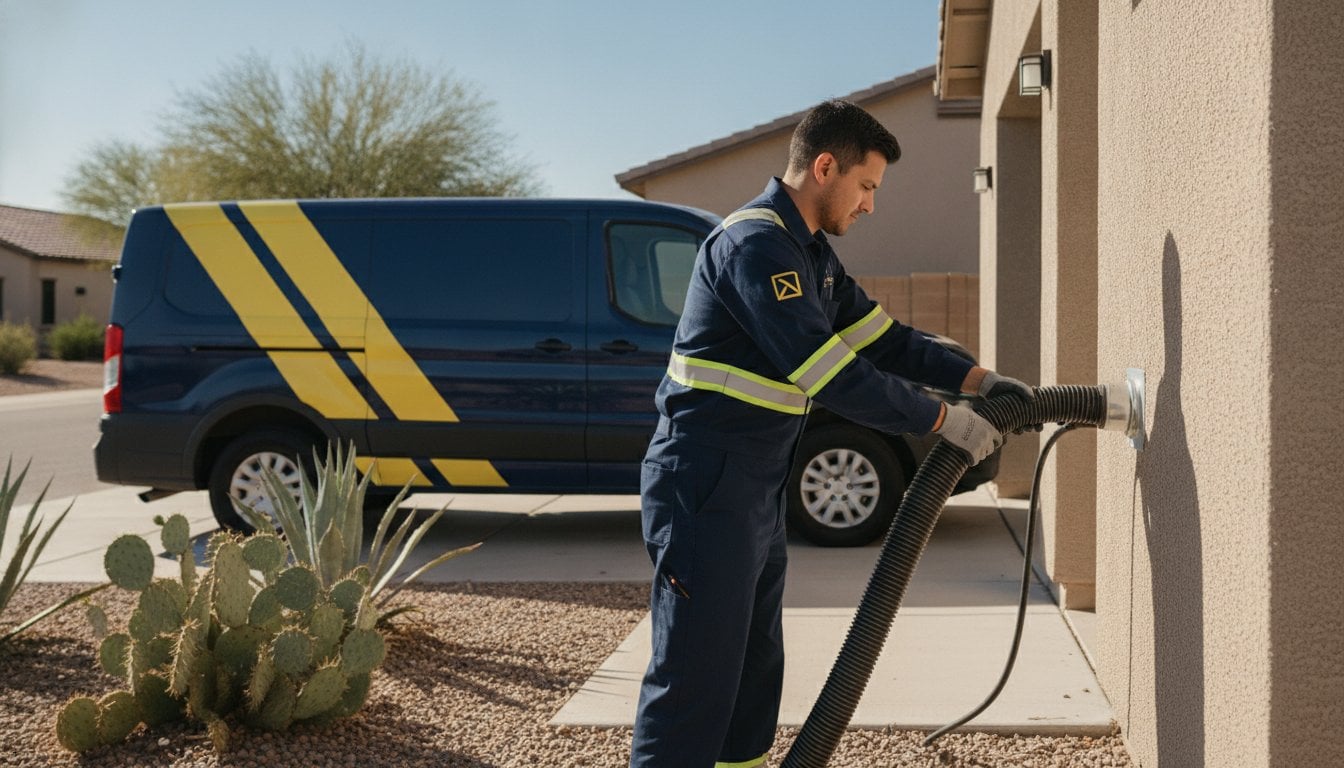
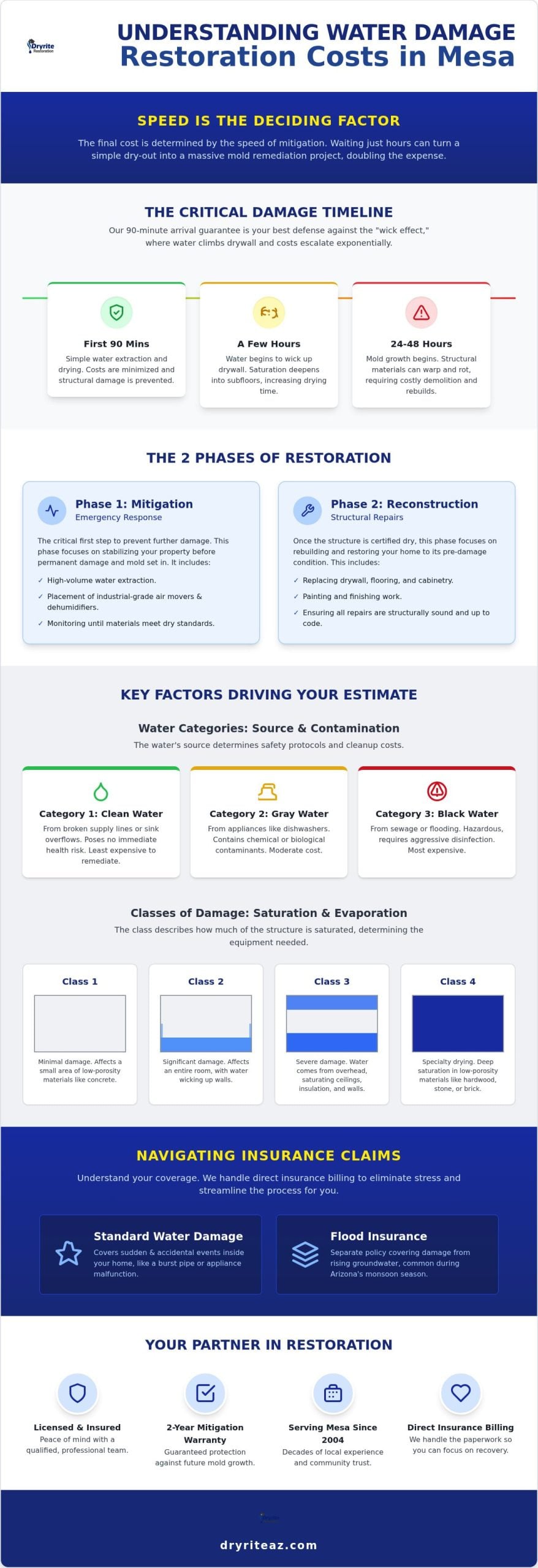
Mitigation is the critical first step to prevent mold and stabilize your property before permanent damage sets in. This phase involves high-volume water extraction and the placement of industrial-grade dehumidifiers. Billing for this stage often centers on equipment “run-time.” Air movers and LGR dehumidifiers must run until moisture readings in your studs and subflooring hit specific dry standards. If the equipment is removed too early, you risk long-term rot. Fast action here is the only way to keep your total restoration budget from spiraling. Our focus is on immediate stabilization to minimize the footprint of the damage.
Phase 2: Reconstruction and Structural Repair Costs
Once the structure is certified dry, the focus shifts to rebuilding. Managing the water damage restoration cost Mesa homeowners incur during this stage means making smart choices about finishes. Reconstruction costs vary wildly based on your specific material choices. Replacing a standard carpet is a different financial conversation than installing luxury vinyl plank or custom tile. As a licensed and insured team, we ensure that your home isn’t just “pretty” but structurally sound. Cutting corners on the rebuild often leads to uneven flooring or failing drywall joints later. We manage these projects internally to maintain accountability and prevent the communication gaps that often lead to hidden fees.
Key Factors That Drive Restoration Estimates Up or Down
Wait time is the primary enemy of your property and your wallet. Every hour water sits stagnant, the water damage restoration cost Mesa homeowners face climbs as moisture migrates deeper into structural supports. Professionals use technical metrics to determine the scope of work, specifically the source of the water and how much of the room is saturated. These factors dictate the number of technicians needed and the specific type of equipment required to stabilize the environment. Acting within the first few hours can often prevent a simple drying job from turning into a full-scale demolition project.
Water Categories: Clean vs. Toxic Cleanup
The source of the water intrusion determines the safety protocols our team must follow. Category 1 involves clean water from a broken supply line or a sink overflow. This is the least expensive to remediate because the water poses no immediate health risk. Category 2, or “gray water,” contains chemical or biological contaminants from appliances like dishwashers. Category 3 involves “black water” from sewage backups or outdoor flooding. These scenarios require hazardous waste protocols and aggressive disinfection. In older Mesa homes, disturbing wet materials during a Category 3 cleanup may even trigger the need for Asbestos Removal Mesa AZ before drying can safely proceed.
Classes of Damage: Class 1 through Class 4
While categories describe the source, classes describe the rate of evaporation required. Class 1 is the simplest, affecting only a small area of low-porosity materials like concrete or tile. Class 2 involves the entire room, with water wicking up the walls. Class 3 is more severe, with water coming from overhead and saturating ceilings and insulation. Class 4 represents the most complex challenge: deep saturation in materials like hardwood, stone, or brick. These “specialty” drying situations require high-capacity dehumidifiers and targeted heat injectors, which naturally increases the daily equipment rate on your final invoice.
Physical accessibility also impacts the bottom line. Drying a wide-open living room is straightforward, but extracting water from a cramped crawlspace or a tight attic requires specialized labor and compact tools. Navigating Water Damage Insurance Claims after a monsoon flood requires documenting these technical challenges clearly to ensure your adjuster understands the complexity of the work. If you’re facing a complex layout or high-class damage, you should consult a licensed specialist immediately to prevent secondary damage from escalating your costs.
Navigating Water Damage Insurance Claims in Arizona
Filing an insurance claim is often more stressful than the flood itself. To ensure the water damage restoration cost Mesa homeowners incur is fully covered, you must speak the language of the insurance adjuster. Most Arizona policies center on the “sudden and accidental” clause. This means coverage typically applies to burst pipes or water heater failures, but excludes slow, neglected leaks. We use Xactimate software to generate our estimates. This is the same platform used by major carriers, which streamlines the approval process and minimizes disputes over labor rates or equipment costs. Using industry standard software ensures your claim is processed with professional accuracy from day one.
Direct Coordination and Billing
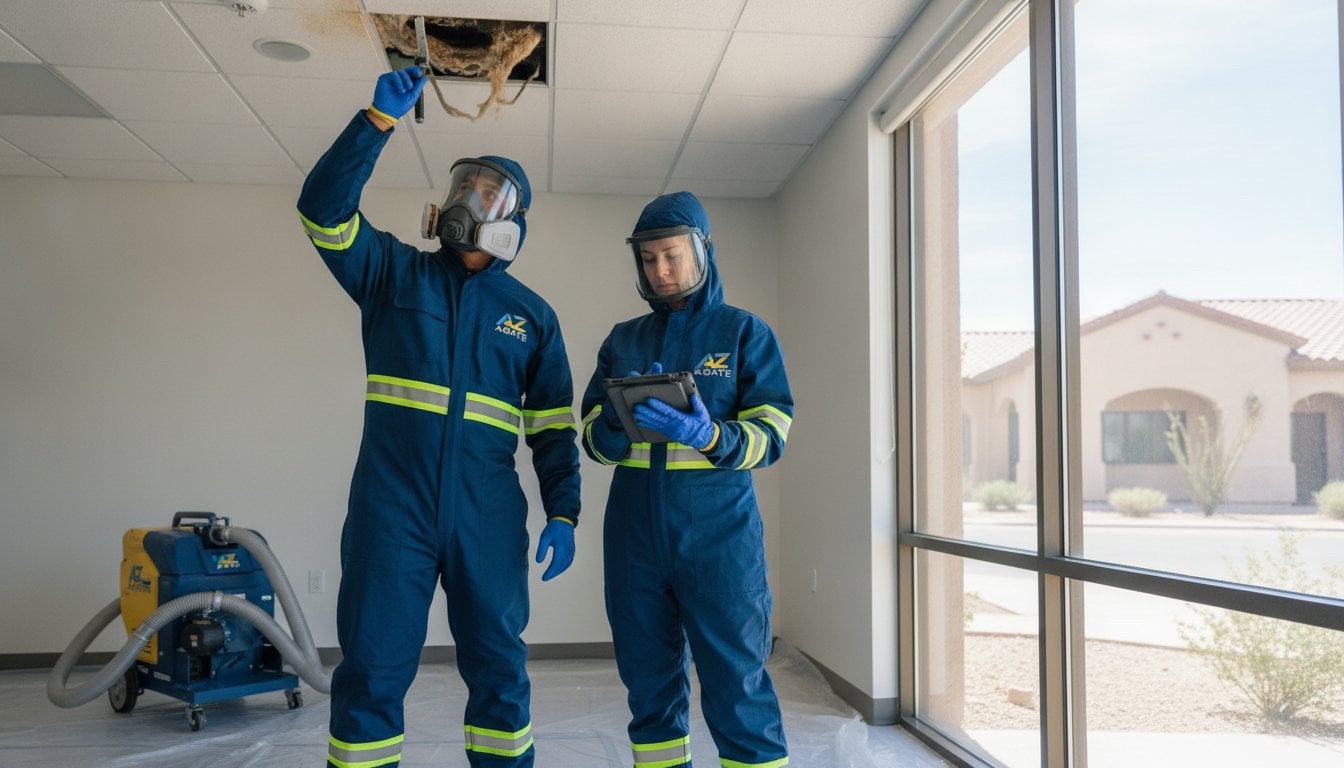
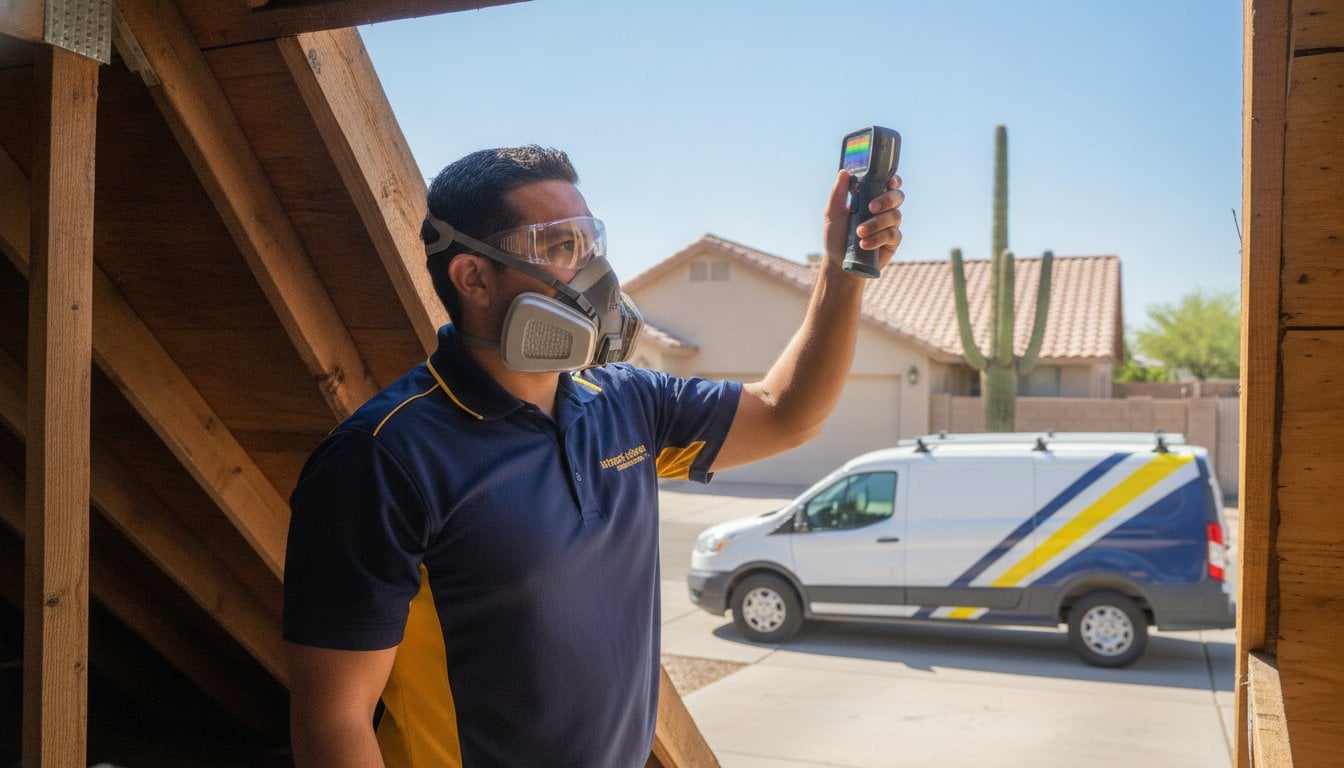
Dryrite Restoration acts as a stabilizing force between you and your insurance provider. Our team handles the heavy lifting of documentation, providing the moisture maps and thermal imaging reports adjusters require. By managing communication directly, we close the gap between the disaster and the payout. This direct billing model means you don’t have to act as a middleman during a crisis. We are licensed and insured, and we back all our mitigation work with a 2-year warranty. This long-term commitment gives both you and your insurer peace of mind that the job was done right the first time.
Preventing Claim Denials
Claim denials often stem from a homeowner’s failure to fulfill their “duty to protect” the property. If you let water sit for days, the insurer may argue that the resulting mold was preventable. Immediate mitigation is your best defense against a denied claim. You should also be aware that “gradual damage” is a common reason for rejected payouts in the Phoenix Metro area. Reviewing the Arizona Department of Insurance guide on water damage can help you understand your rights as a consumer. For specific strategies on documenting your loss, visit our page on Water Damage Insurance Claim Help Arizona for a deeper dive into successful recovery.
Don’t face the insurance company alone while your home is in turmoil. We have the expertise to manage your claim from initial inspection to final reconstruction. If you need a partner who understands the Mesa insurance landscape, contact us today for immediate insurance coordination.
How the 90-Minute Rule Saves You Thousands
Speed is the most effective way to lower the water damage restoration cost Mesa homeowners eventually pay. While it’s tempting to wait until morning to call for help, water never stops moving. It travels through the path of least resistance, often hiding behind baseboards and climbing up porous drywall. This phenomenon, known as the “wick effect,” can turn a single-room dry-out into a multi-room reconstruction project in just a few hours. By arriving within 90 minutes, we stop the water before it reaches structural studs or saturates the subflooring. This rapid response often preserves expensive materials like hardwood or custom cabinetry that would otherwise require total replacement after a 24-hour delay. For example, saving a saturated hardwood floor requires specialized drying mats applied within the first few hours. If the water sits for a full day, the wood fibers swell and buckle, making replacement the only option.
Avoiding Mold Remediation Costs
Mold is the single most expensive complication in property recovery. In the intense Arizona heat, mold spores can begin colonizing wet surfaces within 24 to 48 hours. Once mold is present, the project scope expands to include air scrubbing, physical containment, and post-remediation testing. These steps add thousands to the final invoice. Rapid industrial drying eliminates the moisture mold needs to survive, effectively bypassing these costs entirely. Our team focuses on aggressive dehumidification to ensure your home stays safe and your budget stays intact. For a detailed look at how to handle existing growth, read our guide on Professional Mold Remediation Mesa AZ.
Mesa’s 24/7 Emergency Advantage
Dryrite Restoration’s 90-minute arrival guarantee isn’t just a service metric; it’s a cost-containment tool. We stabilize your home’s environment immediately, lowering the total claim value and reducing your out-of-pocket stress. Every minute saved during the initial extraction phase prevents secondary damage from escalating the water damage restoration cost Mesa families face. We handle the chaos so you can return to tranquility. As a licensed and insured specialist, we provide the quiet strength needed to navigate these high-stakes moments. Don’t wait for the damage to double. Call for an immediate Water Damage Restoration Mesa AZ assessment to protect your property and your budget.
Secure Your Property and Financial Recovery Today
Managing the water damage restoration cost Mesa homeowners face requires a balance of immediate action and technical expertise. You now understand that the category of water and the class of damage dictate the scope of your recovery. Speed remains your greatest ally. By prioritizing a rapid response, you prevent the wick effect from destroying structural elements and avoid the high price of mold remediation. We stand ready as your experienced protector, providing the calm competence needed to navigate this crisis. Our team manages every detail internally, from initial extraction to final reconstruction, ensuring no communication gaps slow your progress.
Take the first step toward restoring your peace of mind. We offer 24/7 emergency service with a 90-minute arrival guarantee and direct insurance billing to lower your stress. As a licensed and insured specialist serving Mesa since 2004, we back our mitigation work with a 2-year warranty. Don’t let a temporary disaster become a permanent financial burden. Get an Emergency Cost Estimate — 90-Minute Arrival Guaranteed and let us bring order back to your home. You have the tools to recover; we have the expertise to make it happen.
Frequently Asked Questions
Is water damage restoration covered by standard Arizona homeowners insurance?
Standard Arizona policies typically cover damage that is “sudden and accidental,” such as a burst pipe or a failed water heater. They usually exclude gradual damage caused by long term leaks or poor maintenance. It is also vital to distinguish between water damage and flood damage; the latter requires a separate policy through the NFIP. We specialize in direct insurance coordination to help you navigate these specific policy requirements and ensure your claim is documented correctly.
How much does a water damage restoration estimate cost in Mesa?
While many local providers offer an initial inspection, the final water damage restoration cost Mesa homeowners see depends on the technical assessment of the property. A professional estimate involves moisture mapping and thermal imaging to identify hidden saturation. This level of detail is necessary for insurance approval and ensures that no moisture is left behind to cause rot. We provide a transparent breakdown of all required mitigation and reconstruction steps during our 90-minute arrival window.
What is the average cost to dry out a flooded basement or room?
Industry data for 2026 suggests that minor drying projects often range from $970 to $3,900, while major structural flooding can exceed $11,000. These figures are influenced by the volume of water and the class of the damage. For example, drying out a room with saturated hardwood requires more specialized equipment than a concrete basement. Rapid intervention is the most effective way to keep your specific project on the lower end of these national averages.
Can I save money by doing the water cleanup myself?
Attempting DIY cleanup often leads to higher long term expenses. Household vacuums and fans cannot extract deep moisture from subfloors or wall cavities. If moisture remains, you risk structural rot and mold growth, which insurance companies may refuse to cover due to improper mitigation. Hiring a licensed and insured professional ensures the job meets IICRC standards. This protection, combined with our 2-year warranty, saves you money by preventing expensive secondary repairs later.
How long does it take for mold to grow after a water leak in Arizona?
Mold can begin to colonize wet surfaces within 24 to 48 hours. The intense Arizona heat combined with indoor moisture creates an ideal breeding ground for spores. This narrow window is why our rapid arrival guarantee is so critical for property stabilization. If you wait longer than two days, your project will likely require a full mold remediation protocol. This extra step involves containment and specialized air scrubbing, which significantly increases the total project invoice.
Why do restoration companies charge more for sewage (Category 3) cleanup?
Category 3 water, or “black water,” contains significant pathogens and biohazards that require specialized handling. Technicians must use advanced personal protective equipment and aggressive antimicrobial treatments to ensure the area is safe for habitation. Most porous materials saturated by sewage, such as carpets or drywall, cannot be cleaned and must be removed and disposed of as hazardous waste. These extra safety protocols and disposal requirements naturally lead to higher labor and material costs compared to clean water leaks.