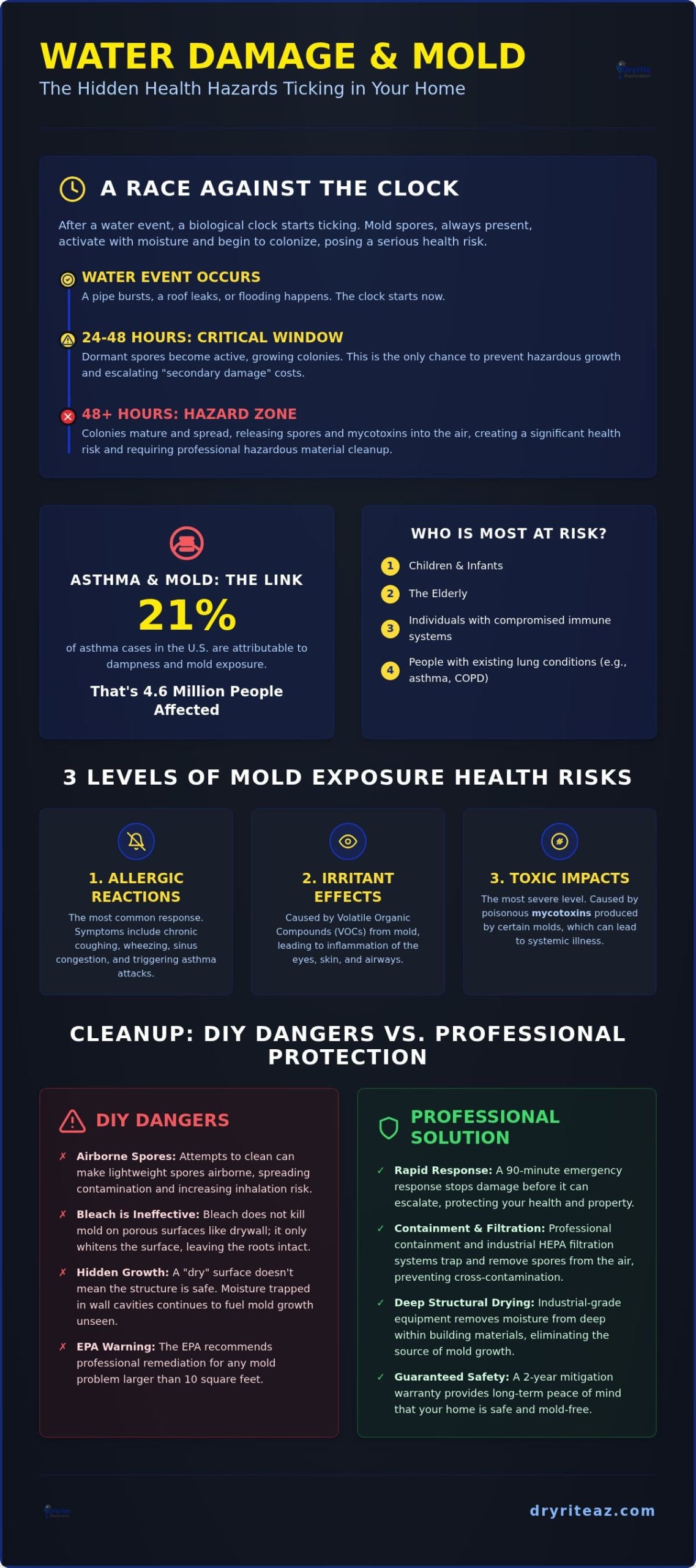
Did you know that 21% of asthma cases in the U.S. are linked to dampness and mold exposure? That statistic means 4.6 million people suffer because moisture issues weren’t handled correctly. If you’ve recently dealt with a burst pipe, you’re likely feeling anxiety and confusion. You might be worried about the health risks of mold after water damage or wondering if that musty smell is a sign of hidden growth in your HVAC system.
We understand the stress of watching your home become a health hazard. It’s a race against a biological clock that starts ticking within 24 to 48 hours of a water event. This guide will help you identify if your symptoms are mold-related and clarify the truth about different mold types. You’ll learn how to stop growth immediately and why professional stabilization is the only way to keep your family safe.
We’ll cover why you should never reach for bleach and when the EPA recommends calling an expert for areas over 10 square feet. Protecting your home starts with a 90-minute response to stop the damage before it compromises your health. Let’s secure your family’s future today.
Key Takeaways
- Act within the first 24 to 48 hours to stop the biological clock and prevent secondary damage from escalating your repair costs.
- Identify the critical health risks of mold after water damage, including the difference between simple allergies and the systemic impact of mycotoxins.
- Learn why musty odors are an essential clinical warning sign of hidden mold lurking inside wall cavities or under floorboards.
- Understand how professional containment and HEPA filtration prevent the dangerous aerosolization of spores that often occurs during DIY cleanup.
- Discover why a 90-minute emergency response and a 2-year mitigation warranty are vital for restoring your home’s safety and your peace of mind.
The 24-Hour Window: Why Water Damage Quickly Becomes a Health Hazard
Water damage is a biological emergency. Mold spores are naturally present in every home, but they require a specific catalyst to colonize: moisture. When a pipe bursts or a roof leaks, moisture meets organic food sources like the paper facing on your drywall. This combination triggers a rapid metabolic reaction. Within 24 to 48 hours, these spores transition from dormant particles into active, growing colonies. This short window is your only opportunity to stop the clock on the health risks of mold after water damage before the environment becomes hazardous.
We categorize mold as “secondary damage.” While the initial water event causes immediate structural harm, the resulting fungal growth often carries a much higher price tag for remediation and healthcare. Secondary damage is the biological growth resulting from unmitigated water. If you don’t extract the water and stabilize the environment immediately, you aren’t just paying for a plumber; you’re paying for a hazardous material cleanup.
The Role of Humidity and Heat in Arizona
Arizona’s climate presents unique challenges for property owners. During the monsoon season, outdoor humidity spikes. When this moisture enters a damaged home, it creates a “greenhouse effect” that accelerates fungal metabolic rates. Trapped moisture behind Mesa drywall provides a dark, warm sanctuary for rapid growth. These colonies can spread through wall cavities long before you see a single dark spot on the paint.
The “perfect storm” for growth in our region includes:
- Elevated indoor humidity levels above 60%.
- Stagnant air trapped in wall cavities and subfloors.
- Sustained indoor temperatures that mimic a tropical environment.
Heat acts as a fuel source for these organisms. In Phoenix and Mesa, fungal colonies can reach maturity significantly faster than they would in cooler, drier climates.
Why “Drying Out” Naturally Isn’t Enough
Many homeowners believe that if the floor feels dry to the touch, the danger has passed. This is a dangerous misconception. Mold doesn’t die when the water evaporates; it simply goes dormant. These dormant spores are extremely lightweight and become airborne the moment you start a DIY cleaning attempt. Research provided in this comprehensive overview of mold health issues shows that inhalation is the primary pathway for illness.
To protect your family, you need professional water damage restoration in Mesa AZ to ensure deep structural drying. This process removes the health risks of mold after water damage by eliminating the moisture source entirely. Professional intervention uses industrial-grade dehumidifiers to pull moisture from deep within building materials, ensuring the environment is no longer hospitable for fungal life.
Respiratory and Systemic Health Risks of Mold Exposure
Exposure to indoor mold isn’t a singular medical event; it’s a spectrum of biological impacts. We categorize these into three distinct levels: allergic reactions, irritant effects, and toxic impacts. Allergic reactions are the most common, involving immediate or delayed immune responses. Irritant effects occur when mold produces volatile organic compounds (VOCs) that inflame the eyes, skin, and airways. The most severe level involves toxic impacts caused by mycotoxins. These are poisonous chemical compounds naturally produced by certain fungal species that can lead to systemic illness.
The health risks of mold after water damage are cumulative. Small, daily exposures build up over time, meaning symptoms often worsen the longer you remain in the environment. This bio-accumulation is particularly dangerous for high-risk groups. Children, the elderly, and individuals with compromised immune systems or pre-existing lung conditions face the highest stakes. For these vulnerable residents, a mold-infested home isn’t just uncomfortable; it’s a direct threat to their long-term recovery and well-being.
Common Respiratory Symptoms
For many Mesa residents, mold exposure mimics the symptoms of severe seasonal allergies. Chronic coughing, wheezing, and persistent sinus congestion are standard warning signs. According to the EPA guide to mold and health, damp indoor environments are a major trigger for asthma attacks. If you find your respiratory issues improve when you leave the house but return shortly after you walk through the front door, you likely have an indoor air quality crisis.
Use this checklist to determine if your “allergies” are actually mold-related:
- Shortness of breath that intensifies in specific rooms.
- Persistent throat irritation that doesn’t respond to standard medication.
- Frequent sneezing fits only while indoors.
- Watery, red, or itchy eyes that clear up after spending time outside.
Neurological and Systemic Impacts
Beyond the lungs, certain species like Stachybotrys chartarum, commonly known as “black mold,” produce trichothecene mycotoxins. These toxins can cross into the bloodstream and affect the central nervous system. Residents often report “brain fog,” chronic fatigue, and pounding headaches that have no other clear medical cause. These systemic issues are why we treat fungal growth as a serious threat to your family’s cognitive and physical health.
Mold is a biohazard requiring specific containment protocols to prevent these toxins from spreading through your HVAC system. If you suspect your home has become a health hazard, securing professional mold remediation is the first step toward restoring your peace of mind. We specialize in identifying these hidden toxins and removing them before the health risks of mold after water damage become permanent life changes.
Identifying Hidden Health Threats in Arizona Homes
Visible mold is only the tip of the iceberg. In many Arizona homes, the real danger lurks behind the scenes. Wall cavities, subfloors, and attic spaces act as incubators for fungal colonies that never reach the surface of your paint. These hidden pockets are a primary source of the health risks of mold after water damage, as they continuously release microscopic spores into your breathing zone without your knowledge.
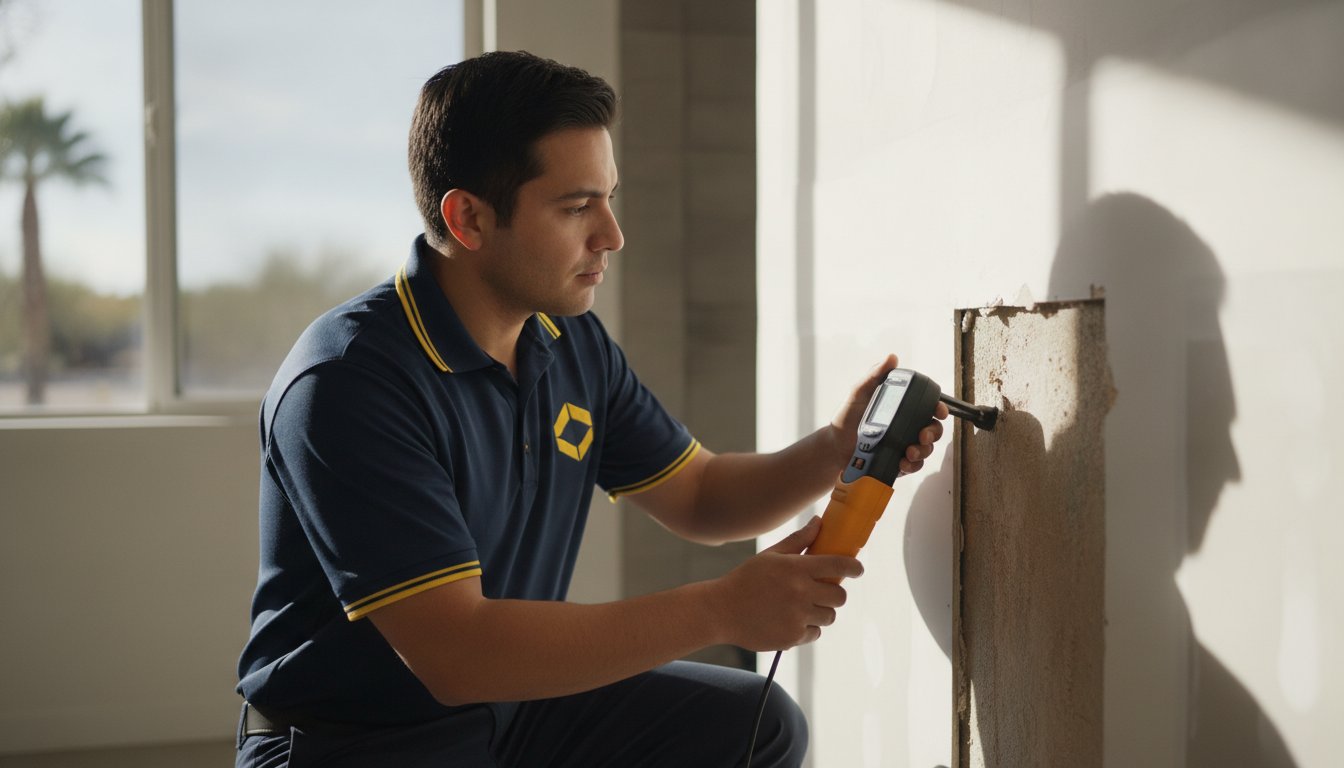
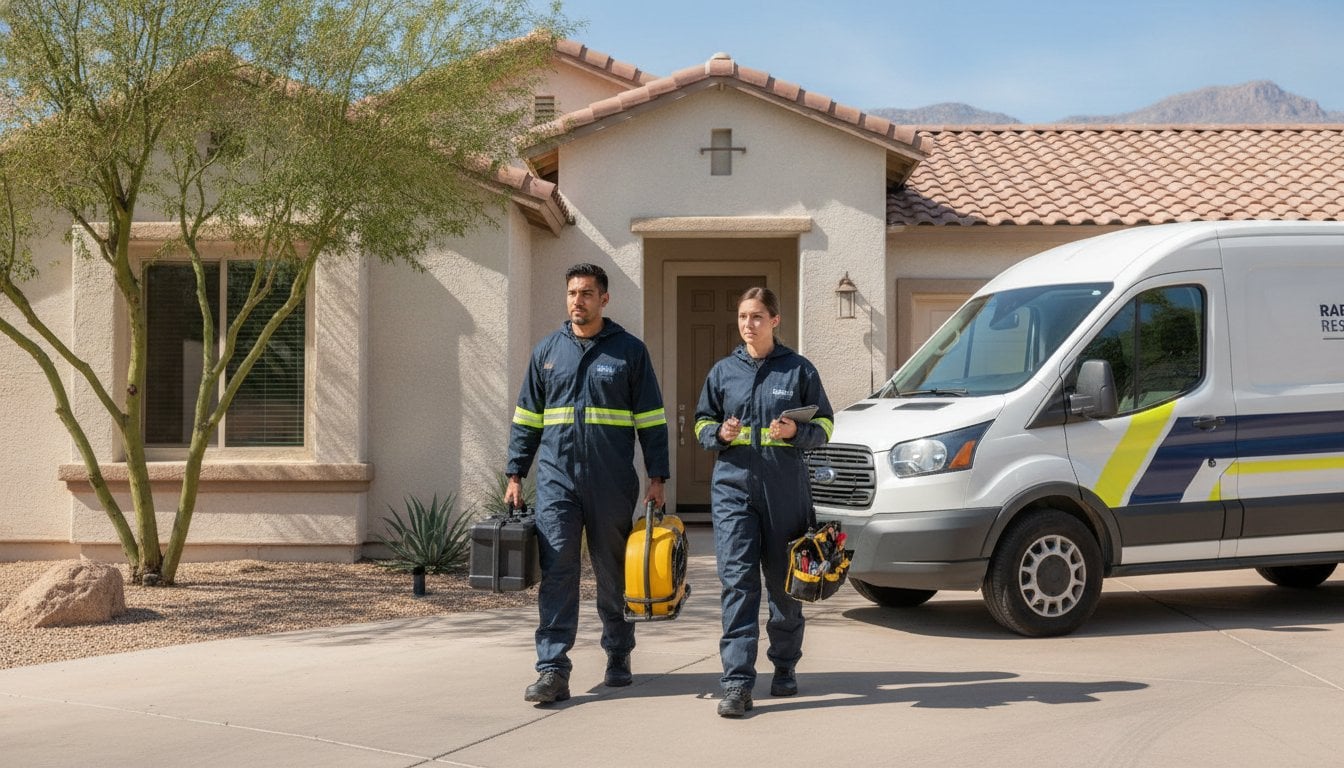
Trust your senses. A persistent, earthy, or musty odor is often the first clinical sign of a biological hazard. Don’t ignore these smells just because your walls look clean. Spores are highly mobile and cause “cross-contamination,” where growth in a damp laundry room quickly travels through the house to your bedrooms. We arrive on-site within 90 minutes to “stop the clock” on these invisible threats. Our team uses advanced moisture mapping and thermal imaging to find trapped water without unnecessary demolition.
The HVAC Connection: Spore Distribution
Arizona air conditioning units are essential for survival, but they can easily become a distribution hub for toxins. Condensate drain pans and cooling coils often harbor growth if they aren’t draining properly. When a leak occurs near a return air vent, the system sucks up spores and blows them into every room of the house. This link between water damage and indoor air quality makes professional air duct cleaning a necessity after a flood event. Our specialized duct services remove these contaminants, ensuring your AC distributes clean air rather than a biohazard.
Hidden Mold in Kitchens and Bathrooms
Mesa homeowners frequently encounter leaks in under-sink cabinets or behind refrigerators. These areas are particularly high-risk because they often contain porous materials like particle board. Particle board absorbs moisture like a sponge and provides a dense organic food source for toxic species. Once these materials are saturated, they cannot be simply “wiped down” with bleach. They require controlled removal to prevent spores from becoming airborne and affecting your family’s health.
If you’ve discovered a slow leak behind an appliance, secure your property with professional mold remediation in Mesa AZ to eliminate hidden risks. We provide the expert handling and documentation needed to restore your home to a healthy state. Contact Dryrite Restoration immediately to schedule a professional inspection for any moisture area over 10 square feet.
Professional Remediation: Protecting Your Family Through Expert Mitigation
Professional remediation is the definitive wall between your family and long-term illness. When homeowners attempt to scrub mold themselves, they often worsen the health risks of mold after water damage by aerosolizing dormant spores. These microscopic particles become airborne and settle deep in your respiratory system. We prevent this through strict containment protocols. Our teams establish negative air pressure and utilize HEPA filtration to ensure that while we work, no contaminants escape into the rest of your living space.
We treat every water event as a biohazard. Our process includes the application of professional-grade antimicrobial treatments. These solutions don’t just kill existing growth; they create a protective barrier on structural materials to inhibit future fungal colonization. By arriving within 90 minutes, we stop the moisture from migrating. This rapid intervention is the ultimate preventative health measure for your household.
The Dryrite Restoration Standard
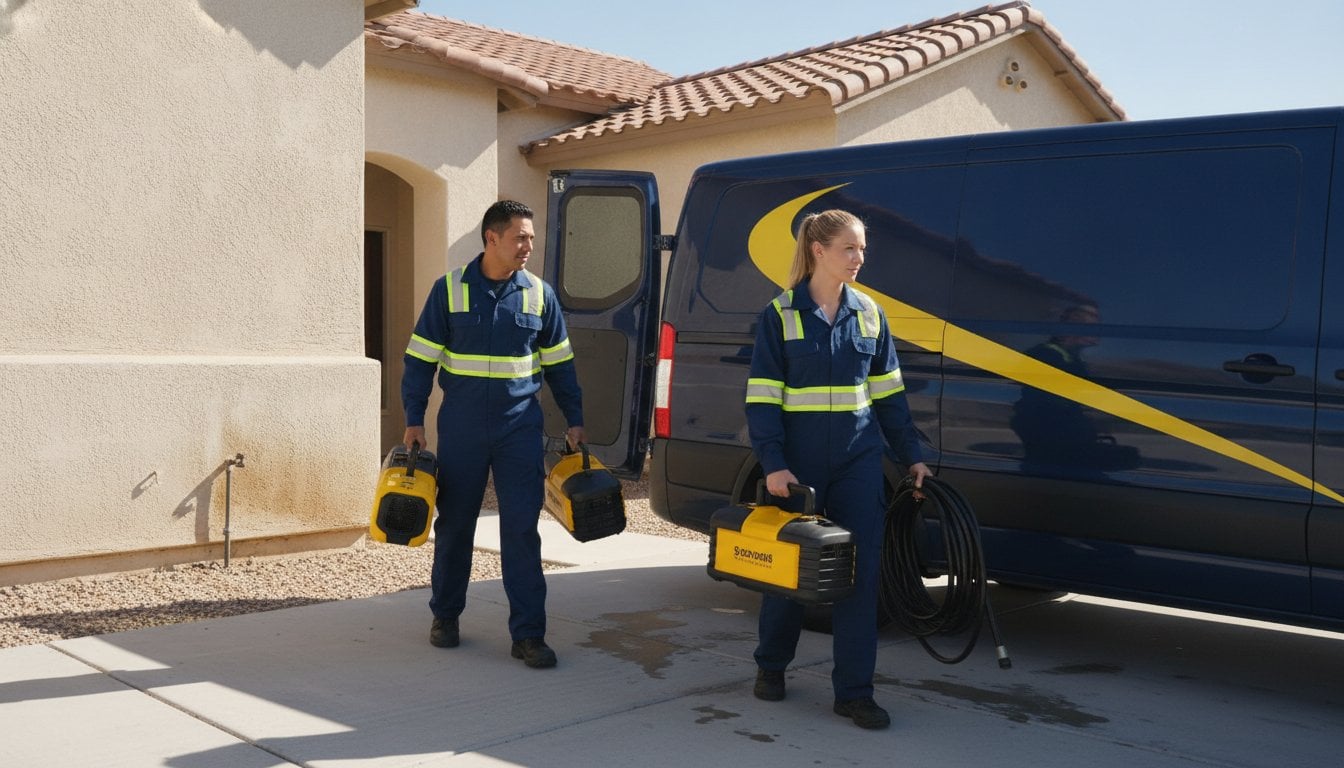
We don’t simply “dry” a home; we stabilize the entire environment. Our IICRC-certified technicians deploy industrial-grade dehumidifiers and high-velocity air movers to extract moisture from deep within building materials. This precision prevents the biological growth that leads to chronic health issues. We stand by our work with a 2-year warranty on mitigation, providing a long-term promise of a mold-free environment. To lower your stress, we also manage direct insurance coordination. We handle the complex documentation and prevent communication gaps so you can focus on your family’s well-being.
Next Steps for Homeowners in Crisis
If you’re facing a water emergency right now, act immediately to protect your health. Turn off the main water valve if it’s safe to do so. Avoid the affected area to prevent tracking spores into clean zones. Your next move is to call for a 90-minute response to stop the biological clock. Once our work is finished, we recommend final clearance testing. This independent verification proves your indoor air quality has returned to safe levels. Don’t leave your family’s safety to chance. Contact Dryrite Restoration now for a 90-minute emergency response to secure your property.
Take Decisive Action to Secure Your Family’s Health
You now understand that moisture is more than just a structural problem; it’s a biological catalyst. Ignoring dampness even for a few days allows colonies to thrive in the unique Arizona heat. By recognizing the health risks of mold after water damage early, you can prevent chronic respiratory issues and systemic toxins from entering your living space. Speed is your greatest ally when protecting your loved ones from invisible spores and mycotoxins.
Our IICRC certified experts act as a stabilizing force during your property crisis. We provide 24/7 emergency service in Mesa and Phoenix with a guaranteed 90-minute arrival time to “stop the clock” on fungal growth. With our 2-year warranty on mitigation work, you receive a long-term commitment to your home’s safety. We handle the technical details and insurance coordination so you can focus on recovery without administrative friction.
Get a Professional Mold Inspection and 90-Minute Emergency Response. Don’t let a temporary leak lead to permanent health changes. We’re here to bring order back to your home and ensure your family breathes easy again.
Frequently Asked Questions
How long does it take for mold to become a health risk after water damage?
Mold begins to colonize and present a health risk within 24 to 48 hours of initial water contact. In the high heat environment of Phoenix and Mesa, fungal metabolic rates accelerate, making rapid intervention critical. Our team provides a 90 minute arrival guarantee to extract moisture before these biological colonies mature. Waiting even a few days can significantly increase the health risks of mold after water damage for your family.
Can I stay in my house if there is mold after a flood?
Whether you can safely remain depends on the extent of the growth and your family’s health history. If the affected area is larger than 10 square feet or if the HVAC system is contaminated, the EPA recommends professional intervention. Staying in a home with active growth exposes you to airborne spores and mycotoxins. We use negative air pressure and HEPA filtration during remediation to ensure your living environment remains stable.
What are the symptoms of “toxic mold” exposure?
Exposure to toxic mold species often results in both respiratory and neurological symptoms. You might experience persistent coughing, wheezing, or sinus congestion that worsens while indoors. Prolonged exposure to trichothecene mycotoxins can also lead to systemic issues like chronic fatigue, headaches, and “brain fog.” If your seasonal allergies seem unusually aggressive or never clear up, it is likely a sign of an indoor biological hazard that requires an immediate professional assessment.
Is black mold more dangerous than other types of mold?
All indoor mold growth poses a threat, but “black mold” or Stachybotrys chartarum is particularly concerning due to its production of mycotoxins. These chemical compounds can cause more severe systemic reactions than typical allergenic molds. However, color is not a definitive indicator of toxicity. Any mold growing on porous materials like drywall or particle board in your Mesa home should be treated as a potential biohazard that requires controlled containment and removal.
Will my insurance cover mold remediation if it resulted from water damage?
Insurance coverage typically depends on the source of the moisture. Most policies cover mold remediation if it is a direct result of a sudden and accidental water event, such as a burst pipe. However, mold resulting from long term neglect or lack of maintenance is often excluded. We work directly with insurance companies in the Phoenix area to manage your claim and provide the necessary documentation to prove the loss was accidental and sudden.
Can I clean up mold myself using bleach or vinegar?
You should not use bleach as a primary solution for mold cleanup. While it might kill surface growth on non porous materials, it cannot penetrate porous surfaces like drywall or wood where the roots reside. DIY cleaning often increases the health risks of mold after water damage by aerosolizing spores and spreading them through your home. Professional remediation involves physical removal and antimicrobial treatments to ensure the colony does not return to your property.